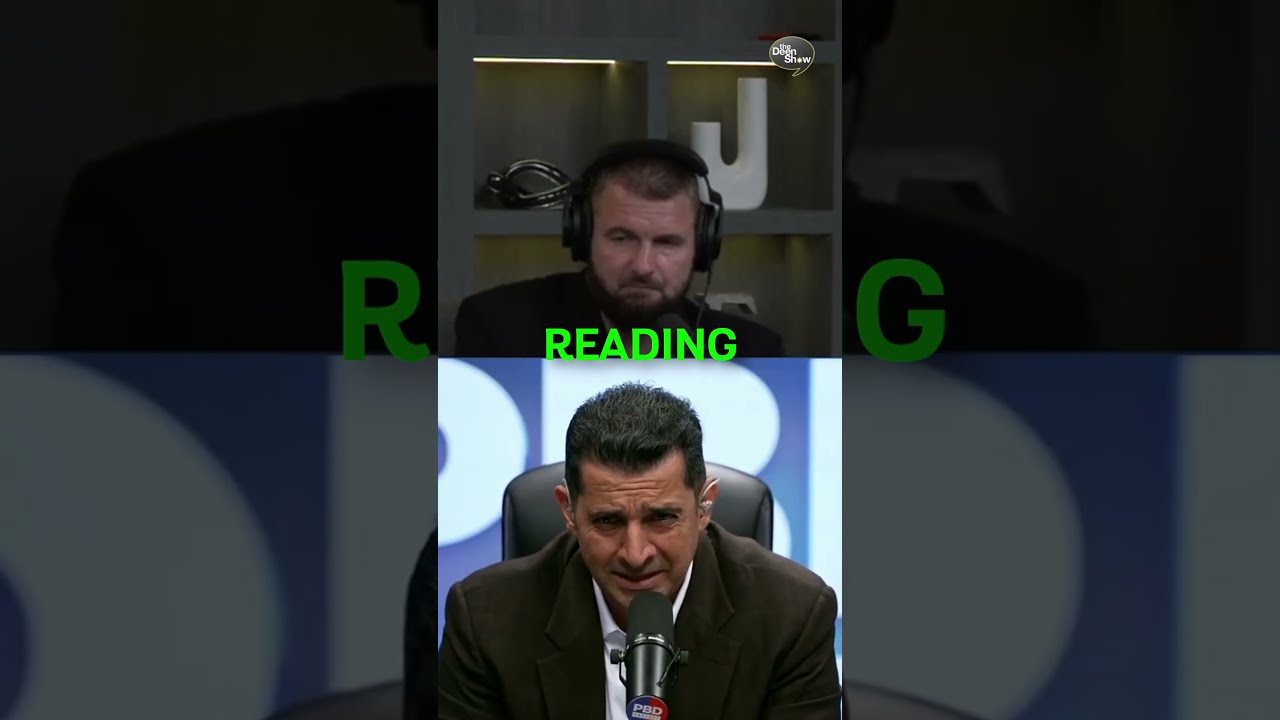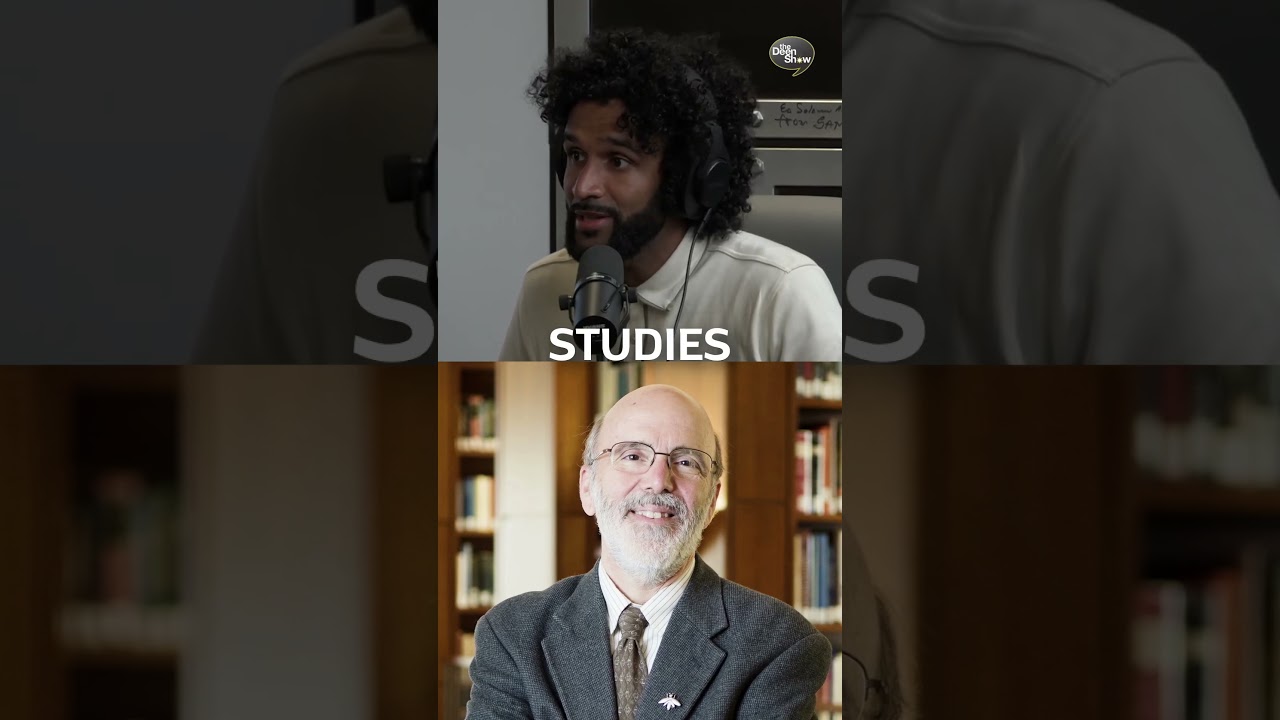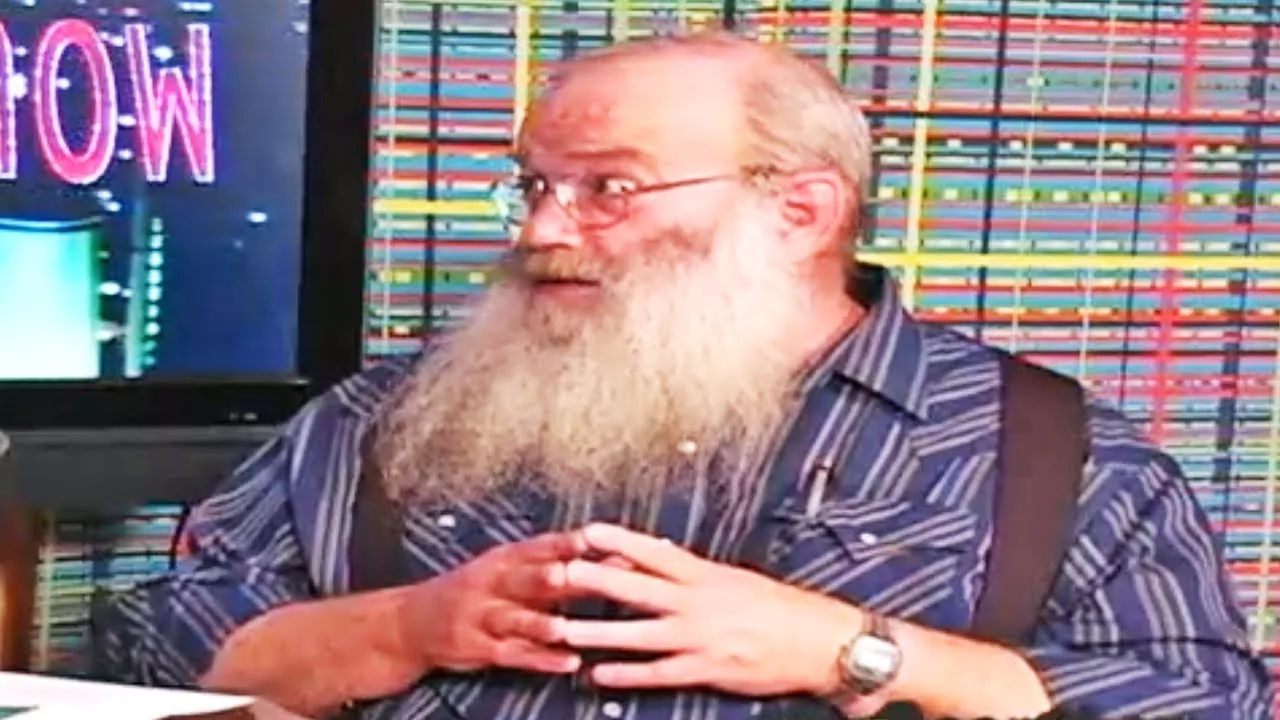
What does a man do when the very institution he devoted his life to reveals, through its own highest scholarship, that the foundations he preached have been significantly altered? For Dr. Gerald Dirks — formerly the Reverend Gerald Dirks, ordained deacon of the United Methodist Church and holder of a Master of Divinity from Harvard Divinity School — this was no hypothetical question but a lived crisis of conscience. In this first part of his conversation on The Deen Show, Dr. Dirks traces a remarkable arc of spiritual guidance: from a devout child memorising scripture in a small Kansas church, to one of the most gifted young ministers of his generation, to a man whose honest engagement with biblical scholarship made it impossible, in good conscience, to continue preaching what he had been ordained to preach — and whose sincere search for truth ultimately led him to Islam.
A Child of the Pulpit — How Faith Became a Calling Before It Became a Question
Dr. Dirks grew up in a rural Kansas town of roughly 500 people where the local church was the unquestioned centre of community life. Long before he was a theologian, he was a child collecting perfect attendance pins at Sunday school and memorising biblical verses for prizes. By the age of 14 he was delivering the Youth Sunday sermon at his congregation, and word of his gift spread so quickly that he was soon preaching at neighbouring churches, nursing homes, and church-affiliated organisations. At 17 he entered Harvard College with a philosophy major oriented towards the ministry, received his licence to preach from the United Methodist Church in 1969, was ordained a deacon in 1972, and in 1974 graduated with a Master of Divinity from Harvard Divinity School. By his own modest admission, attendance records were set wherever he preached. He has since authored multiple books bridging Islam and the Abrahamic traditions — among them Easy to Understand Islam, Muslims in America, The Crescent and the Cross, and The Abrahamic Faiths — a body of work reflecting a lifetime of serious, earnest interfaith scholarship.
Key milestones in Dr. Dirks’ formation as a Christian minister:
- Began preaching publicly at age 14, selected as Youth Sunday speaker at his local Methodist church in Kansas
- Entered Harvard College at 17 with a philosophy major, already committed to a life of ministry
- Licensed to preach by the United Methodist Church in 1969
- Ordained deacon in 1972 during his graduate studies at Harvard Divinity School
- Graduated with a Master of Divinity from Harvard Divinity School in 1974
- Left the active parish ministry in autumn 1974 — and never again filled a pulpit
- Authored six books on Islam, Islamic history, and Abrahamic comparative religion after his conversion
“One of the ironies of life is that the churches often take the most promising of their young ministers and send them to really good seminaries — and in those really good seminaries you are systematically exposed to the oldest existing texts of how the Bible actually once read, the changes that were made in those texts, when those changes took place, why those changes took place. And those changes raise serious, serious questions about such fundamental Christian doctrines as the Trinity, the sonship of Jesus Christ, peace be upon him, the crucifixion event, and the doctrine of atonement.” — Dr. Gerald Dirks
When Scholarship Meets Doctrine — The Questions That Forced a Crisis of Faith and Integrity
The turning point in Dr. Dirks’ life came not through doubt in the popular sense, but through the very academic rigour the church itself had given him. At Harvard Divinity School, he was exposed to the oldest surviving biblical manuscripts and confronted with a clear pattern: textual alterations, insertions, and deletions that raised fundamental questions about the reliability of core Christian doctrines as they are taught today. More troubling still was what the historical record revealed about the early Church — that its defining dogmas were shaped not by purely theological reasoning, but by what Dr. Dirks candidly calls “decidedly geopolitical machinations.” Different branches of early Christianity, including the Jerusalem church — the actual community of Jesus’ first disciples and their direct followers — were systematically suppressed over time, their scriptures destroyed and their traditions erased. What survived and became mainstream was Pauline Christianity, the strand taken by Paul of Tarsus primarily to Gentile communities in Europe and Asia Minor. A study by Psychology Today magazine in the early 1970s illustrated the consequences of this suppression of knowledge: ordinary Christian laity affirmed on average seven of ten core Christian beliefs, while ordained clergy — those with the deepest access to biblical scholarship — affirmed only four. The gap between the pulpit and the pew was not accidental; it was, for many ministers, a matter of managed silence.
What serious biblical scholarship brought into question — key takeaways from Dr. Dirks’ account:
- The Trinity: Even Athanasius, widely regarded as the father of the Trinity doctrine, reportedly admitted on his deathbed that the more he contemplated it, the less sense it made — and most attempts by ordinary Christians to explain it inadvertently drift into positions the Church has historically condemned as heresy
- The divinity of Jesus (peace be upon him): Original biblical manuscripts raise serious questions about whether this doctrine derives from Jesus himself or from later theological and political development
- The crucifixion: The oldest surviving texts, Dr. Dirks notes, raise genuine doubts about the crucifixion narrative as it is universally preached today
- The doctrine of atonement: The theological framework of blood sacrifice for the forgiveness of sin — central to Pauline Christianity — does not appear with the same clarity in the earliest available sources
- The suppression of early Christian diversity: Multiple branches of early Christianity were politically eliminated and their scriptures destroyed, erasing significant portions of the original tradition and leaving only one thread of a far more complex tapestry
- A crisis shared by many: Dr. Dirks was not alone — approximately half of his Harvard Divinity School graduating class walked away from parish ministry upon graduation, choosing personal integrity over institutional conformity
“How can I stand behind the pulpit on Sunday morning and preach a sermon that I knew was at variance with the actual taproot of Christianity? If I stood behind the pulpit and preached what I had been taught in seminary, I’d be looking for a new job within a week. To preserve my personal integrity, I left the active ministry.” — Dr. Gerald Dirks
The story of Dr. Gerald Dirks is, at its heart, a story about the courage to follow truth wherever it leads — even when that path runs against personal security, social standing, and a lifetime of investment in one faith tradition. Between 1974 and his eventual embrace of Islam, Dr. Dirks lived in what he calls the position of an “atypical Christian”: a man who believed firmly in the existence of one God, who rejected the Trinity and the divinity of Jesus (peace be upon him), who read the Bible for its genuine moral wisdom while remaining deeply aware of its textual history, and who continued studying archaeology, manuscripts, and biblical scholarship with the intensity of someone still sincerely searching. His journey is a powerful reminder that the fitrah — the innate inclination towards monotheism, truth, and sincere submission that Allah, subhanahu wa ta’ala, places in every human being — does not disappear simply because the path to honouring it is long and difficult. Part two of this conversation will reveal the final steps that brought Dr. Dirks home to Islam, and why the clarity, intellectual coherence, and uncompromising tawhid of Islam proved to be exactly what a man of his depth, integrity, and scholarship had been searching for all along.