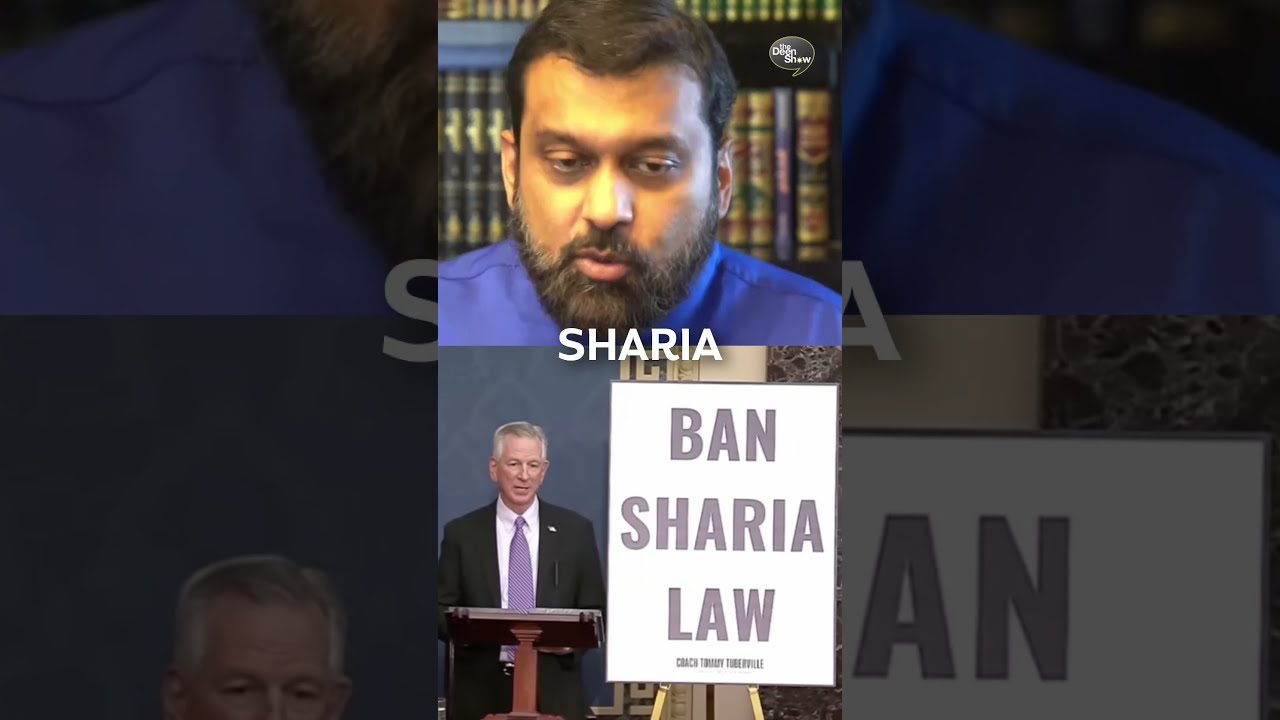
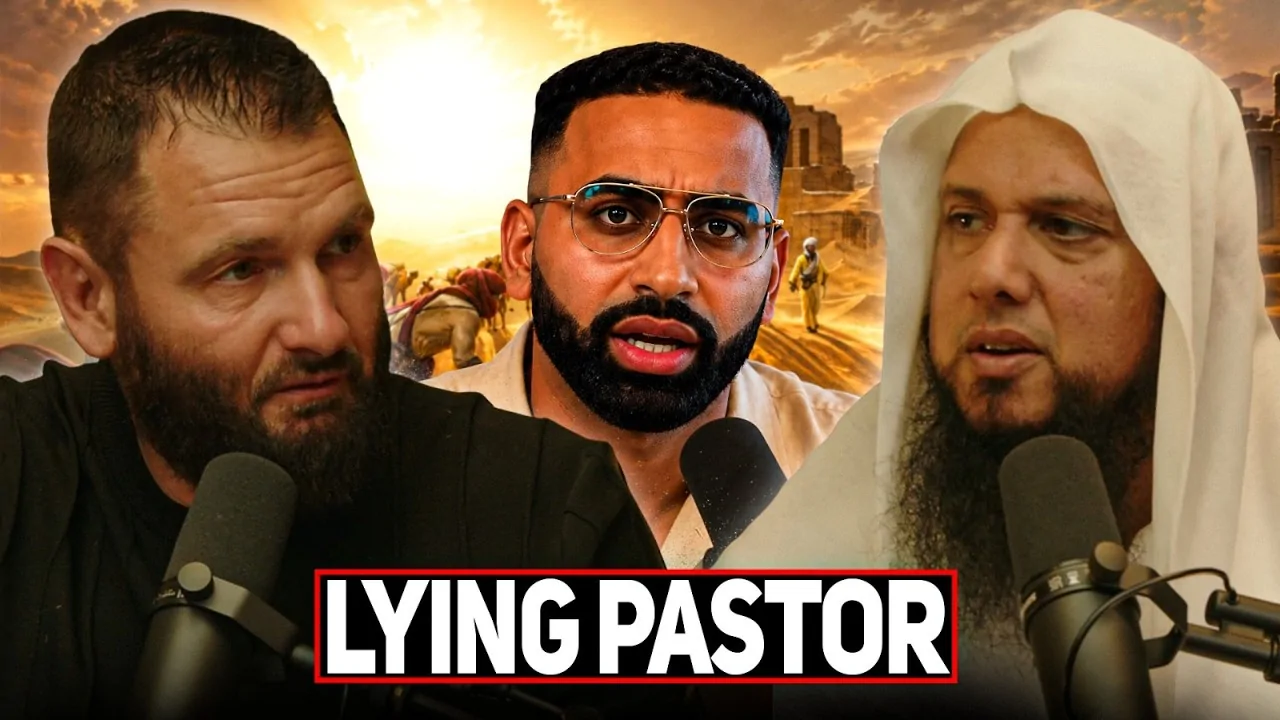
In an era of viral sound bites and algorithmically amplified fear, misinformation about Islam has found fertile ground across social media and mainstream platforms alike. In Episode 1177 of The Deen Show, host Eddie and Shaykh Assim Rashid — a qualified Islamic scholar and translator of Obeying the Messenger — sit down to address a deeply alarming video in which a pastor makes a string of inflammatory claims about Islam: that Muslims secretly use a doctrine called “taqiyya” to deceive non-Muslims until they gain power, that Sharia law would lead to the killing of pastors and the rape of women, and that mosques are being built through a coordinated takeover of Christian churches. Each claim is examined, verified against Islamic sources, and systematically dismantled — not through hostility, but through scholarship, historical evidence, and the kind of honest, courageous conversation that the religion of Islam itself demands.
The Taqiyya Myth: Islam Strictly and Absolutely Forbids Lying to Spread the Faith
The core accusation — that Muslims are religiously permitted, even obligated, to lie to non-Muslims as part of a stealth takeover — is one of the most persistent and damaging myths circulating about Islam today. Shaykh Assim Rashid addresses it directly and without hesitation. “Taqiyya,” as weaponised in anti-Islam rhetoric, is simply not a mainstream Islamic concept. In Sunni Islam — the tradition followed by the vast majority of the world’s nearly two billion Muslims — there is no sanction for lying to propagate the faith, period. The only narrow Quranic allowance involves a believer forced at the point of a sword to verbally deny their faith under a direct threat of death, and even then, many of the companions of the Prophet ﷺ refused to do so, choosing martyrdom over a single dishonest word. The notion that Muslims are systematically deceiving non-Muslims as part of a conquest strategy is not only theologically baseless — it is logically incoherent. As Shaykh Assim points out, if you carry what you sincerely believe to be the truth, why would you ever need to lie to spread it? Even ChatGPT, queried live on-air, confirmed that honesty is a core Islamic value and that Islam does not promote lying to anyone — a response Shaykh Assim described as “pretty much spot on.”
“We absolutely don’t. There is no room for us to lie. Period. And when it comes to presenting a sacred message, part of preserving its sanctity is that you be truthful to the message. You don’t give false impressions about it.” — Shaykh Assim Rashid
- Taqiyya is absent from Sunni Islam — it appears in certain minority sects for personal protection purposes and has no application whatsoever to spreading the faith.
- Lying is categorically forbidden in Islam — the sole Quranic allowance is verbal denial of faith under life-threatening coercion, which many companions refused even then.
- Honesty is the very foundation of da’wah — Muslims share Islam because they believe it is the truth; deception would destroy the very message they are conveying.
- Claims of Muslim “takeover through deception” are historically inverted — it is Islamic civilisation that has a documented record of sheltering minorities, not persecuting them.
- The pastor’s statements reflect projection, not scholarship — making inflammatory claims without scholarly grounding or a single verifiable source is its own form of extremism that harms interfaith discourse.
What Islam Actually Teaches About Christians, Religious Freedom, and Coexistence Throughout History
The pastor’s claims that Muslims would harm pastors, destroy churches, and oppress women under Islamic governance are not merely unfounded — they are historically inverted. Shaykh Assim points to one of the most luminous examples in Islamic history: when Caliph Umar ibn al-Khattab (may Allah be pleased with him) entered Jerusalem victoriously, he destroyed not a single church, removed not a single relic, and harmed not a single Christian. He guaranteed safe passage to all who wished to leave, and full protection of religious freedom to all who wished to remain. When invited to pray inside the Church of the Holy Sepulchre, he declined — specifically to prevent future Muslims from ever claiming it as Islamic property. To this day, Muslim families hold the keys to that very church, entrusted with its guardianship because the Christian communities themselves were divided by internal schisms. On the accusation that mosques being built in cities like London represent a Muslim “takeover” of churches, Shaykh Assim offers a devastatingly simple rebuttal: if this were an invasion, no one would need to buy anything. The reality is that declining Christian congregations are selling their buildings, and Muslim communities — who pray five times daily and require a mosque as a living, intimate, spiritual centre — are purchasing them legally through open market transactions. As for the claim that women are beaten and abused under Islamic guidance, the episode highlights a powerful counter-reality: more women are coming to Islam than men — educated, thoughtful women who have done their research, who are tired of being objectified by secular culture, and who find in Islam a tradition that genuinely honours their dignity, safeguards their rights, and elevates their status. The Bosnian genocide is raised as a sobering historical mirror: when Chetnik extremists massacred Bosnian Muslims in the 1990s, over 600 mosques were demolished — while Islamic history shows Muslims giving shelter even to Jews expelled from Andalusia, and guarding Christian holy sites across centuries of governance.
“Islam is something that spreads from one heart to another. And there is no compulsion in bringing people into the faith. We cannot and we do not compel anyone. The Quran completely negates it.” — Shaykh Assim Rashid
What draws so many seekers in the West toward Islam — quietly, personally, without coercion or manipulation — is the religion’s extraordinary completeness and internal coherence as a way of life and a path of spiritual guidance. As Shaykh Assim explains, Islam is a “deen of perfect balance”: it does not demand monasticism or the abandonment of human needs, but instead teaches discipline, moderation, and the elevation of the soul alongside the honest fulfilment of worldly life. It addresses every dimension of human existence — personal hygiene, family relations, financial ethics, social conduct, inner character — with a clarity that seekers from other traditions consistently remark upon. A Christian priest who engaged in extended dialogue with Shaykh Assim eventually admitted: “Every time I’ve asked you a question, I keep going back to my tradition — the teachings don’t seem as crystal clear as they are in yours.” Islam also reveres the entire lineage of prophecy: it honours Jesus (peace be upon him), holds his blessed mother Mary in the highest regard, and mentions miracles of Jesus in the Quran that do not even appear in the Bible. This is not a religion hiding something sinister behind a friendly face — it is a faith whose sources are immaculately preserved, whose history is open to scrutiny, and whose invitation is simple, dignified, and open to all who sincerely wish to understand. The truth, as Shaykh Assim puts it, has its own allure — and no deception, no conspiracy, and no fear-mongering can ultimately extinguish it.