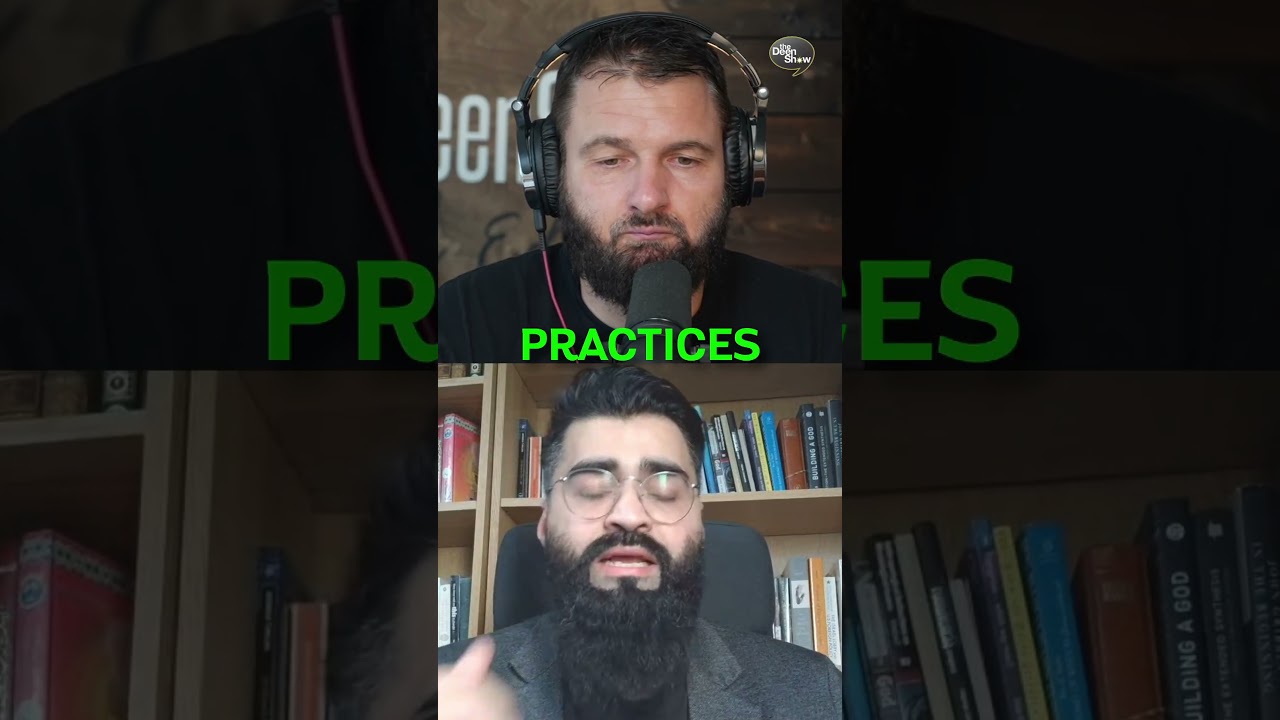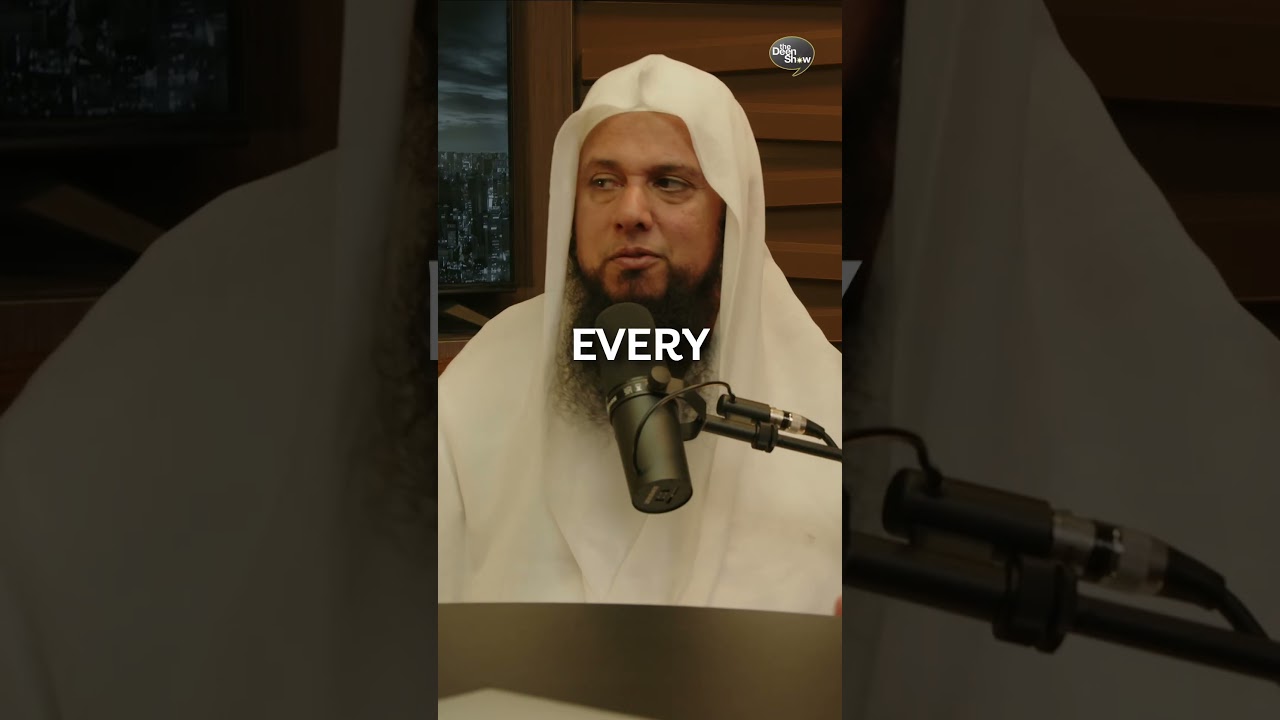
What compels a committed Christian Youth Minister — born and raised in the American South, steeped in scripture from childhood — to leave the faith of his upbringing and embrace Islam? For Yahya Evans, formerly known as Joshua Evans, the answer was not disillusionment, personal crisis, or outside pressure. It was the act of reading his own holy book with a genuinely unbiased, analytical mind. Shared in direct response to an anti-Islam video circulating online, Evans’s conversion story is a compelling reminder of one of Islam’s most enduring truths: that sincere, courageous inquiry — free from cultural conditioning and inherited loyalty — has a way of leading the honest heart to the straight path.
From Pulpit to Prayer Mat: How an Honest Reading of Scripture Led to Islam
Raised in Greenville, South Carolina in a deeply traditional Christian household, Evans rose to serve as a Christian Youth Minister — a role demanding not just personal conviction, but the capacity to defend that conviction publicly. It was this very commitment to truth that ultimately shook his inherited faith. A careful, open-minded study of the Bible revealed contradictions he could no longer overlook: irreconcilable tensions between the Old and New Testaments, a significant divergence between the direct teachings of Jesus and the later theological constructions of Paul, and elements of Roman paganism woven into doctrines that had come to define mainstream Christianity. He was also troubled by the portrayal of revered biblical prophets — Noah depicted as a drunkard, David as an adulterer who arranged a man’s murder — figures presented as divinely chosen guides, yet behaving worse, in his own words, than the common people around them. After years of ministry and honest reflection, Evans reached a conclusion both painful and liberating: the Bible in its current compiled form could not represent the preserved and complete guidance of God for mankind. He stepped away from Christianity not with bitterness, but with intellectual clarity and a sincere determination to find the truth.
- Contradictions between the Old and New Testaments pointed to a message that had been altered over time
- Paul’s theological teachings — including concepts traceable to Roman paganism — diverged significantly from what Jesus himself preached
- Biblical prophets portrayed with serious moral failings could not, to an honest analytical mind, represent God’s chosen models for humanity
- The “only begotten Son” verse was not present in the original biblical texts — Bible scholars themselves acknowledge it was inserted during the Roman Church’s compilation of the canon
- The Bible itself states that no man can bear the iniquities of another — logically dismantling the doctrine of atonement through crucifixion from within Christianity’s own scripture
“Why do you call me good? There is none good but one, and that is God.” — Jesus, as recorded in the Bible, redirecting every expression of praise away from himself and toward God alone — the testimony of a prophet, not a deity.
Islam’s Clear Answer: The Oneness of God, the True Role of Jesus, and the Logic of Tawhid
Once Evans stepped away from Christianity, the theological questions that had haunted him for years — Is Jesus God? Can God be a Trinity? Did Jesus die for our sins? — found rational, consistent, and deeply satisfying answers in Islam. God, by definition, is the Creator of all that exists: of time, of matter, of the very conditions of existence itself. He cannot, therefore, be contained within or subject to what He Himself created — making the incarnation logically impossible. Jesus (peace be upon him) never once claimed divinity in his own recorded words; he consistently redirected all praise toward “the Father which is in Heaven.” The Trinity — three in one — fails elementary logic: 1+1+1 equals three, not one, and the Quran addresses this with elegant precision, stating that had there been more than one God, conflict would have reigned across the heavens and the earth rather than the perfect, harmonious order we observe in creation. As for the claim that Jesus was the “Son of God” because he was born without a father, Evans offers a striking counter: Adam was created with neither mother nor father, directly by the hands of God — and yet this claim is never made for him. The phrase “son of God” appears throughout the Bible as an honourary expression of reverence, not literal divine sonship; Hebrews itself states that all who follow God have the right to be called sons of God. In Islam, Jesus (peace be upon him) is honoured as one of the mightiest of God’s messengers, born miraculously to the Virgin Maryam (peace be upon her), sent with signs and guidance to the Children of Israel, and himself a perfect embodiment of submission to God’s will — making him, in the truest and most complete sense of the word, a Muslim.
The Invitation Stands: Guidance Is Available to Every Sincere Seeker
“Open your heart and your mind. Take a step back and look analytically at what you have believed. Read with an open mind and open heart — and ask God for His guidance. Tell God you are earnestly and sincerely seeking His guidance, and He will guide you — because He is the only one who can guide.” — Yahya Evans
Yahya Evans’s journey from Christian ministry to Islam is not merely a personal biography — it is a living example of what the Quran affirms in Surah Al-Baqarah (2:112): that whoever submits their whole self to Allah and does good will receive their reward from their Lord, and shall have no fear, nor shall they grieve. The path he walked — rigorous study, honest self-examination, and sincere supplication to God for guidance — is open to every seeker, regardless of background, culture, or prior belief. Islam does not ask anyone to abandon reason; on the contrary, it demands that reason be engaged fully and honestly. The unity of God (Tawhid), the prophethood of Jesus and Muhammad (peace be upon them both), and the unbroken thread of divine revelation across every age are not conclusions reached through blind faith, but through the kind of earnest, evidence-driven inquiry that Evans’s story so powerfully exemplifies. If this account has stirred something in you — a question, a doubt, a longing for certainty — then take the advice of a man who once stood where you may be standing now: open the Book, read it with fresh eyes, and ask the only One who has ever truly been able to guide.