What does it take for a Filipino American raised on hip-hop culture and the relentless pursuit of worldly success to walk away from everything familiar, embrace Islam, and eventually find himself invited to the White House? For the special guest featured in this episode of The Deen Show, the answer begins with a soul that always knew — even in the midst of materialism and distraction — that it was created for something far greater. Born in the United States to Filipino parents hailing from the same nation as boxing legend Manny Pacquiao, his story is one of conscious searching: through personal loss, violence in his community, the philosophical weight of conscious hip-hop, and a restless spiritual hunger that no amount of worldly success could silence. Islam did not simply find him — he found it, through rigorous and honest comparative study of the world’s major faith traditions, and what he discovered changed everything: his identity, his family, his business, his friendships, and ultimately the lives of dozens of people around him.
From Comparative Study to Conviction: Why This Seeker Chose Islam
After stepping back from his upbringing in a predominantly Catholic Filipino-American household, this brother took the remarkable step of examining all the world’s major religions with an open and critical mind — Judaism, Christianity, Islam, Buddhism, Confucianism, Jainism, and more. What distinguished Islam was not cultural familiarity but intellectual and spiritual satisfaction: the uncompromising clarity of tawhid, the pure monotheism that declares one Creator, worshipped directly, without intermediaries or the divinisation of creation. He noted that Islam’s position on the Prophet Jesus (peace be upon him) — a mighty messenger, not a god — is not a rejection of the Abrahamic lineage but its most consistent expression. Moses, Abraham, and Jesus (peace be upon them all) were, in the Islamic framework, all Muslims: human beings who submitted their will entirely to their Lord. After his conversion, he was expelled from the family home by parents shaken by media-driven fears about Islam. Undeterred, he spent four years studying Islamic sciences in West Africa and the Middle East — immersed in learning, purifying his character, and returning home transformed. During his absence, an astonishing ripple had begun: his mother became Muslim, then his father, then his sister, his best friend, entire families in his community — all drawn, as he explains it, not by argument alone, but by witnessing a real and lasting change in the man they already knew.
- Tawhid above all: After comparing major world religions, Islam’s pure monotheism — one Creator, no intermediaries, no worship of creation — provided the intellectual and spiritual clarity he had always been searching for.
- The fitra (innate nature): Islam validated the deep-seated conviction he had carried all his life — that there is one supreme Creator — rather than asking him to abandon what he innately believed.
- Shared prophetic tradition: Learning that Moses, Abraham, and Jesus (peace be upon them) were all considered Muslims — in the sense of submission to God — removed the perceived conflict between Islam and his previous heritage.
- Character as dawah: His family initially rejected Islam due to media misrepresentation; it was witnessing his sustained moral transformation that ultimately guided them to the faith, years later.
- The Islamic middle path: Islam does not demand a choice between worldly excellence and spiritual devotion. He became a living proof of balance — entrepreneur, world traveller, man of principle — without compromising his deen.
“Islam was the most intellectually satisfying. The idea of one true Creator was something I could easily swallow — it made the most sense to me. And it was very easy to convert.”
Honouring a Mother, Meeting a President, and Living as a Muslim in the World
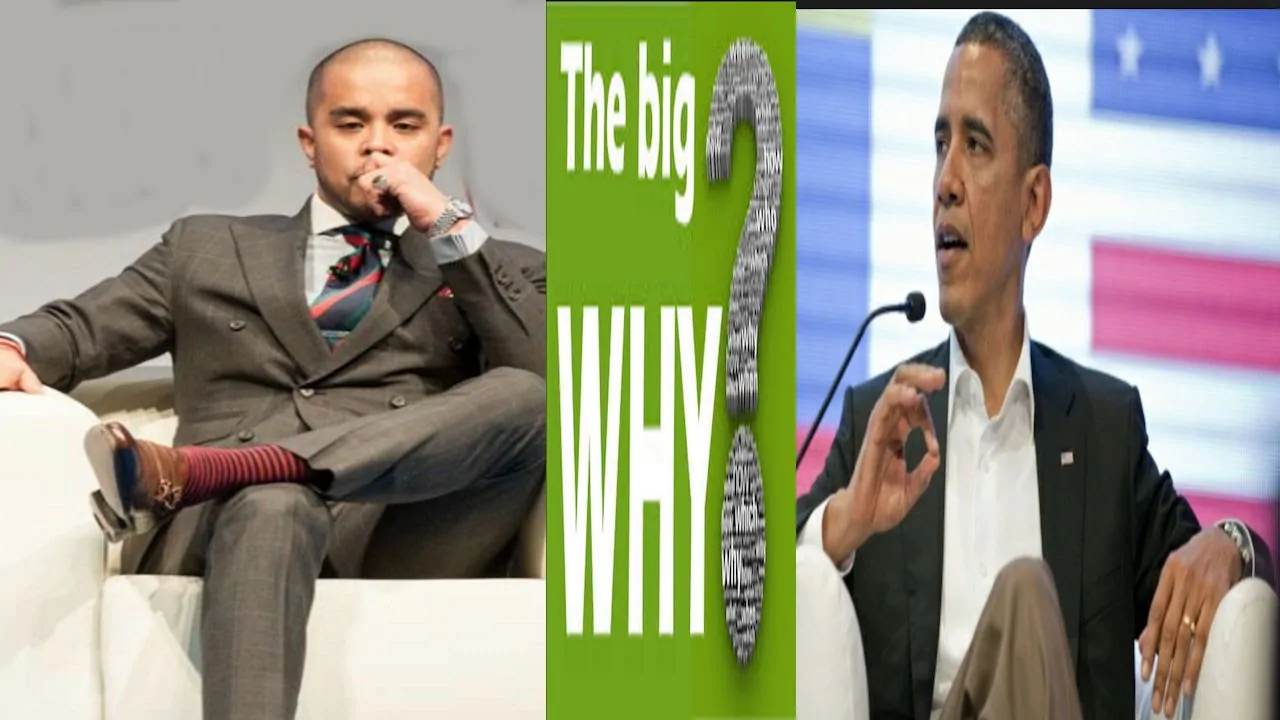
When the invitation to visit the White House arrived — bringing him face to face with President Barack Obama — the moment carried a significance far beyond the political. It was, in his own words, something he attended for his mother: the woman who had once expelled him from the family home over her fear of Islam and who, years later, had herself taken her shahada and embraced the very religion she had once despised. She was beside herself with joy, watching the son she remembered leaving to study in the desert walk into one of the most famous buildings in the world as a proud, grounded, and flourishing Muslim man. The White House visit became a symbol of something the episode explored at length: that Islam does not force a believer to choose between excellence in this world and closeness to their Lord. In business, in relationships, in every conversation on an airplane or at a restaurant, his faith permeated everything — not as a burden, but as a foundation. People who encountered him were drawn to the peace they observed in him, asking what had changed, how he had arrived at such stability and positivity. His answer was always the same: God knows your heart, God guided you here, so give your sincerest best — and leave the rest to Him. He spoke of true wealth not as something stored in bank accounts, but as wealth of mind, body, and soul — the kind of richness that Islam uniquely offers and that no material acquisition can replicate.
“In the deepest, darkest hour of the night — just ask your Creator for the best. Wealth of mind, wealth of body, wealth of soul: it doesn’t matter what material surrounds you. If you have that wealth, you’re good.”
The story of this Filipino American Muslim is, at its core, a story about the universal human search for meaning — the same search that stirs in the hearts of people in Manila, Los Angeles, West Africa, and everywhere in between. Every human being is born carrying the fitra, that innate recognition of the Creator placed within us long before the world had a chance to distract us from it. Islam does not ask a person to abandon their culture, their family, or their ambitions — it asks them to anchor all of those things in truth, in gratitude, and in sincere service to the One who gave them life. For anyone caught in the quiet desperation of a world that promises peace through material gain but rarely delivers it, this episode offers a compelling testimony: the deepest peace — the kind that outlasts trends, survives hardship, and transforms entire families — is not found in possessions or prestige. It is found in submission to the Creator, in the direct and unmediated connection between the human heart and the One who fashioned it. May Allah guide all sincere seekers — whatever their background, wherever they are watching from — to the light of Islam, just as He guided this remarkable brother from the streets of Southern California to the sands of West Africa and back again, carrying a peace that no worldly wealth could ever buy.