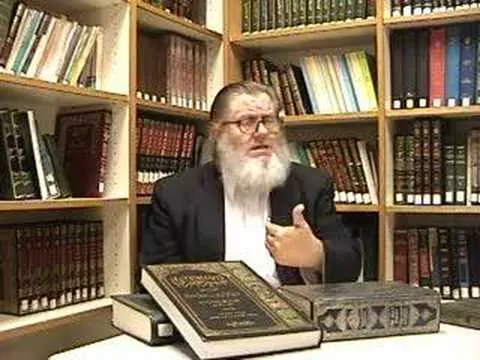
What happens when the people most committed to one faith — ordained ministers, Catholic priests, born-again Christians — encounter Islam and find themselves unable to turn away? This is not a fringe occurrence or an isolated curiosity. Across the world, men and women who dedicated their lives to preaching and practicing other religions have walked through the doors of Islam, often after years of sincere searching. The story shared in this episode of The Deen Show is one of the most remarkable: a Catholic priest, a Protestant music minister, and a born-again Christian wife — an entire household of devout non-Muslims — all embracing Islam on the same day, after a series of conversations with one quietly confident Egyptian Muslim neighbour.
The Question That Changed Everything: Proof and Faith in Islam
The turning point began not with a sermon or a debate, but with a challenge. When the narrator — raised in a household of ministry, music, and Christian devotion — tried to convince his Egyptian Muslim friend to convert to Christianity, he was met with a response that stopped him in his tracks. The Muslim said he would follow any religion that was better than his, but he needed proof. When the narrator countered that religion is based on faith, not proof, the Muslim replied that in Islam, there is both. That single distinction opened a door that could not be closed. The group began meeting night after night, discussing the Bible’s multiple competing versions — the Catholic priest held a Bible with 73 books, the Protestants had 66, with no original manuscript preserved anywhere — and then turning to the Muslim’s answer: one Quran, unchanged since revelation, preserved word-for-word in the hearts of over nine million living people worldwide. Father Peter Jacobs, a Catholic missionary with fourteen years of service in Latin America, asked to visit the mosque. He returned the second time wearing a white thobe and kufia, having taken his shahada that same day.
- Islam’s insistence on both proof and faith sets it apart from blind belief — this is what first compelled serious inquiry
- The Quran’s unbroken preservation — one text, one language, memorised by millions — stood in sharp contrast to the fragmented Biblical manuscript tradition
- Father Peter Jacobs, a 14-year Catholic missionary, embraced Islam after visiting the mosque — describing it as “a nice, quiet place where people lined up, prayed, and left”
- The absence of music in Islamic prayer, far from being a gap, prompted genuine reflection on the nature of worship itself
- The simultaneous conversion of an entire household — minister’s son, Catholic priest, and born-again Christian wife — speaks to Islam’s power to answer the deepest theological questions
“In Islam, we have proof and faith.” — The response of a Muslim neighbour that launched an entire household’s journey toward Islam, challenging the assumption that sincere belief requires abandoning reason.
A Prostration in the Country: Seeking Guidance with an Open Heart
After Father Peter returned as a new Muslim, the narrator found himself awake through the night, walking the country roads with his Egyptian friend, asking questions and receiving answers until dawn. When the Muslim went to pray Fajr, the narrator felt an overwhelming compulsion to act — not to perform a ritual he had studied, but to do what he had always known from the Bible itself: that the prophets fell on their faces before Almighty God. He found a piece of plywood behind his father’s house, faced east, and placed his forehead on the ground. He did not ask for a miracle. He did not ask for a sign. He asked only for guidance — with complete sincerity, with an open heart. When he raised his head, there were no angels, no rainbows, no music. But something had shifted internally. He saw himself clearly — his biases, his prejudices, his attitudes toward others — and understood that this was where the real work of faith begins. His wife, separately and without coordination, had arrived at the same conclusion that same night, declaring she wanted to become Muslim. Both took their shahada together.
“Oh God, if You’re there — guide me.” — A prayer of raw sincerity, prostrated toward the east, that marks the moment a lifelong Christian minister’s son surrendered his certainty and asked the Creator for truth on His terms.
The journey of priests and preachers entering Islam carries a profound lesson for every seeker, Muslim and non-Muslim alike: that Islam does not demand you abandon your intellect at the door of faith. It asks you to bring your questions, your doubts, your need for evidence — and then to act with sincerity when the answers come. The spirituality of Islam is not built on emotional performance, church choirs, or communal spectacle. It is built on direct connection — one servant, facing their Creator, with nothing between them. For those who have spent their lives preaching truth to others, the discovery that they had not yet found it themselves is a humbling reckoning. But Islam, in its mercy and clarity, offers exactly what every sincere heart is searching for: a path that unites proof with faith, simplicity with depth, and individual accountability with divine guidance. The only prerequisite is an honest question, asked with a willing heart.