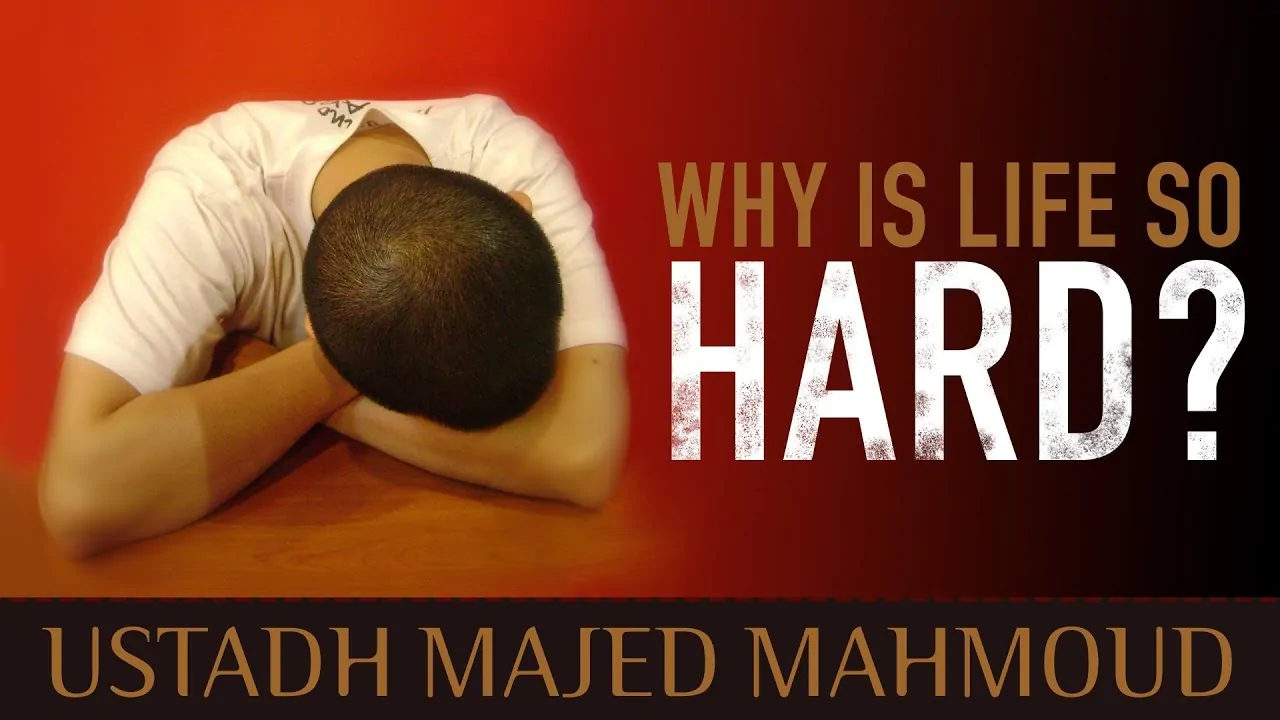
Every honest person has asked it at some point — why is life so hard? Why does illness, loss, financial strain, and heartbreak find us even when we sincerely try to live with faith and purpose? In this powerful reminder, Ustadh Majed Mahmoud dismantles the assumption that a meaningful life should come without difficulty, and reveals the profound Islamic wisdom behind hardship: tests are not a sign of abandonment — they are a sign of elevation. No doctor earns their credentials without passing the MCAT. No athlete makes the team without surviving tryouts. No one receives a driver’s licence without sitting a test. So why, then, would Allah (subḥānahu wa ta’āla) — the One who created the greatest reward in existence — hand Jannah to those who simply claimed belief, without ever being proven by the trials of life?
Faith Without a Test Is Not Faith — It Is a Claim
The Quran directly confronts our tendency to expect ease alongside belief. Allah (subḥānahu wa ta’āla) asks plainly: Do you think you will say “I believe” and not be tested? This rhetorical question is itself a mercy — it reframes every hardship not as divine neglect, but as divine engagement. The believers who came before us, the prophets, the companions, the righteous across every era, were shaken by sickness, poverty, and calamity. They were not abandoned; they were being refined, elevated, and prepared. This single shift in understanding transforms our entire relationship with difficulty in the dunya, and it is one of the most important spiritual realities in Islam for anyone seeking guidance through pain.
“Do you think you will enter Paradise just like that, and you will not face what the people in the past have faced? They faced sicknesses, poverty, and calamities — and they were shaken — out of tests and trials.” — Quranic reminder shared by Ustadh Majed Mahmoud
The Eternal Reward That Makes Every Trial Worth It
Ustadh Majed paints a vivid picture of what awaits the believer who endures with patience and sincerity — and the contrast with this world is staggering. In Jannah, there is no sadness, no depression, no sickness. Sweat becomes musk. Houses are built from bricks of gold and silver. Every beautiful scene surrounds you, and every pleasure is yours without effort or exhaustion. And yet, as breathtaking as all of that is, it remains secondary to the single greatest reward of all: seeing Allah (subḥānahu wa ta’āla). That vision — beholding your Lord — is described as the most beautiful experience a human soul could ever know, surpassing every pleasure of paradise combined. With that destination in clear view, the trials of this world find their proper size and proportion.
- Hardship is universal: Prophets, companions, and the most devout believers throughout history faced illness, poverty, and loss — trials are woven into the fabric of this life.
- Tests validate belief: Claiming faith without being tested is like claiming a degree without sitting the exam — sincerity is proven under pressure, not in comfort.
- Jannah surpasses all imagination: No sadness, no sickness, mansions of gold and silver, abundant food, eternal beauty — a complete, perfect existence.
- The ultimate reward is seeing Allah: The vision of Allah (subḥānahu wa ta’āla) is the pinnacle of paradise — every sacrifice in the dunya pales against this promise.
- Perspective is the weapon of the believer: When the destination is known, the journey — however hard — becomes purposeful and bearable.
“You will go to Jannah and enjoy the most beautiful thing in the world — the most beautiful thing you will ever experience — which is seeing Allah. And you think you will just get it just like that?” — Ustadh Majed Mahmoud
Life is hard because it is meant to be — not as punishment, but as preparation. Islam does not promise a pain-free existence; it promises that no pain is wasted, that every moment of sincere patience and submission to Allah (subḥānahu wa ta’āla) is witnessed, recorded, and rewarded beyond what we can imagine. The reminder from Ustadh Majed Mahmoud is ultimately a call to perspective — to look at our struggles as the price of admission to an eternal, perfect home, and to renew our faith knowing that the One who set the test also prepared the reward. The next time life feels overwhelming, return to this question: would you hand someone the most magnificent prize in all of existence without first knowing whether they truly meant it when they said they believed?