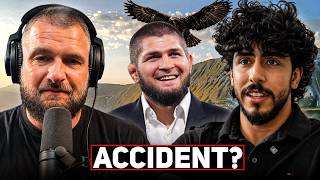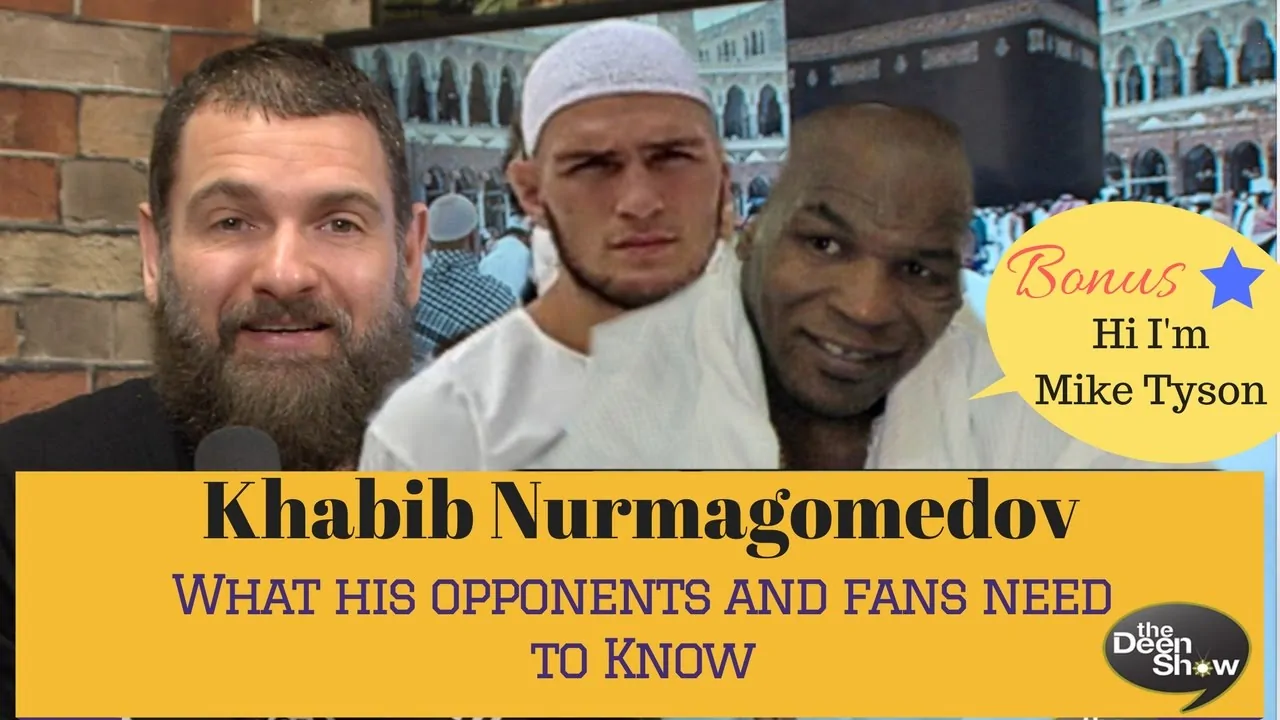
When Khabib Nurmagomedov steps into the UFC octagon, fans from every background witness something far deeper than world-class grappling. Here is an undefeated fighter from the Russian Republic of Dagestan who, the moment the referee signals victory, drops to his knees, places his forehead on the canvas, and raises a single finger to the sky — not as a performance for the crowd, but as a heartfelt act of devotion rooted in Islamic faith. For millions of fans who may never have engaged with Islam, or who have only encountered it through sensationalist headlines, Khabib offers a rare, unscripted window into a spiritual practice built on humility, gratitude, and conscious submission to the Creator of the heavens and the earth — and once you understand what those gestures mean, you will never watch him fight the same way again.
What Khabib’s Post-Fight Rituals Actually Mean
Every gesture Khabib makes after a victory carries specific spiritual significance within Islam — and far from being foreign, much of what he does connects to traditions people of many faiths will recognise. When he raises a single finger upward, he is directing all credit and all glory to the One who gave him his extraordinary physical gifts. When he prostrates — pressing his face to the ground — he is performing sujood, the same act recorded in the Gospel of Matthew (26:39), where Jesus “went a little further and fell on his face and prayed to God.” Muslims hold deep reverence and love for Jesus as one of the mightiest messengers God ever sent, alongside Abraham, Moses, and the final prophet, Muhammad (peace be upon them all). The two phrases heard from Khabib after his bouts carry equally profound meaning, and none of it is what the islamophobia machine would have you believe:
- Alhamdulillah — “All praise belongs to God.” A complete, humble acknowledgement that every talent, every blessing, every breath is a gift from the Creator — not something earned by ego alone.
- Allahu Akbar — “God is greater.” Greater than money, fame, championship belts, and every worldly ambition. It is not a war cry; it is the Islamic equivalent of “Hallelujah” — an expression of awe, gratitude, and perspective.
- The prostration (Sujood) — the physical posture of placing one’s forehead on the ground before God, mirroring the prayer practice described across the Abrahamic tradition, and performed by 1.7 billion Muslims worldwide every single day.
- Hajj pilgrimage — Khabib has also performed Hajj, the once-in-a-lifetime journey to the Kaaba in Mecca — a house of worship first built by Abraham to honour the One God — which Islam calls every physically and financially able Muslim to undertake at least once.
- The Five Pillars of Islam — testimony of faith (Shahada), five daily prayers (Salah), giving to the poor (Zakat), fasting during Ramadan (Sawm), and the Hajj pilgrimage — these are the framework within which Khabib’s entire life, inside and outside the octagon, is anchored.
“Arrogance will get you lost. You cannot go wrong with keeping it humble — keeping it humble, always thanking the One who gave you the abilities to win that championship, to get up in the morning, to breathe this air.” — TheDeenShow
Islam Beyond the Headlines: 1.7 Billion People, One Misunderstood Faith
One of the most important things Khabib’s global visibility achieves is placing a corrective lens on a faith that has been systematically misrepresented for decades. According to a Time magazine article from April 1979, over 60,000 books were written against Islam in a single century, and the Islamophobia industry today generates an estimated $250 million annually through fear-mongering and deliberate distortion. When violent fringe groups — representing approximately 0.006% of the global Muslim population — are used to define a religion practised by over 1.7 billion human beings, the dishonesty is staggering. It would be the equivalent of judging Christianity or secularism by the actions of the KKK or other extremist factions — a comparison no fair-minded person would accept. Oxford University researchers have concluded that belief in a Creator is not learned behaviour — it is innate, built into human nature from birth. Islam, in this light, is not an alien imposition; it is an invitation to honour what is already within us. The guidance it offers — pray five times daily not because God needs it, but because we need the recharge of heart and spirit — produces the peace, purpose, and inner stability that no amount of money or fame can manufacture. And when ordinary people have taken the time to look past the manufactured fear and actually sit with Muslims, enter a mosque, and engage honestly, the result is almost always the same.
“When I took a minute to actually talk to some of the Muslim people, I found out they are just like me — and I was uneducated on their religion. When I sat down and listened to them, and actually entered their mosque and watched some of their prayers, it was a beautiful thing.” — John Dutcher, former critic of Islam who changed his perspective through direct human connection
Khabib Nurmagomedov’s career has accomplished something no advertising campaign could replicate: it has placed Islamic faith, practice, and character in front of a global sporting audience — raw, unedited, and undeniable — in the arena itself. The prostration, the praise, the pilgrimage, the humility — none of it is performance. It is the natural overflow of a life consciously oriented toward the Creator, a life shaped by the understanding that this world is a test and that we will each be accountable for how we lived it. Islam is not the root of the world’s violence — it is the antidote to the ego, the greed, and the arrogance that are. The faith that guides Khabib’s every bow and every word of thanks is the same faith that calls its 1.7 billion adherents to seek peace with God, peace within themselves, and peace with all of humanity. If his story has stirred curiosity in you, that curiosity is worth honouring — seek out Muslims in your community, visit a mosque, ask sincere questions, and let the human connection do what propaganda never can. You may find, as so many others have, that what you discover is not something foreign or frightening, but something deeply, recognisably true.