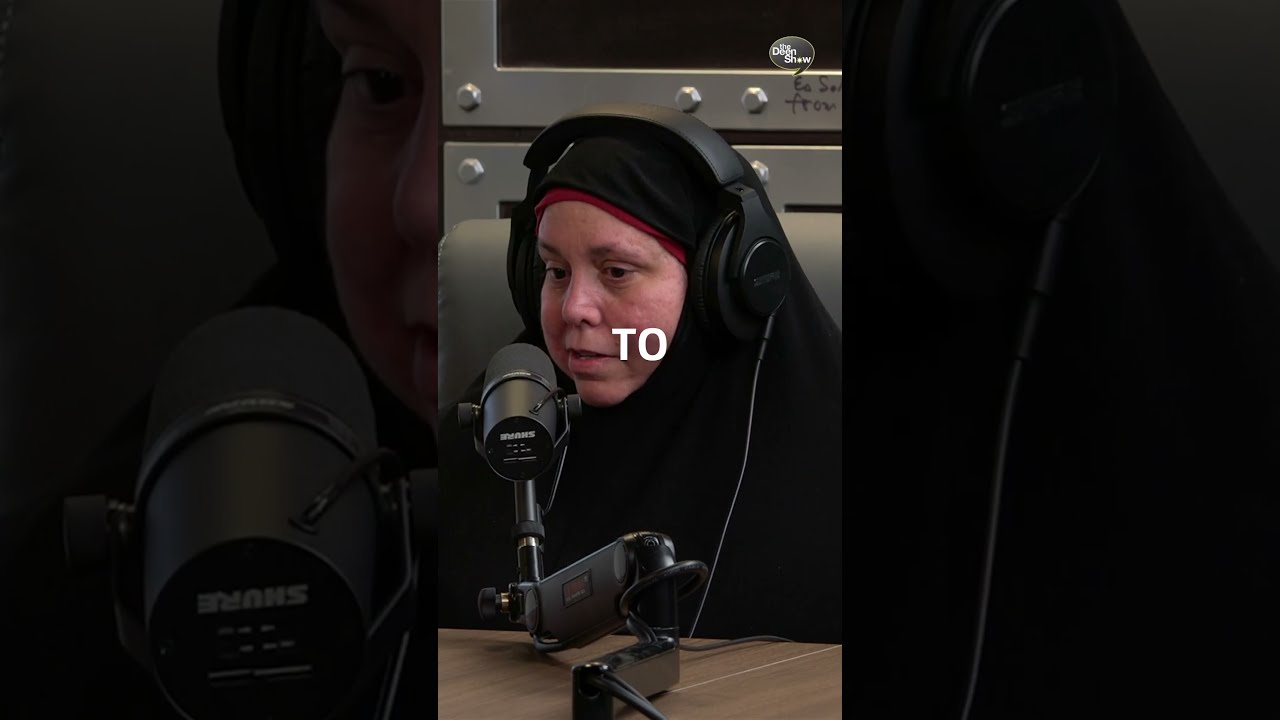
Every thinking person, at some point, confronts the question that cuts to the heart of all religion: how does a flawed human being find forgiveness, meaning, and ultimately — salvation? While various faith traditions offer complex and sometimes contradictory answers, Islam presents a concept of salvation that is refreshingly direct, theologically coherent, and deeply personal. In a conversation with Dr. Maranum, president of Ask A Muslim, the essence of this Islamic worldview is unpacked with clarity: the path to God requires no intermediary, no substitutionary sacrifice, and no theological loophole — only sincere turning to the One who created you.
Salvation in Islam: A Direct and Unmediated Relationship with the Creator
At the core of Islamic faith is the understanding that every human soul stands in a direct relationship with Allah — the Creator — with no priest, saint, or sacrificial figure standing between them. If a person sins, they turn directly to God and ask for forgiveness; God, being Most Merciful and Most Gracious, forgives. This is not a new concept invented by Islam, but rather the same guidance delivered through every prophet — from Adam, Noah, Abraham, and Moses to Jesus and finally Muhammad, peace be upon them all. Crucially, Islam also affirms a principle found even in the Old Testament: no soul can bear the burden of another’s sin. Deuteronomy 24:16 states plainly that a son shall not be punished for the sins of his father, nor a father for the sins of his son — each person is accountable only for themselves. In Islam, this principle of individual moral accountability is foundational, and it renders the concept of vicarious atonement — the idea that one person’s death erases another’s sins — both scripturally unsupported and logically unnecessary.
- No intermediaries needed: In Islam, forgiveness is sought directly from Allah, who is All-Hearing and always accessible.
- Individual accountability: Each soul is responsible for its own deeds — no one inherits the guilt of another, nor can anyone else’s sacrifice wipe your slate clean.
- Consistent with earlier scriptures: The principle that one soul cannot bear another’s sin appears in the Torah (Deuteronomy 24:16), affirming Islam’s continuity with the original Abrahamic message.
- God’s mercy is unconditional: A sincere, heartfelt turning to God in repentance is sufficient — no ritual, institution, or third party is required.
- Universal message: All prophets taught submission to the One God alone — the very definition of the word “Muslim” (one who submits to the Creator).
“If I am weak, I go to the most powerful — to the One who is All-Hearing, who can answer my calls at any time. Why would I go through any other loopholes to gain salvation? That is the basic concept of salvation in Islam.” — Dr. Maranum
Sacrifice, Piety, and the Theological Problem with Vicarious Atonement
The concept of sacrifice in Islam is real and meaningful — Muslims worldwide sacrifice animals during the annual Hajj pilgrimage as an act of worship and gratitude — but the Quran is explicit about what this act actually accomplishes. As Allah states in Surah Al-Hajj (22:37): “It is neither their meat nor their blood that reaches Allah, but it is your piety that reaches Him.” Sacrifice, in Islam, is an outward expression of inward devotion — it is the fear of God, the taqwa, that carries spiritual weight. This stands in stark theological contrast to the doctrine of atonement through crucifixion, which raises profound questions: by definition, “sacrifice” means giving up something in exchange for something else — but an all-powerful, all-sufficient God has no need to give anything up, nor any debt to settle. The question Dr. Maranum poses is precise: who needs to sacrifice for whom? Furthermore, even within the Gospel of Matthew, Jesus (peace be upon him) is depicted crying out, “My God, my God, why have you forsaken me?” — a plea that aligns with what Muslims believe actually occurred: that Jesus prayed to God to be saved from crucifixion, and God answered his prayer. Neither the prophets before Jesus foretold a God who would incarnate to be killed, nor did Jesus himself ever explicitly instruct his followers that belief in his death for their sins was the condition for eternal salvation. The Quran, unlike earlier scriptures, was preserved unchanged — memorized word-for-word by millions across fourteen centuries, from Indonesia to Morocco, in a single unaltered version — and it confirms that Jesus was a noble prophet and servant of God who submitted wholly to his Creator, just as every Muslim strives to do today.
“Neither the meat nor the blood will reach God — what reaches Him is your piety, your fear of God, your self-righteousness. That is what God takes from us.” — Quran 22:37, as cited in the discussion
The Islamic understanding of salvation is not a theological abstraction — it is a living, breathing spirituality that calls every human being to accountability, humility, and a direct and honest relationship with their Creator. It asks nothing more than sincere faith, righteous action, and the courage to turn to God when you fall short. Every prophet — Moses, Abraham, Jesus, Muhammad, peace be upon them all — modeled this same submission, this same Islam. Today, Muslims who dress modestly, who grow beards, who prostrate in prayer, who honour Jesus as a prophet and servant of God, are following in that same unbroken prophetic tradition. If the question of salvation weighs on your heart, Islam’s answer is remarkably clear: there is One God, He created you, He knows you, He hears you — and the door of His mercy is always open to those who knock.