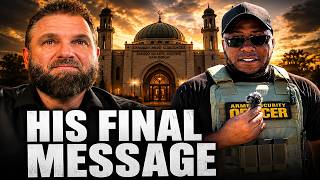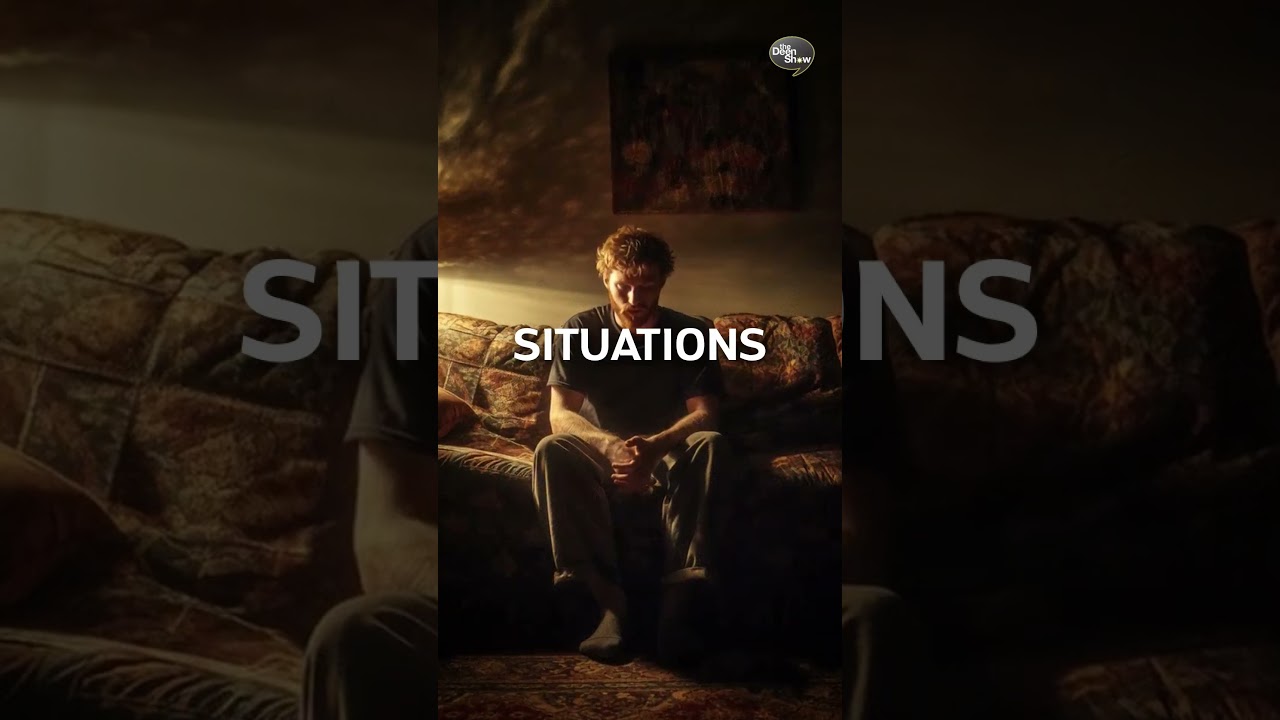
Imagine receiving a final message from a dying brother — a man lying in a hospital bed, breathing his last, his heart filled with a single word: regret. A Muslim doctor shared this very reality during a profound Ramadan lecture, reading aloud a farewell letter from a patient named Muhammad, a convert who had lived what most would consider an ordinary Muslim life. He prayed, he fasted in Ramadan, he performed Hajj once. Yet as pancreatic cancer consumed his final days, Brother Muhammad found himself not at peace, but crushed beneath the weight of everything he had postponed — the Quran he never memorised, the mother he never embraced, the children he never raised upon Islam, and the one more Ramadan he would never see. His final message was not a complaint but a warning: a last lecture from a man who had run out of time, addressed to every living Muslim who still has some.
The Crushing Weight of Deathbed Regret
As a physician who has sat at the bedsides of the dying — Muslim and non-Muslim alike — the speaker bore witness to a pattern that cannot be dismissed: every single patient, without exception, departs this world filled with regret. Islam and faith teach us that this life is merely the third of five stages of our existence — preceded by Allah’s divine knowledge of us and our time in the womb, and followed by the grave and the eternal Hereafter. Yet we live as though this world is all there is. The Quran states plainly: “Verily, mankind is ever a witness over himself, even if he offers his excuses” — our own souls testify against us. The medical reality is equally sobering: one in four people will die of cancer; one in three will die of heart disease; and statistically, one in two of us will never have the physical capacity to utter the Shahadah at death — silenced by sedation, struck down without warning, or too weak to form the words. The Prophet ﷺ told his Ummah that they would live sixty to seventy years — every decade that passes is a portion of the currency with which we must purchase our Hereafter, spent or squandered.
- Regret is the universal emotion at death — regardless of faith, wealth, or worldly status, every dying person wishes they had lived differently.
- Death is never physically peaceful — medical testimony confirms the prophetic hadith: the sakarat al-mawt (pangs of death) are real, painful, and inescapable.
- Half of us may never say the Shahadah in our final moments — through sudden cardiac arrest, heavy sedation, or unconsciousness as death approaches.
- The love of this world and love of the Hereafter sit like two scales in the heart — when one rises, the other falls; they cannot coexist in equal measure.
- A simple test reveals our true priorities — the wise Imam Sufyan al-Thawri observed: notice how elaborately you cook when a wealthy guest visits compared to a poor one. That difference is your love of the Dunya, laid bare.
- The grave is our first night in the next life — the Prophet ﷺ swore by Allah that every soul will be tested in the grave with a trial comparable to the fitna of the Dajjal, beginning on the very first night.
“Verily death has its trials, verily death has its pain — do not ever think that you will have an easy death.”
— Prophet Muhammad ﷺ (authentic hadith)
If This Is Your Last Ramadan — What Will You Leave Behind?
The question this sermon places before every believer is not theoretical — it is existential: what if Allah does not grant you another Ramadan? Consider that Abu Bakr al-Siddiq, who was explicitly promised Jannah by the Prophet ﷺ himself, used to wish he were a twig of a tree — cut off, eaten, and gone — so overwhelming was his fear of standing before his Lord. Aisha (may Allah be pleased with her) was reported to have spent hours after Fajr weeping over a single Quranic verse about the Fire, still in tears when the narrator returned before Dhuhr. These were the greatest souls to walk this earth after the prophets, and yet they trembled. Among us, none can truthfully say with absolute certainty that Allah is pleased with them — and in our own hearts, we know this. The greatest of the Sahabah asked Allah every night: “Oh Allah, I know You have created people for Jannah and for Jahannam — tell me, which group am I from?” That question is the beginning of real spiritual guidance, real taqwa, real purpose. It is Brother Muhammad’s dying words, however, that carry the most urgent reminder for our age of distraction and spiritual complacency.
“By Allah, all I will have done is just added another grave on this Earth. I am your brother — your Muslim brother — Muhammad.”
— A dying convert’s final letter, read during a Ramadan lecture
Ramadan is the season in which the gates of mercy are flung wide open, the devils are chained, and every deed of worship is multiplied beyond reckoning — yet it passes year after year while the Dunya quietly reclaims our hearts. The pious predecessors warned: “Beware of the magic of this world, for it separates a slave from his Lord just as the magic of Harut and Marut separated a husband from his wife.” The antidote is not perfection — none of us will leave this world having done enough — but it is urgency, sincerity, and an absolute refusal to postpone what can be done today. Memorise even one more verse of the Quran. Pray one more prayer on time, with presence and stillness. Mend one broken relationship. Give charity that costs you something real. Teach your children one name of Allah before they go to sleep tonight. Do not wait for a terminal diagnosis to feel the gravity of your mortality — for by then, the window of action may have already closed. The most powerful legacy any of us can leave is not wealth divided among heirs, but children who know their Lord, communities who remember our du’a, and a record of deeds that continues to rise on our behalf long after the grave has received us. Brother Muhammad’s letter was his final gift to the living — a reminder, raw and irreversible, that the time to act upon our faith is not tomorrow, not after Ramadan, not when life settles down. It is now, in these remaining days, while Allah has still granted us breath and the sacred gift of another chance.