
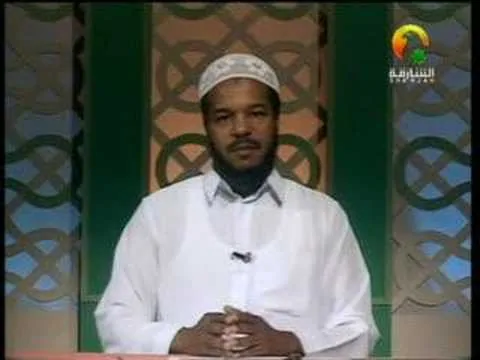
Islam is the faith of more than a billion people — nearly a quarter of all humanity — yet it remains among the most misrepresented religions in the world today. Dr. Bilal Phillips, Canadian Islamic scholar and host of the Understanding Islam series, opens with a clear-eyed diagnosis: this misunderstanding has deep historical roots and is perpetuated from both outside and within the Muslim community. His invitation is disarming in its simplicity — set aside your emotions, go to the sources, and judge with the God-given intelligence you were created with. For those willing to accept that challenge, what they will find is not a religion of extremism or inequality, but a faith of profound justice, spiritual clarity, and timeless guidance.
The Historical Roots of Islam’s Misrepresentation
Dr. Phillips traces the misunderstanding of Islam to two distinct causes. Externally, a deliberate campaign of disinformation emerged during the Crusades, when European church leaders — threatened by Islam’s remarkable spread across Spain, where the majority of the population embraced the faith freely and without coercion for over 700 years — began circulating false narratives. Those distortions were handed down through generations in books, magazines, and media, and continue to shape global perception to this day. Internally, at various points in history, Muslims themselves have strayed from Islam’s authentic teachings and projected a distorted image to the world — one too often associated with violence, extremism, and intolerance. Dr. Phillips is unambiguous: neither image reflects true Islam. The purpose of this series is to strip away those layers of distortion, go directly to the Quran and authentic Sunnah, and examine what Islam actually teaches — presenting a rational, evidence-based case for why it is the true religion ordained by God for all of mankind.
- External misinformation — centuries of anti-Islamic propaganda, beginning with the Crusades, shaped European and later global perception of Muslims and their faith
- Spain under Islam — for over 700 years, the vast majority of Spain’s population were never forced into Islam; conversion was largely voluntary, which is precisely why the church feared the faith’s appeal
- Internal failures — when Muslims depart from authentic Islamic teachings, they inadvertently confirm false stereotypes rather than dispelling them
- Primary sources matter — true understanding of Islam requires engaging with the Quran and hadith directly, not relying on cultural portrayals or media representations
- Reason as a tool — God gave humanity intelligence to investigate religion rationally; we will be held accountable for the choices we make, not merely for the family we were born into
“If you want to find out the truth about something, you have to look at it unemotionally — put aside your emotions, because emotions blind us to the realities of things. Look at the information practically, and then judge it in the light of your intelligence.” — Dr. Bilal Phillips, Understanding Islam
Justice, Not Equality: Correcting Islam’s Most Misunderstood Principle
Among the most persistent misconceptions about Islam is the claim that it treats men and women unequally — and therefore unjustly. The scholarly response to this charge requires a critical distinction: Islam is not the religion of equality, but the religion of justice. As Shaykh Ibn ‘Uthaymeen (may Allah have mercy on him) explains, these terms are not interchangeable. Equality demands that all parties be treated identically regardless of their nature, role, or circumstance; justice means giving each person what they are rightfully owed according to who they actually are. The Quran never commands equality — in fact, it repeatedly denies it as a universal operating principle: “Say: Are those who know equal to those who know not?” [al-Zumar 39:9]. The differences between men and women in Islamic law — in household leadership (qiwamah), inheritance, testimony, and dress — are expressions of divine wisdom, not arbitrary discrimination. A man who bears the greater financial obligation receives a larger share of inheritance; a woman whose entire body is considered awrah is commanded to dress accordingly. These distinctions reflect real, meaningful differences in biology, responsibility, and spiritual role. Yet in the core acts of worship, both men and women stand as equals before Allah — they perform wudu, ghusl, prayer, fasting, Zakat, and Hajj on the same terms — as the Prophet ﷺ affirmed: “Women are the twin halves of men.”
- Justice (‘adl) is the Quranic command — “Verily, Allah enjoins Al-‘Adl (justice)” [al-Nahl 16:90], not universal sameness regardless of circumstance
- Qiwamah — men’s leadership responsibility in the household is inseparable from their legal obligation to financially provide and protect
- Inheritance — a son’s double share corresponds to his duty to financially support wife, children, and family; a daughter keeps her entire inheritance for herself with no financial obligation
- Equal in worship — women pray, fast, give Zakat, and perform Hajj on equal spiritual footing with men; the acts of devotion that draw a believer close to Allah make no distinction
- Dress distinctions reflect reality — the modesty rulings for men and women differ because the nature of temptation differs; the law reflects that distinction with precision and wisdom
- Complementarity, not hierarchy — “The male is not like the female” [Aal ‘Imran 3:36] is not a statement of superiority but the honest foundation of a system built on human nature as Allah created it
“Those who say that Islam is the religion of equality are lying against Islam. Rather, Islam is the religion of justice — which means treating equally those who are equal and differentiating between those who are different.” — Shaykh Ibn ‘Uthaymeen, Sharh al-‘Aqeedah al-Waasitah
An Open Invitation: Investigating Islam on Its Own Terms
Islam does not ask for blind faith — it presents a case and invites scrutiny. Dr. Phillips closes with a challenge that is also an act of mercy: approach the evidence with an open mind, evaluate it with reason, and follow where it leads. God, in His infinite justice, will not hold people accountable for the family they were born into, but for the choices they make with the faculties He gave them. Every religion claims to be the truth; what distinguishes Islam is that it welcomes examination, because its evidence is not weakened by inquiry but strengthened by it. From the miraculous coherence of the Quran and the rational architecture of Islamic law, to the inner consistency of a spirituality that has guided over a billion souls across every culture and century, Islam’s claim to be the timeless, universal religion of God rewards sincere investigation. As Allah reminds us: “Should not He Who has created know? And He is the Most Kind and Courteous, All-Aware of everything.” [al-Mulk 67:14]. For anyone seeking clarity in a world of noise — seeking a spirituality grounded in truth, a guidance rooted in wisdom, and a faith that speaks to both the intellect and the heart — the invitation stands: come to Islam with an open mind, set aside what you think you already know, go to the sources, and let the evidence speak for itself.