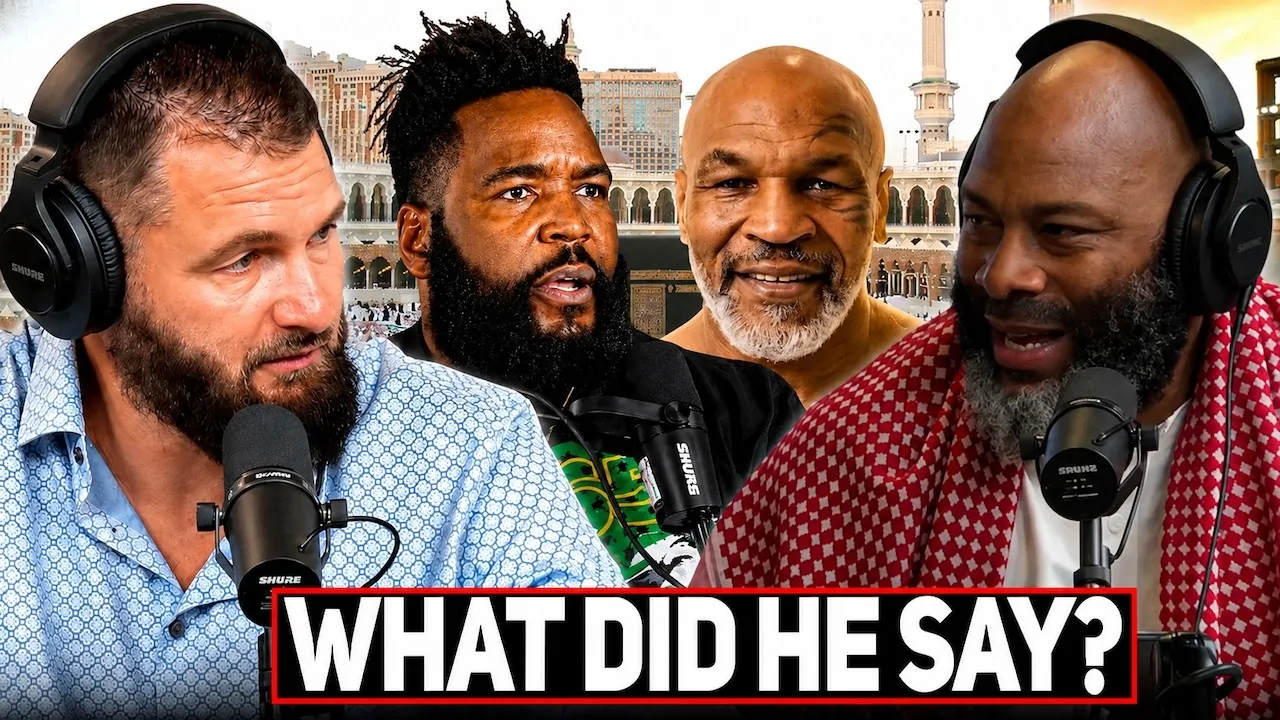
When prominent voices publicly challenge Islam — whether it is Dr. Umar Johnson, the pan-Africanist intellectual who declared he left the faith because he felt he was “practicing Arabism, not Islam,” or a global icon like Mike Tyson crediting “the universe” for his greatest blessings — the Muslim community needs grounded, compassionate, and intellectually honest responses. In TheDeenShow Episode 1186, host Eddie sits down with Dr. Zaki, a medical doctor who accepted Islam from a Christian background over 30 years ago, to address both of these challenges with clarity and wisdom rooted in faith. What emerges is a profound conversation about the universal nature of Islam, the true identity of Allah, and why every human soul — regardless of race, culture, or celebrity status — is inevitably on a journey back to its Creator.
Islam Is Universal, Not Arab: A Clear Response to the “Arabism” Critique
Dr. Umar Johnson’s viral critique — that American Muslims are “practicing Arabism, not Islam” and that Islamic communities ignored Black identity, culture, and struggle in favour of Arab cultural conformity — is a criticism Dr. Zaki takes seriously and does not dismiss. He acknowledges that for reverts, especially African-Americans, navigating a faith whose primary scripture is in Arabic while encountering culturally conditioned Muslim communities can feel alienating. But he is equally clear that this is a confusion of culture with creed. Islam’s guidance on dress is simply modesty — not thobes or kufis specifically. Its dietary laws govern what is halal and permissible — not what cuisine to eat. A Muslim physician in America can wear a suit to the clinic, train in sweatsuits, and eat from any national cuisine on earth, provided it meets Islamic principles. The strongest rebuttal, Dr. Zaki reminds us, is Hajj itself — the annual gathering of millions from every nationality, ethnicity, and language on the planet, standing shoulder to shoulder before Allah. Islam is not just the only faith that speaks to racism; it is, in Dr. Zaki’s words, the only system in human history to dismantle racism at its very root and core.
- Islam’s dress code is modesty, not Arab fashion — Muslims worldwide dress according to their own cultural styles within Islamic guidelines of modesty and cleanliness.
- Halal is about permissibility, not cuisine — biryani, jollof rice, or any other dish can be halal; the Islamic faith does not mandate Arab food.
- Hajj is the living proof of Islam’s universality — no gathering on earth approaches the racial and cultural diversity assembled in Makkah each year in worship of one God.
- The Prophet Muhammad ﷺ eradicated racism at its root — his final sermon declared no Arab has superiority over a non-Arab except through taqwa, God-consciousness.
- Legitimate criticism targets Muslim behaviour, not Islam itself — the faith is preserved and complete; its followers are imperfect, and reverts deserve patience, not judgment.
- The Quran calls every Muslim to a direct relationship with Allah — unlike Christianity as commonly practiced, there is no intermediary between the believer and God Almighty in Islam.
“Our purpose is to get to know who Allah is so we can worship Him, because we will inevitably meet with Him. We all belong to Him — that is where we are from, and that is where we are going back to.” — Dr. Zaki
Mike Tyson, the Universe, and the Uncompromising Clarity of Islamic Monotheism
In a widely circulated clip, Mike Tyson describes how his former coach told him he was “summoned” through the universe — that if you sincerely ask the universe for what you want, you receive it. Dr. Zaki’s response, which mirrors the host’s own immediate instinct, is gentle but precise: this is what happens when human beings “dance around Allah.” The universe is not a conscious entity; it cannot hear, respond, or summon. It is a creation — and a creation, no matter how vast, magnificent, or awe-inspiring, cannot be the object of worship or supplication. This is the distinction that Islam draws with crystal clarity: Allah created the universe, and there is a categorical, unbridgeable difference between the Creator and the created. The same principle applies equally to artificial intelligence, to celebrity, to any force that modern society attributes divine-like qualities to — and it applies to the well-intentioned but imprecise spiritual language increasingly common among public figures who sense the greatness of God but stop short of naming Him. Dr. Zaki notes that even the most irreligious person instinctively cries out to God when a tornado approaches or a boat begins to sink — because the fitrah, the innate human disposition toward recognising a supreme Creator, is hardwired into every soul. Mike Tyson has been seen praying alongside practicing brothers, and both Dr. Zaki and the host express genuine warmth and hope for him, recognising that righteous companionship and a return to studying the names and attributes of Allah is the most effective path back to the faith he once embraced.
“The same way you cannot say Allah the Creator is Jesus — you cannot say Allah the Creator is the universe. No. Allah created the universe. Very simple. Very basic.” — Dr. Zaki
Every thread in this conversation — whether addressing pan-Africanist critiques, Hollywood spirituality, the comparison between Islam and Christianity, or the purpose of human existence — returns to the same foundational truth: one cannot worship Allah without first knowing Him. Islam is unique among world faiths in answering the most fundamental human questions with evidence, precision, and certainty. Who is God? What are His names? Why did He create us? For what are we accountable? The Quran — preserved in its original form, a linguistic miracle that has stood an open challenge to humanity for over fourteen centuries — is Allah speaking directly to every human being, in every era, across every culture. Dr. Zaki’s thirty years as a Muslim, a physician, and a revert from a loosely Christian background are a living testimony that Islam does not ask anyone to abandon their identity — it invites them to discover the deepest and most enduring one they possess. Whether you are a Black intellectual wrestling with questions of cultural justice, a former heavyweight champion navigating spiritual longing, or simply someone asking why you are here, the answer in Islam is the same: you were created by Allah, guided by the final Prophet Muhammad ﷺ, and you are, inevitably, on your way home to meet your Lord.