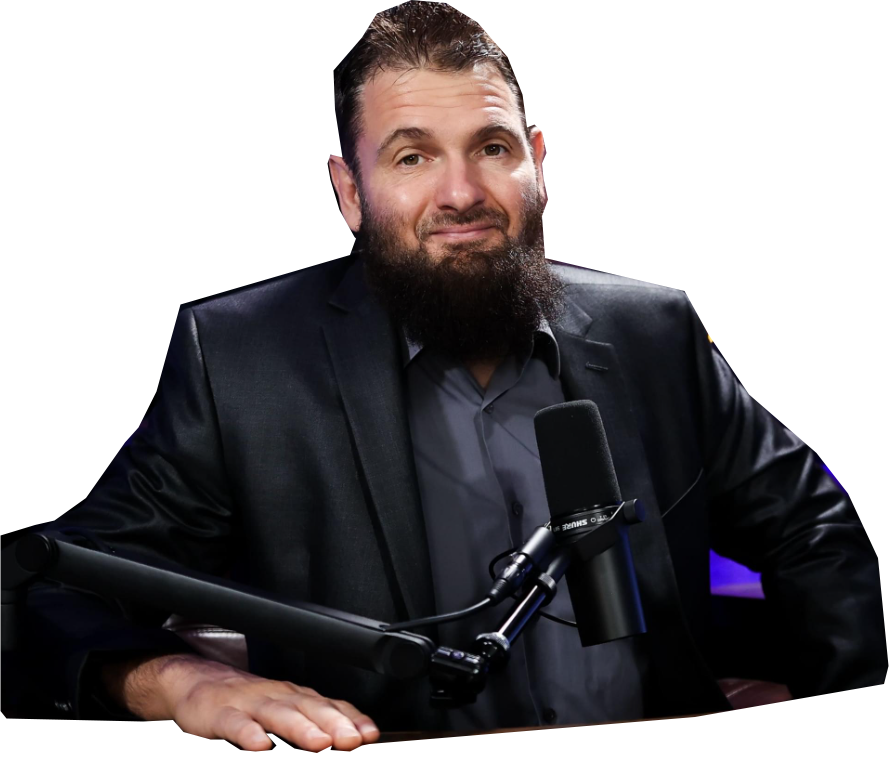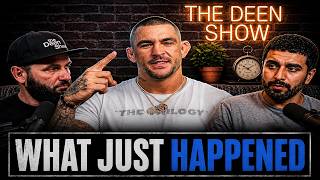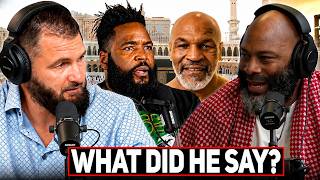
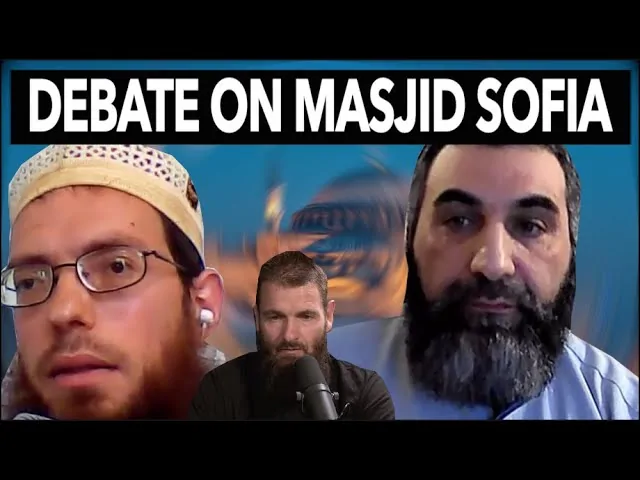
When Turkey’s secular government announced the reconversion of the Hagia Sophia from a museum back into a functioning mosque in 2020, the Muslim world responded with a surge of emotion — joy, pride, and a sense that something historic had been reclaimed. But The Deen Show brought together two voices to interrogate what lay beneath that emotion: Imam Issa Wood, a scholar grounded in Quranic guidance and prophetic tradition, and Dr. Steph, a historian with personal roots in the Greek Orthodox world. Their conversation moved far beyond the surface of a building’s designation, opening into a searching examination of geopolitical power, Islamic principles of alliance, the role of the Dajjal in contemporary world events, and what it truly means to exercise faith-driven discernment in an age of manipulation and misinformation.
Turkey, NATO, and the Limits of Political Islam
Imam Issa Wood was careful to establish his spiritual position clearly: no Muslim of sound faith could be anything but grateful when the name of Allah (SWT) is elevated in the world and places of prayer are opened. That genuine joy, however, did not prevent him from pressing a harder question — one rooted directly in Islamic guidance. Turkey is not merely a Muslim-majority country; it is a full member of NATO, the Western military alliance that has, in Imam Issa Wood’s assessment, done more to destabilize and overthrow Muslim-majority nations than any other modern geopolitical force, with documented involvement in Libya, Syria, Iraq, and Afghanistan. A government whose economy runs on the petro-dollar fiat system — controlled by the very financial architecture that NATO protects — does not make a decision as politically explosive as the Hagia Sophia conversion without implicit permission from its allies. Dr. Steph, approaching the matter with a historian’s precision, largely confirmed this read: Turkey’s state was built on secular foundations by Mustafa Kemal Ataturk in 1923, and its current government, whatever its religious optics, remains a secular construct. His own time in Istanbul offered an uncomfortable data point — the Blue Mosque, steps from the Hagia Sophia, could barely fill a single row at Fajr. Turkey was not running out of prayer space. This was a political statement, not a spiritual one.
“Turkey is a NATO member — part of the NATO military wing. When NATO says jump, Turkey has to say how high. This is happening by the graces of NATO, and we should be asking why.” — Imam Issa Wood, The Deen Show
- The timing was deliberate: The conversion was announced in 2020, amid global lockdowns and civil unrest — a moment calibrated for maximum emotional impact and minimum critical scrutiny.
- Turkey’s NATO membership is spiritually significant: Imam Issa Wood cited the Quranic warning in Surah Al-Ma’idah against forming deep alliances with those who are allied against the interests of the Muslim Ummah — a verse he applied directly to Turkey’s geopolitical position.
- Economic dependence shapes political reality: Turkey’s reliance on the petro-dollar fiat system means that NATO can threaten its currency and economy at will — making any truly independent Islamic foreign policy virtually impossible from within that alliance.
- The Hagia Sophia’s history is layered and contested: Built as the pre-eminent Orthodox cathedral of the Byzantine world in the 6th century, converted to a mosque after the Ottoman conquest, then transformed into a neutral museum under Ataturk — each transition mirrors the politics of its era, not purely religious conviction.
- Low mosque attendance undermines the revival narrative: Dr. Steph’s personal observation of near-empty mosques at dawn prayer in Istanbul is a powerful counter to the idea that Turkey’s Muslims were spiritually hungry for more prayer space.
The Al-Aqsa Precedent, the Third Temple, and the Dajjal’s Calculated Strategy
The most penetrating dimension of Imam Issa Wood’s analysis concerned not what had happened, but what it was being set up to justify. If the Muslim world celebrates the conversion of the Hagia Sophia on the basis that military conquest confers the right to transform a sacred space — the same logic used to justify Mehmed II’s original decision after the fall of Constantinople — then that argument cannot be selectively applied. Those who seek to build the Third Temple on the Temple Mount, where Masjid Al-Aqsa and the Dome of the Rock currently stand, will use precisely this precedent. “If the Muslims can do it, why can’t we?” is not a hypothetical talking point — it is a rhetorical weapon already being sharpened. Imam Issa Wood connected this to a broader Islamic eschatological framework: the Prophet Muhammad (ﷺ) foretold that Muslims and Christians — specifically those whose identity is rooted in sincere faith, not political Christianity — would make a reconciliation in the end times, united against the Dajjal, their common enemy. The Quran itself (Surah Al-Ma’idah, 82) describes those closest to the believers in love and affection as those who say “We are Christians” — priests, monks, and the humble of heart. The Dajjal, as a force that operates in the world before manifesting as an individual, has every strategic interest in preventing that cooperation. Stoking ancient wounds between Orthodox Christians and Muslims — reigniting the grief of Constantinople, the bitterness of the Balkans — serves that agenda perfectly. Dr. Steph, while offering an important caution that the history of Orthodox-Muslim relations is genuinely complex and cannot be romanticized given events in Bosnia and Bulgaria, nonetheless agreed that larger powers above both Greece and Turkey have actively cultivated their mutual hostility, and that those powers have no interest in seeing the two communities find common ground.
“The Dajjal cannot come into a world where the two great religions that believe only Jesus is the Messiah are cooperating together against him. That is incredibly problematic for the Dajjal. So we should be asking: who benefits from keeping us divided?” — Imam Issa Wood, The Deen Show
The conversation surrounding the Hagia Sophia is ultimately a test of the kind of discernment that true Islamic spirituality demands. The Deen Show opened this dialogue with a du’a that every believer can recognise — asking Allah (SWT) to let us see truth as truth and falsehood as falsehood, and to keep us from both. That supplication is not poetic decoration; it is a survival tool for navigating a world in which sacred symbols can be weaponised, emotions can be engineered, and geopolitical gambits can be dressed in the language of religious revival. Islam calls its followers not to naive emotion in either direction — neither uncritical celebration nor reflexive rejection — but to the kind of deep, Quran-guided awareness that asks: who benefits, what does history teach, and what do the words of the Prophet (ﷺ) illuminate about this moment? Imam Issa Wood, Dr. Steph, and The Deen Show have modelled that process faithfully: acknowledging the genuine joy of a place of worship, while refusing to let that joy become a blindfold. For Muslims navigating a world of competing powers and hidden agendas, the greatest act of faith may be exactly this — to look with both the eye and the heart, and to hold fast to the guidance of the Book of Allah (SWT) even when the view it reveals is uncomfortable.