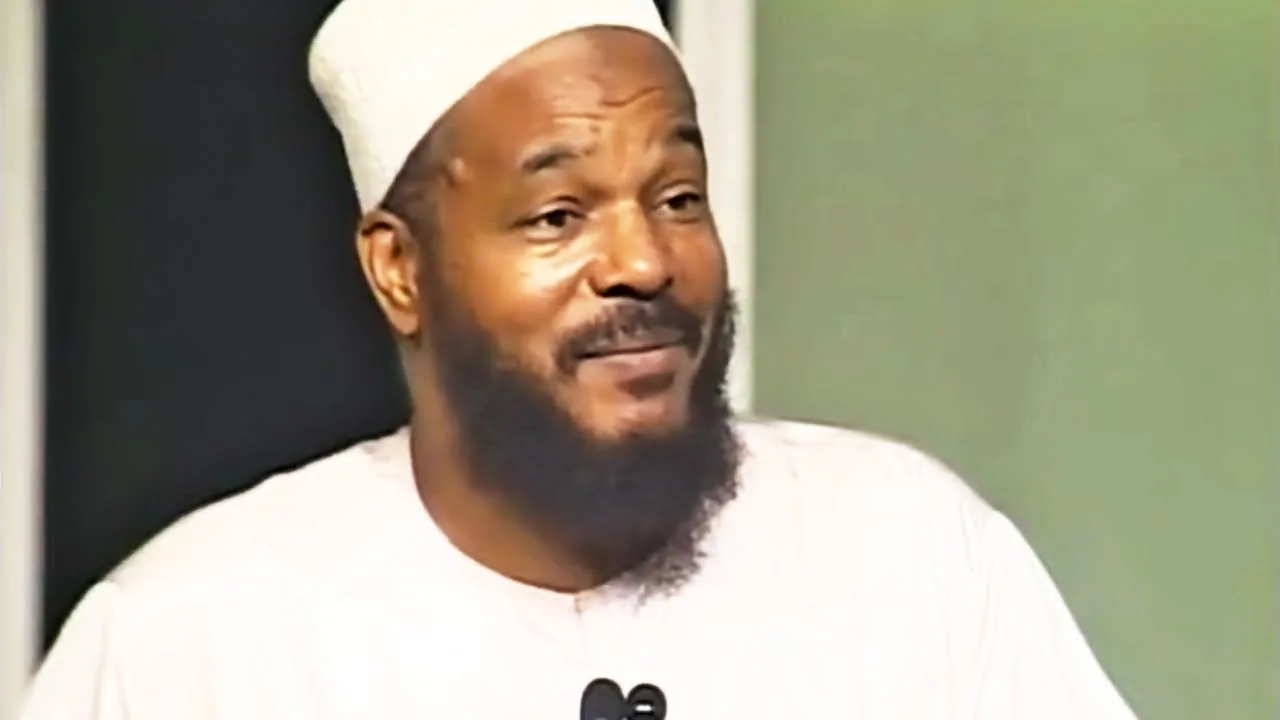
At the inaugural Journey of Faith conference in 2008, Dr. Abu Ameenah Bilal Philips delivered a lecture that cuts to the very heart of Islamic faith and spirituality: the universal declaration of La ilaha illallah — there is no God worthy of worship but Allah. This was not merely the message of Prophet Muhammad ﷺ; it was the same call carried by every prophet sent to humanity — from Ibrahim (Abraham) to Musa (Moses) to Isa (Jesus), peace be upon them all. As Dr. Philips makes clear, understanding this message in its full depth is not a theological luxury but a matter of eternal consequence. At a time when false gods are more subtle and pervasive than ever, this lecture — drawing on Quranic guidance, authentic hadith, and compelling contemporary examples — remains as urgent today as it was when the first messenger stood before his people and declared the oneness of Allah.
La Ilaha Illallah: The One Message Carried by Every Prophet
Allah states in the Quran (Surah An-Nahl, 16:36): “And We certainly sent into every nation a messenger, [saying], ‘Worship Allah and avoid false gods.'” Dr. Philips unpacks the profound structure of La ilaha illallah, explaining that it begins with a negation — a cancellation of every false deity before affirming the one true God. This is not a mere formality; it is a complete worldview and a total reorientation of purpose. He demonstrates with striking relevance that false gods are not always stone idols — they can be as invisible as the concept of “luck” or “fortune.” The very word fortune derives from Fortuna, the ancient Roman pagan goddess of luck, and when a person attributes the outcomes of their life entirely to luck, they are unknowingly invoking a pagan deity. Knocking on wood traces back to ancient Scandinavian tree-god rituals; crossing fingers carries similar pagan origins. These are not harmless cultural habits — they are traces of shirk (associating partners with Allah) embedded in everyday modern life. The message of Islam, like the message of all the prophets before it, cancels all of this and replaces it with purposeful, conscious submission to the one Creator. Belief in God is, moreover, the natural human disposition — the fitrah — with which every child is born; atheism, Dr. Philips argues, is an aberration caused by external corrupting factors, not a rational default state.
- Every prophet — Ibrahim, Musa, Isa, and all others (peace be upon them) — carried the identical essential message: worship Allah alone and reject false gods.
- The declaration begins with negation (laa): Islam first strips away every false claimant to divinity before affirming the one true God.
- The word fortune derives from Fortuna, a pagan Roman goddess — attributing life’s outcomes to “luck” is a subtle, unconscious form of idol worship.
- Everyday rituals like knocking on wood and crossing fingers carry ancient pagan roots and are remnants of false-god worship that Islam came to abolish.
- Belief in God (fitrah) is the human norm; the Prophet ﷺ taught that every child is born with innate awareness of Allah.
- Understanding who Allah is constitutes the first and indispensable condition of a valid, accepted declaration of faith.
“Whoever dies knowing that there is no God worthy of worship but Allah will enter Paradise.” — Prophet Muhammad ﷺ, Sahih Muslim
Dr. Philips emphasises: this promise holds only for those who truly know Allah as He actually is — not those whose concept of Allah is corrupted by pantheism, idol-worship, or false theological innovation.
Who Is Allah? Correct Knowledge as the Foundation of Faith
A point that is often overlooked in contemporary Islamic education is that repeating the shahada is insufficient if one’s understanding of Allah is fundamentally distorted. Dr. Philips draws on a powerful narration from Sahih Muslim in which the Prophet ﷺ tested a slave girl’s faith not by asking “Do you believe in God?” — for nearly everyone claimed some belief in God — but by asking directly: “Ayna Allah?” — “Where is Allah?” She replied without hesitation: “Above the heavens,” affirming that Allah is wholly distinct from and transcendent above His creation. The Prophet ﷺ confirmed her faith and instructed: “Free her, for she is a believer.” This single narration demolishes the pantheistic claim that “everything is Allah and Allah is everything” — an idea rooted in the deviant thought of the 13th-century figure Ibn Arabi, whose statements the vast majority of scholars of his era and after judged to constitute disbelief. Dr. Philips warns that this idea has found modern packaging through popular writers who dismiss as foolish those who affirm Allah’s transcendence above His creation — directly contradicting the standard set by the Prophet ﷺ himself. True guidance demands that we know Allah according to the Quran and the Sunnah as understood by the Companions of the Prophet ﷺ, not according to personal philosophical reasoning or the interpretations of mystics who placed their own intellect above authentic revelation.
From the Tongue to the Heart to the Deed: Living the Message
“He brought a message which was summed up in that phrase — but he then lived it, showed us how it should be manifest in our lives. All the struggles he went through, the good times, the bad times — he lived it, he demonstrated for us how we make that declaration real.” — Dr. Abu Ameenah Bilal Philips
The most transformative dimension of this lecture is the reminder that Islam is not a religion of slogans or ritual lip service. Prophet Muhammad ﷺ did not merely teach La ilaha illallah — he embodied it through every hardship endured on the path of da’wah, every act of worship performed in the depths of the night, every patient response to persecution, and every gracious interaction with those around him. The declaration of faith must travel from the tongue, where it is spoken, to the heart, where it is accepted with sincere conviction, and then into the limbs and daily choices, where it becomes visible to all who observe a life truly lived for Allah alone. Rushing beside a deceased person’s body urging the corpse to say the shahada is not the Islam the Prophet ﷺ brought. Placing drawings of his sandals under one’s pillow to seek blessings is not the Islam the Prophet ﷺ brought. What he brought was a lived, embodied, and utterly liberating monotheism — one that frees the human being from every servitude except to Allah, the Lord of all that exists. In an age saturated with subtle false gods — status, superstition, celebrity, and blind fortune — the message of La ilaha illallah remains the most radical, purposeful, and spiritually liberating declaration a human being can make. May Allah grant us the knowledge to understand it truly, the sincerity to carry it in our hearts, and the courage to manifest it in the way we live.