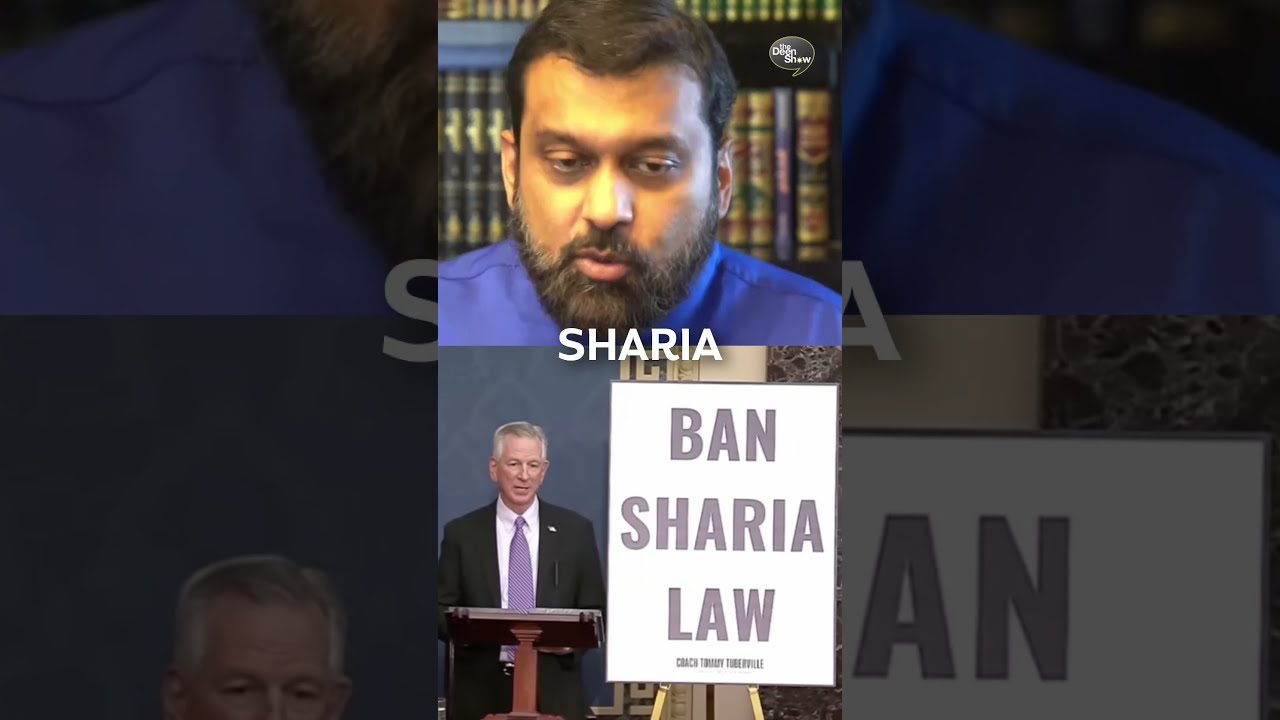
When misinformation about Islam spreads on major platforms like the PBD Podcast, it takes seasoned scholars to set the record straight. In this powerful episode of The Deen Show, veteran Imam Siraj Wahhaj — the first Muslim to recite the opening prayer of the Quran before the United States Congress — sits down to directly address false claims made on the PBD podcast following the Bishop Mari Mari stabbing incident. His response is a masterclass in separating truth from talking points and faith from fear.
What the PBD Podcast Got Wrong About Islam and Violence
On the PBD podcast, the host claimed that Islam “has at its core the extinction of others” and that “anything that is an Infidel is subject to extinction.” Imam Siraj Wahhaj wasted no time dismantling this dangerous misinformation. As he firmly stated: “He’s not talking about my religion. He’s not talking about the religion of two billion people on the planet.” The Imam pointed out that when an attacker with mental health issues who was not Muslim killed six people in a mall, it was labeled a mental health issue — but when a troubled individual who happened to be Muslim committed violence, the entire faith of Islam was put on trial. This double standard fuels the very Islamophobia that puts innocent Muslims at risk.
“Allah does not forbid you from dealing justly and kindly with those who have not fought you because of your religion or driven you out of your homes.” — Quran, Chapter 60:8
Islam’s Teachings on Peace, Coexistence, and People of the Book
- Marriage across faiths: The Quran explicitly permits Muslim men to marry Christian and Jewish women — a direct refutation of any claim that Islam demands hostility toward non-Muslims
- Shared scripture: Muslims revere the Torah and the Gospel (Injil) as books of guidance and light sent by God, honoring the prophets of Judaism and Christianity alike
- Love for all Prophets: Muslim children are named Moses, Abraham, Jesus, and Muhammad — because Islam teaches love and respect for every prophet sent by God
- Jesus in Islam: Muslims believe the Day of Judgment will not come until Jesus (peace be upon him) returns to defeat the Antichrist — a belief that binds the Abrahamic faiths together
- Dialogue over division: Imam Siraj Wahhaj emphasized that 1,400 years of Islamic tradition has always prioritized teaching, discussion, and interfaith understanding over hostility
The Difference Between What Muslims Do and What Islam Teaches
“Muslims may do a lot of things wrong, but Islam is right. Christians may do a lot of bad things, but the message of those prophets was right.” — Imam Siraj Wahhaj
Why This Conversation Matters for Truth and Faith
Imam Siraj Wahhaj made a critical distinction that every honest seeker of truth should consider: radical individuals exist in every religion and ideology, but their actions do not define the faith itself. With two billion Muslims sharing this planet alongside Christians, Hindus, Buddhists, Sikhs, and Jews, the Quran itself declares that religious diversity is part of God’s design. The path forward is not fearmongering on podcasts — it is honest dialogue, mutual respect, and a commitment to peace rooted in authentic knowledge of Islam rather than recycled Islamophobic talking points manufactured by the hate industry.