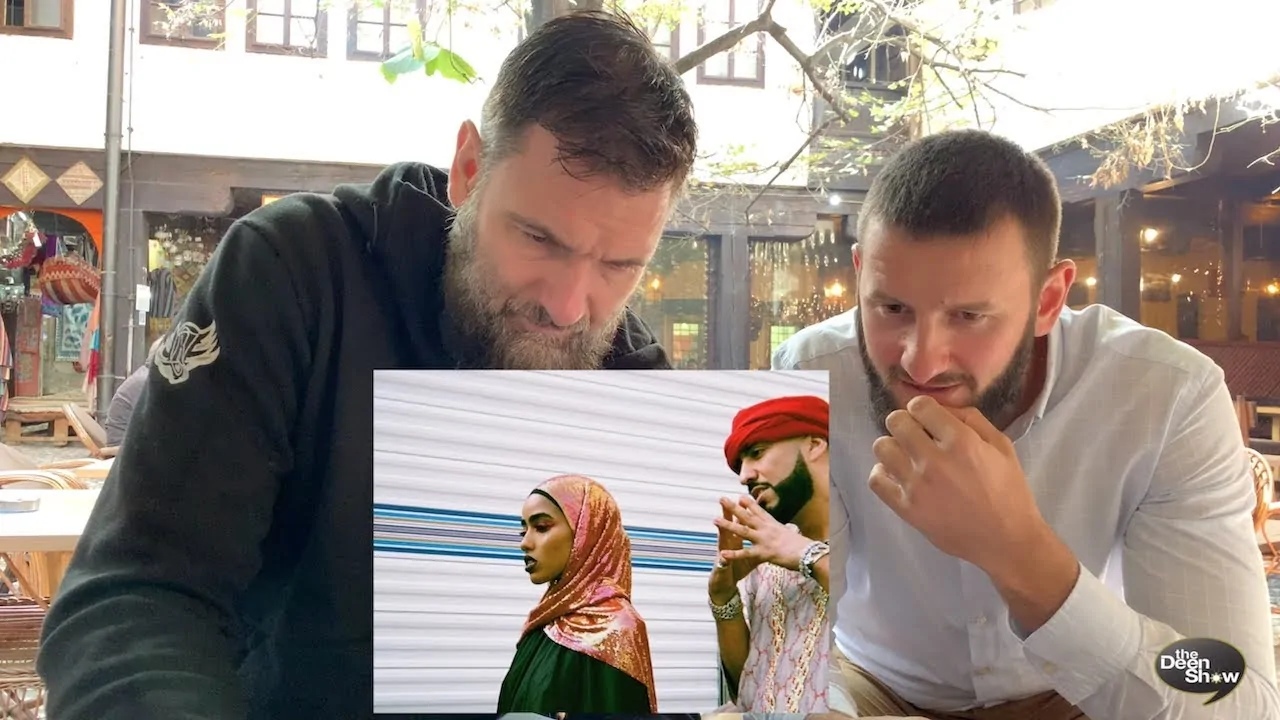
When French Montana disrespected the niqab and hijab in his music video, it was another example of the entertainment industry targeting Muslim women’s modesty for shock value. This episode reacts to the disrespect while also celebrating the cultural pride of Bosnian music that honors tradition and values, contrasting it with the moral bankruptcy of mainstream hip-hop. The comparison between Jala Brat and Buba Corelli’s cultural authenticity and French Montana’s cheap provocation reveals which approach truly resonates with audiences seeking substance over shock.
Disrespecting Muslim Women for Views
French Montana’s use of the niqab and hijab as props in a music video reduces sacred symbols of modesty and devotion to God into objects of entertainment. Islam’s dress code for women is not oppression — it is liberation from the objectification that the entertainment industry profits from. Every time a Muslim woman is mocked for covering, the real question should be directed at the industry that profits from uncovering: why does a woman’s value in your world depend on how much skin she shows?
French Montana used the niqab as a prop for views. Islam’s dress code is not oppression — it is liberation from an industry that profits from objectifying women.
Cultural Pride vs. Cultural Decay
- Bosnian artists like Jala Brat, Buba Corelli, and Saban Saulic represent cultural authenticity that celebrates heritage and tradition
- French Montana’s disrespect of Islamic dress is symptomatic of an industry that views everything sacred as content to be exploited
- The hijab and niqab represent a woman’s choice to be valued for her mind and character, not her body
- Muslim women who wear hijab are among the most educated, professional, and empowered women in the world — their covering is their strength
Why does the entertainment industry only see a woman’s value in how much skin she shows? Islam sees her value in her character, her intellect, and her connection to God.