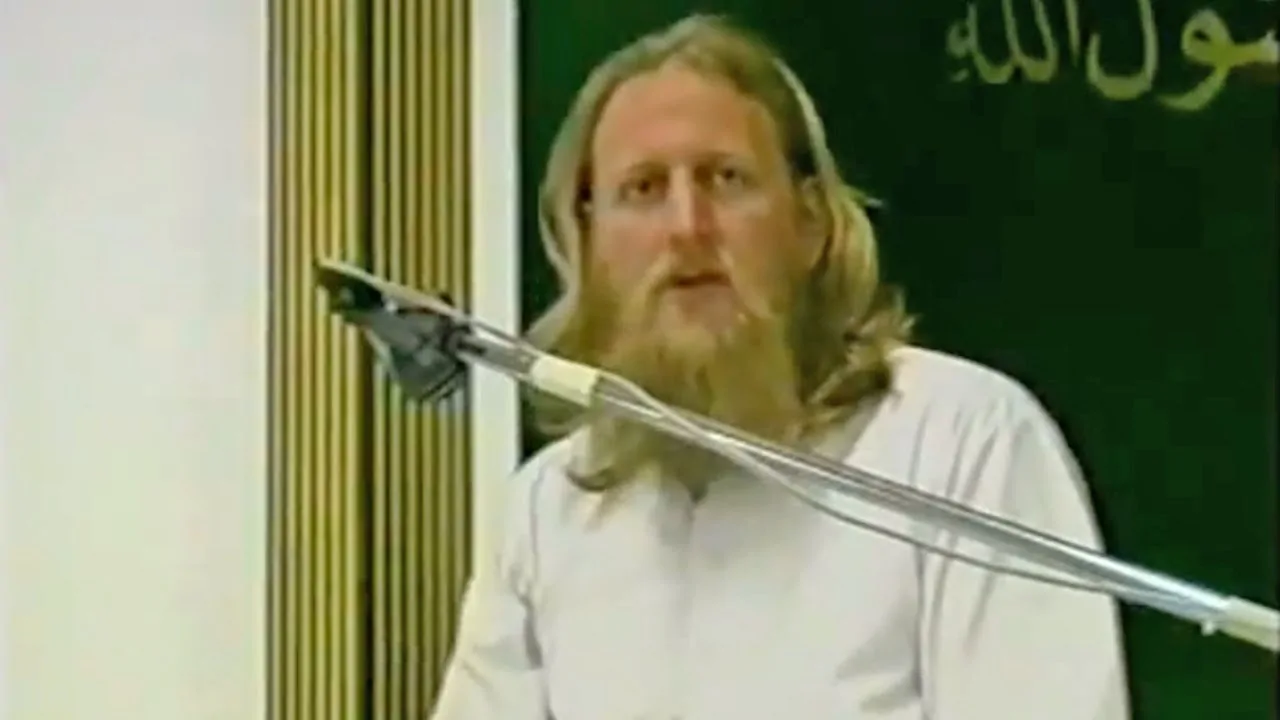
Every soul will taste death — yet how many of us are truly prepared for what comes after? In this powerful lecture, renowned British Muslim speaker and da’ee Abdur Raheem Green delivers a sobering reminder that this worldly life is nothing more than a brief stopping point on a far longer journey. Drawing on Quranic verses and authentic prophetic narrations, he challenges us to confront the one question that should define every choice we make: what will Allah say to me on the Day of Judgment? For the believer who grasps the reality of the Hereafter, this question is not a source of despair — it is the compass that gives life clarity, purpose, and direction.
This World Is the Preparation, Not the Destination
Abdur Raheem Green opens with a striking analogy: imagine a traveller who boards a flight to a foreign land without a passport, a visa, currency, or even the most basic knowledge of the country’s conditions — its language, its climate, its dangers. When that person suffers and perishes upon arrival, we would rightly say they were a fool. But far greater a fool, Green argues, is the person who knows all the details of the journey ahead and still makes no preparation. This is precisely the spiritual condition of the person who claims to believe in the Day of Judgment yet does nothing to ready their soul for it. Islam teaches that Allah (Glorified and Exalted be He) created both life and death as a testing ground — to distinguish those who believe and perform righteous deeds from those who rebel and follow the path of evil. The Quran makes this unmistakably clear. This worldly life, with all its wealth, beauty, poverty, and suffering, is not the destination; it is the arena of preparation for what truly matters. The Prophet Muhammad ﷺ described this reality with timeless wisdom, saying that his relationship to this world was like a traveller who rests briefly beneath a tree and then moves on. Key teachings from this section include:
- The purpose of life, according to the Quran, is to test which of us is best in conduct — not wealthiest, most powerful, or most comfortable
- Worldly blessings and hardships alike — wealth, children, sickness, war — are all merely means, not ends; they only benefit us if we keep our ultimate destination in view
- The truly wise and intelligent person, in Islam, is not the one who accumulates degrees and money, but the one who constantly remembers death and prepares for the life to come
- Whoever concentrates all their worries into the single concern of “what will Allah say to me on the Day of Judgment?” — Allah will take care of all their worldly worries in return
- The person ensnared by this world is like a traveller who stops at a petrol station on the way from Perth to Sydney and begins building a house there — absurd, yet this is how most of humanity lives
“The wise and intelligent person is not the one who aims for the things of this world — the wise and intelligent person is the one who remembers death, who remembers what will take place after death, who understands that this life is only for preparing what is going to happen in the life to come.” — Abdur Raheem Green
The Day of Judgment: A Reality We Must Know and Fear
Green then turns to a vivid and detailed portrait of the Day of Judgment — a day so severe that the great Prophets themselves, Adam, Nuh, and Ibrahim (peace be upon them all), will say “nafsi, nafsi” (myself, myself) when mankind pleads with them to intercede and ask Allah to begin the reckoning. The sun will be brought close; mankind will stand in sweat up to their ankles, their knees, their waists — or, for some, bridled entirely. On that day there will be no shade except Allah’s shade, and only those who earned it through specific righteous deeds in this life will receive it. Every soul — believer and disbeliever — will cross the bridge of the Sirat, stretched over Jahannam, thinner than a hair and sharper than a sword. Some will cross like lightning; others will crawl; some will fall. Green reminds his audience with urgency: if you cannot even name the seven categories of people who receive Allah’s shade on that day, how serious can your claim to be “preparing” truly be? The eternal consequences are binary and absolute — either Jannah (Paradise), a place of peace, joy, and delights beyond imagination, free from age, sickness, envy, and grief; or the Hellfire, a place of unbearable punishment where even the lightest torment involves sandals of fire that cause the brain to boil, and where a stone dropped from its top takes seventy years to reach the bottom. This is not mythology or culture — this is the revealed knowledge that Islam, as given to the Prophet Muhammad ﷺ, calls every human being to internalise and act upon.
“What do I have to do with this world? I am like a traveller who sits under the shade of a tree to take some rest, and then I am on my way.” — Prophet Muhammad ﷺ, as narrated in the hadith
The reminder in this lecture is not meant to paralyse us with fear, but to awaken us to the gift of the present moment — the time we still have to prepare. Islam provides a complete roadmap for this preparation: sincere faith, consistent prayer, honest self-reckoning, righteous deeds, and a heart turned perpetually toward its Creator. The believer who keeps the reality of death and the Hereafter at the forefront of their mind is not a person burdened by gloom — they are a person liberated from the endless anxiety of chasing this world, because they have found the only worry worth having. Let this lecture be a turning point — a moment to honestly ask: have I prepared for the journey that truly matters? And if not, by the mercy of Allah, there is still time to begin.