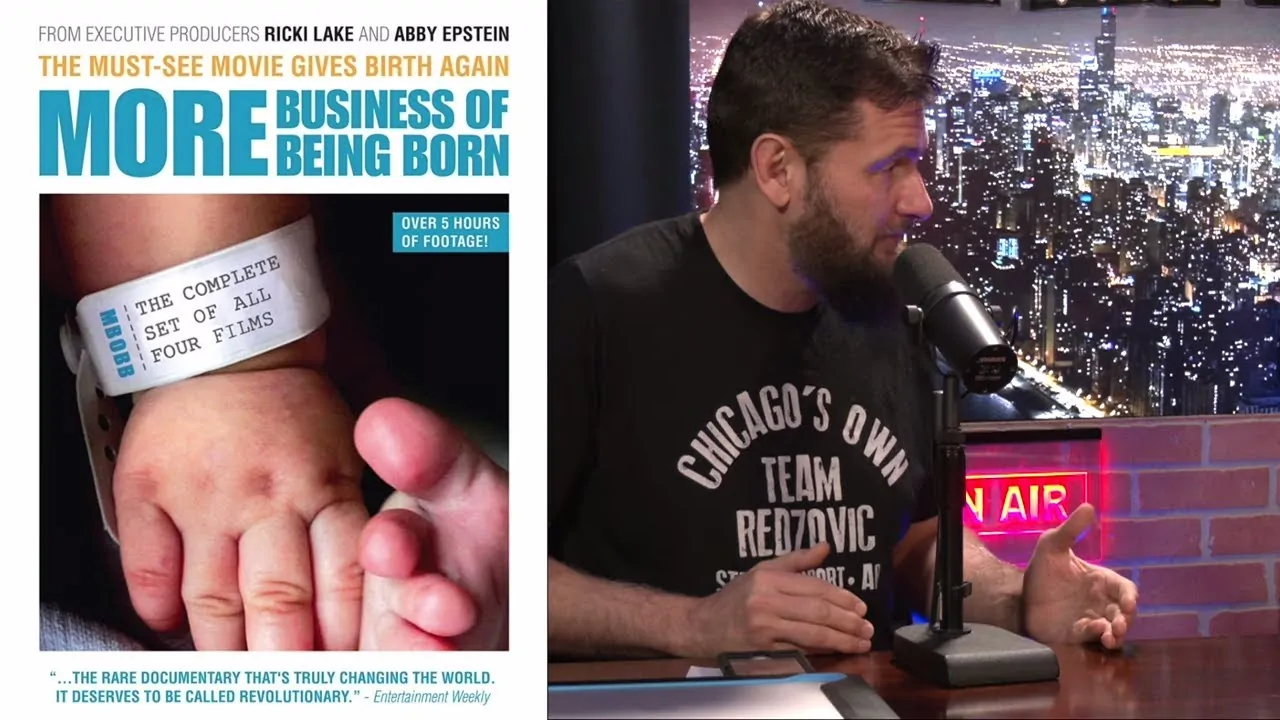
In the name of Allah, the Most Gracious, the Most Merciful — for generations, women brought life into this world in the comfort of their homes, surrounded by trusted hands and guided by the wisdom of experienced midwives. Childbirth, one of the most profound and natural acts written into the human fitrah by Allah, was as ordinary as tending a garden. Yet somewhere along the way, this sacred physiological process became medicalised, institutionalised, and — for many mothers — deeply frightening. With growing concerns around hospital settings and an alarming rise in unnecessary interventions, a certified nurse midwife with over 1,200 home births joined The Deen Show to speak frankly about the state of birth in America, why home birth is experiencing a quiet revival, and what every expectant family deserves to know before making one of the most consequential decisions of their lives.
When Healthcare Becomes a Business: The Real Drivers Behind Skyrocketing C-Section Rates
The United States spends more on healthcare than almost any nation on earth, yet its maternal mortality outcomes lag behind countries with a fraction of its resources — a contradiction the documentary The Business of Being Born (essential viewing for any expecting family) confronts head-on. Women’s bodies have not fundamentally changed in 35 years; what has changed is the practice of medicine itself. Hospital labour wards operate on a for-profit model that cannot afford three-day labours occupying a bed. The result is a cascade of interventions: Pitocin (synthetic oxytocin) administered via IV to speed contractions, inductions pushed well before the natural 42-week limit, and ultimately C-sections now performed at a rate of roughly one in three births. As one obstetrician candidly admitted in the documentary: “You’re going to pay me more, you’re not going to sue me, and I’ll be home in an hour.” The liability calculus — not the mother’s wellbeing — frequently drives the surgical decision. Repeat C-sections compound risk with each subsequent pregnancy, making this a particularly urgent concern for Muslim families who hold the Islamic guidance on family, procreation, and community-building close to their hearts.
“Birth is not like a television show — these things usually unfold over time. The most important thing is to find a provider you have very good communication with and a similar philosophy to, because there needs to be a deep level of trust.” — Certified Nurse Midwife
- The US C-section rate sits at approximately one in three births — driven substantially by liability concerns and hospital throughput pressures, not solely medical necessity
- Maternal mortality in the US is disproportionately high for a wealthy, technology-rich nation; many countries with far fewer resources achieve better outcomes
- “Failure to progress” — the most commonly cited reason for C-sections — often simply means labour did not fit the hospital’s expected timeline, not that anything was medically wrong
- Pitocin inductions produce a steeper, more intense contraction curve than natural labour, increasing demand for epidurals and adding another link to the intervention chain
- Repeat C-sections carry compounding surgical risks; building a large family after multiple caesarean deliveries becomes medically complex and increasingly dangerous
- Women’s labours commonly slow or stop upon hospital admission due to the stress of an unfamiliar, clinical environment — itself often triggering further “necessary” interventions
Reclaiming Birth: The Midwifery Model, Purposeful Pain, and the Wisdom of Preparation
With over 30 years of experience — beginning in 1990 as an assistant and qualifying as a certified nurse midwife in 1995 — the guest has attended more than 1,200 home births, transferring to hospital in only around one in ten cases, the majority of which are calm, planned transitions rather than emergencies. Her practice is built on a partnership model rooted in guidance, informed consent, and deep mutual trust: she advises and supports, but the family remains in the driver’s seat — a philosophy that aligns naturally with Islamic values of shura (consultation) and personal accountability. She is honest about pain: barely a handful of her 1,200 clients described a pain-free experience. But she frames labour pain not as pathology but as purposeful — contractions that signal something immense and sacred is unfolding, separated by natural rest periods that allow a woman to gather her strength and press forward. Her grandmother’s story captures the lost wisdom perfectly: a woman gardening while heavily pregnant, giving birth quietly into the folds of her long skirt in the garden, and returning to her day. That which was once entirely normal has been reframed by modern culture as terrifying. Critically, she cautions that home birth demands a 150% commitment — not a panic-driven last resort when hospital anxiety strikes at 38 weeks, but a path that should begin at the start of pregnancy with intentional preparation, consistent prenatal care, and complete alignment between the family and their midwife.
- Home birth requires full-pregnancy preparation and genuine trust between family and midwife — it is not suitable as a last-minute reaction to hospital fears
- Labour pain is purposeful, not pathological — contractions are intense but arrive in waves with natural rest intervals; the human body is designed for this
- The midwifery model prioritises partnership and informed consent: the family leads, the midwife guides — a meaningful contrast to the authority-first hospital dynamic that leaves many women feeling powerless
- A familiar, low-stress home environment actively supports natural labour progression; one remarkable case saw a woman halt her labour at 7 centimetres for three full days out of fear of hospital intervention — delivering within two hours of establishing trust with a midwife she felt safe with
- Only 5% of babies are born on their due date; the 37–42 week window is all normal, yet many hospitals pressure induction well before 42 weeks — one of the leading causes of preventable C-sections
- Documentary recommendation: The Business of Being Born (produced by Ricki Lake) — an accessible, evidence-grounded film every expectant family should watch
“It’s not pain like you broke your arm — it’s purpose pain. It’s normal pain, and it’s doable. Women do it all the time.” — Certified Nurse Midwife, on the reality of childbirth
Islam honours the mother profoundly — the Prophet ﷺ declared that paradise lies at her feet — and the journey to motherhood, with all its intensity, is itself a form of ibadah (worship). The striving a woman endures in labour is acknowledged in the Quran as a great sacrifice, worthy of immense reward from Allah. Returning to an understanding of birth as a natural, fitrah-aligned process — guided by skilled and trustworthy hands rather than driven by institutional pressures or financial incentives — is not a step backwards. It is a reclamation of something deeply human and deeply rooted in Islamic spirituality. Whether a family ultimately chooses a home birth, a birth centre, or a hospital setting, the central lesson from this episode is the same: seek knowledge, ask hard questions, choose a provider who treats you as a partner rather than a liability, and refuse to allow manufactured fear to strip you of agency over one of life’s most extraordinary moments. As Allah reminds us, He does not burden a soul beyond what it can bear — and the human body, designed by its Creator, carries within it a profound, God-given capacity to bring new life into the world.