At the heart of Islam lies a singular, uncompromising truth that every prophet — from Adam to Muhammad ﷺ — was sent to convey: there is only one God, Allah, who alone deserves all worship, love, and devotion. This principle, known in Arabic as Tawheed, is not simply a theological position but the very purpose of human existence and the foundational message of the Quran. The essence of Quranic guidance is to make clear to every human being who their Lord is — so that they may understand that worship belongs to Him alone, without partners, without rivals, and without any intermediary standing between the Creator and His creation. To grasp Tawheed is to unlock the core of Islamic faith, spirituality, and purpose in this life and the next.
The Three Dimensions of Tawheed: Islam’s Complete Framework of Divine Oneness
Scholars of Islam have long identified three essential and inseparable dimensions of Tawheed, each integral to a sound and complete faith in Allah:
- Tawheed al-Ruboobiyyah (Oneness of Lordship): Affirming that Allah alone is the Creator, Sustainer, and Sovereign over all existence. He alone gives life, causes death, and governs every affair of the universe. Notably, even the disbelievers of old acknowledged this dimension — yet it was not enough, because they failed to direct their worship to Him alone.
- Tawheed al-Uloohiyyah (Oneness of Worship): Directing every act of worship — prayer, supplication, sacrifice, fear, hope, and love — exclusively to Allah. This is the dimension that caused the greatest historical divergence between truth and falsehood, and it is the primary reason all the prophets and divine scriptures were sent to humanity.
- Tawheed al-Asma’ wa’l-Sifaat (Oneness of Names and Attributes): Affirming Allah’s perfect names and attributes as He has described Himself — without distorting their meaning, denying their reality, or drawing any comparison between His attributes and those of His creation. “There is nothing like unto Him,” the Quran declares, setting Him apart from all things in absolute and incomparable perfection.
“Say (O Muhammad): He is Allaah, (the) One. Allaah‑us‑Samad — the Self-Sufficient Master, Whom all creatures need. He begets not, nor was He begotten. And there is none co-equal or comparable unto Him.” — Surah Al-Ikhlaas (112:1–4)
Direct Access to Allah: Why Islam Firmly Rejects Intermediaries in Worship
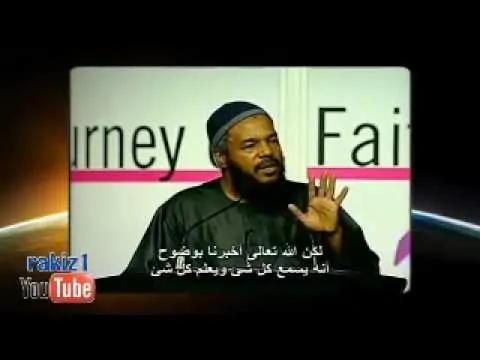
One of the most practically significant implications of Tawheed — and one of the most commonly misunderstood — is Islam’s firm rejection of intermediaries in worship. The reasoning offered for intercessors often sounds compelling on the surface: a person burdened with sin is impure, and God is infinitely pure, so surely one needs a holy figure — a saint, a revered imam, or a pious intercessor — to carry one’s prayers upward. People draw the analogy of a citizen who cannot simply knock on the Prime Minister’s door but must work through a chain of representatives before being heard. This logic makes perfect sense in human society, where leaders are limited, inaccessible, and unaware of every individual’s need. But this is precisely where the worldly analogy collapses entirely when applied to Allah. God is not a distant monarch surrounded by layers of courtiers. He is All-Hearing and All-Knowing, aware of every heart’s secret and every soul’s yearning — and He has never asked to be approached through anyone other than Himself. To call upon saints, to direct worship to revered imams believed to carry divine attributes, or to pray through any created being — however pious — is not an expression of deeper devotion. It is, as the Quran and authentic Islamic tradition make clear, a fundamental misunderstanding of who Allah is, and a departure from the very guidance He revealed to liberate human beings from such spiritual dependency.
“Call on Me and I will answer your prayers.” — Allah, Surah Ghafir (40:60)
The invitation Allah extends to every human being is breathtaking in its directness and its mercy: call on Me. Not through a saint. Not through a chain of holy intermediaries. Not through any hierarchy of the spiritually elite. Directly, sincerely, and humbly — and He will answer. This is the profound gift that Tawheed gives the believer: an unmediated, living, personal relationship with the Lord of all creation. The main message of Islam, across fourteen centuries and every culture and continent where it took root, has never wavered — know your Lord, worship Him alone, and trust completely that He hears you. This is not a religion of ritual performed before an unreachable God; it is a path of intimate faith, purpose-driven living, and an unbreakable spiritual connection with the One who created you, knows you completely, and is — without condition or intermediary — always closer to you than you realise.