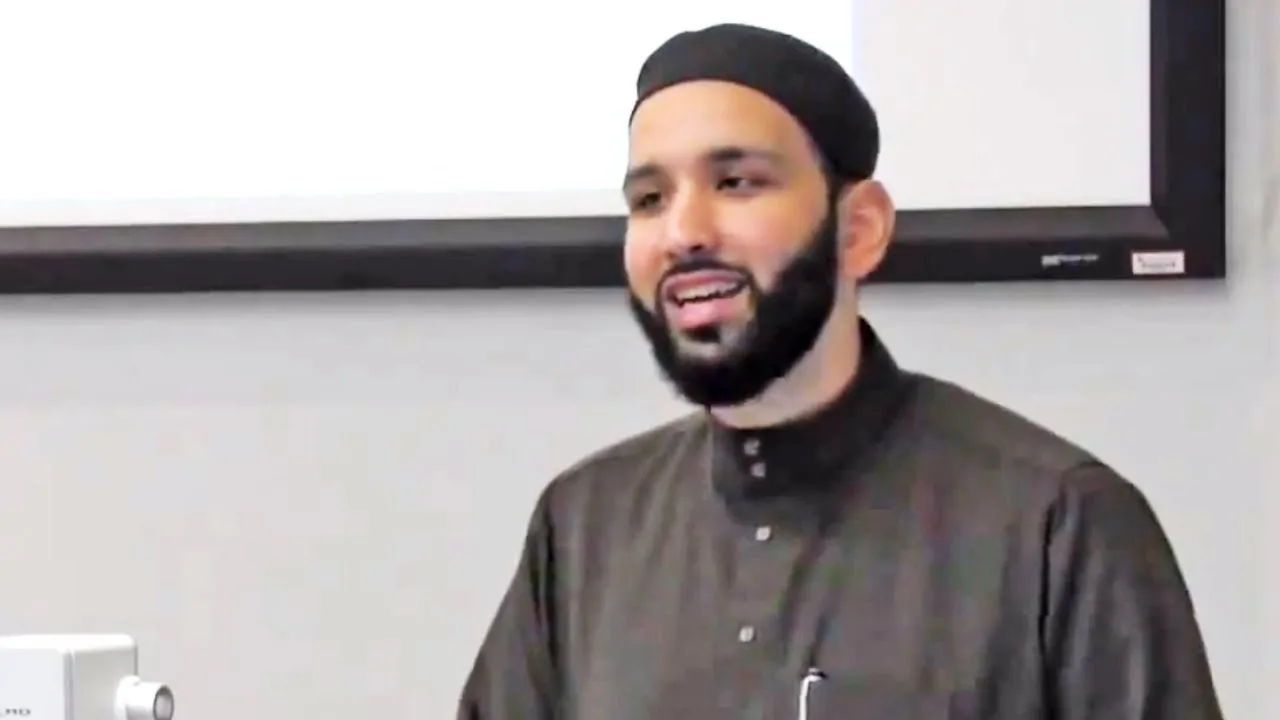
What makes a marriage last? In a world where Western divorce rates exceed 50% and a Harvard study found that couples who engaged in intimate relations before marriage faced a 69% chance of relationship failure, Islam’s guidance on love and matrimony stands as a timeless, evidence-backed framework — not a relic of the past. In this powerful lecture from the Sand Dunes Tour, Shaykh Omar Suleiman — Imam, scholar, and community leader from New Orleans — unpacks the Islamic concept of the “laws of love”: what to look for in a spouse, how faith and character intertwine as the bedrock of a lasting union, and why reducing deen to outward ritual alone is one of the most dangerous mistakes a Muslim can make.
Faith Is Not Enough Without Character — The Two Pillars of a Lasting Union
When the Prophet ﷺ advised believers on choosing a spouse, he named deen (faith) and khuluq (character) as the twin foundations — not beauty, not wealth, not status. Shaykh Omar explains that while Islam permits marrying for attraction, financial stability, or social standing, these factors are complements, never the foundation. Beauty fades. Wealth comes and goes. But the character of a person — their inner beauty, their akhlaq — is what a marriage is actually built on. Critically, the Shaykh draws attention to what “deen” really means: it is not simply the person who memorizes the most Qur’an or appears most strict. A woman described to the Prophet ﷺ who prayed all her prayers and fasted was declared to be in hellfire — because she was abusive to her neighbours. Her deen did not penetrate her heart and did not manifest in good behaviour. That, the Shaykh stresses, is the deception of superficial religiosity. Key takeaways from this section include:
- The Prophet ﷺ instructed us to prioritise deen and character above all other qualities in a spouse
- Outward religious practice that does not produce inner goodness and kind behaviour is not genuine deen
- Character (khuluq) is your inner beauty — it is measurable through how a person treats those around them
- The “bankrupt person” on the Day of Judgement is one who comes with mountains of good deeds but loses them all because of how they mistreated others
- Beauty, wealth, and status are permissible factors but must never be the basis of a marriage decision
- Cultural tribalism — refusing matches based on ethnicity or national origin — directly contradicts Islamic guidance and the example of the Sahabah
“If someone comes to you whose character and religion is pleasing to you, then marry [to them] — or there will be great tribulation and widespread corruption on earth.” — Prophet Muhammad ﷺ
The Inner Scale: Why Allah Weighs Your Character, Not Your Appearance
Shaykh Omar turns to a profound hadith about the Day of Judgement to illuminate why character carries such immense spiritual weight. On that Day, the misan — the divine scale — will not measure physical mass or worldly status. The Prophet ﷺ described Ibn Mas’ud, a man so slight that the wind blew him into a tree, and said his legs would each weigh the equivalent of Mount Uhud on the scale of Allah. In contrast, a physically large person with empty inner character would not weigh the wing of a mosquito. Allah weighs your khuluq — your inner reality as it manifests in how you treat His creation. This is why the Prophet ﷺ himself was described by Sayyida Aisha as “a Qur’an walking on the face of the earth” — not simply a recipient of legislation, but a living embodiment of mercy, kindness, and joyful companionship. He was always smiling, and he made everyone around him smile. This is the standard the Shaykh calls us to pursue, both in ourselves and in the partners we seek. Practical guidance from the lecture on the process of marriage also includes performing istikharah sincerely — not the cultural distortions of papers under pillows or dream-colour superstitions — but the genuine dua of “O Allah, if this is good for me, make it easy; if it is bad for me, take it away,” and then trusting Allah’s response with full sincerity.
“The best amongst you is he who is best to his wife.” — Prophet Muhammad ﷺ, and Khadijah (ra) bore witness: “You told the truth, O Messenger of Allah.”
The laws of love in Islam are not arbitrary restrictions or cultural hangovers — they are a mercy-filled, wisdom-grounded roadmap designed to give every marriage its best possible foundation. Shaykh Omar’s lecture is a compelling reminder that faith, when genuine, must flow outward into beauty of character, gentleness in the home, and kindness to all those around us. For those seeking a spouse, the guidance is clear: look for the one whose deen has actually reached their heart, and whose heart has shaped their conduct. For those already married, the standard of the Prophet ﷺ — always smiling, always making those around him feel at ease, the best to his wives — is not an unattainable ideal but a living invitation to grow. True spirituality is not performed on a prayer mat alone; it is the love, patience, and character we carry into every relationship Allah has placed in our lives.