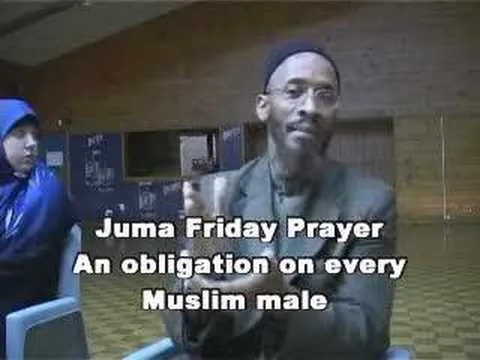
Every Friday at midday, from London to Lahore, mosques across the globe echo with the call to Jumu’ah — the Friday congregational prayer that Islam designates as the most blessed gathering of the week. Far from being a passive day of rest, Jumu’ah — whose Arabic root literally means “gathering” — is a dynamic, spiritually charged act of community worship that takes approximately thirty to forty-five minutes, after which Muslims are entirely free to resume their work, business, and daily pursuits. This weekly gathering stands as one of Islam’s most profound institutions, carrying immense theological meaning, historical depth, and extraordinary divine reward for those who attend with sincerity and proper preparation.
Jumu’ah, the Sabbath, and the Islamic Understanding of Divine Worship
To understand Jumu’ah fully, it helps to trace the origins of weekly holy days across religious traditions. The word “Sabbath” derives from the Arabic word sab, meaning “seventh,” indicating that the original Abrahamic day of rest was Saturday — a historical fact preserved by the Seventh Day Adventists who still worship on that day. The early Christian church, roughly three hundred years after Jesus Christ, shifted its day of worship to Sunday, a day already considered sacred by Romans and Greeks who venerated the sun — a pagan heritage embedded even in the English names of the week: Sunday honors the sun, Monday the moon, Thursday the Norse god Thor. Islam, by contrast, received divine guidance through the Prophet Muhammad ﷺ to establish Yawm al-Jumu’ah as the day of congregational prayer. Critically, Islam does not endorse the notion that Allah “rested” after creating the heavens and earth in six periods; the Quran affirms that Allah settled upon His Throne according to His Divine Majesty — a reality Muslims affirm without anthropomorphic interpretation and without adding any meaning beyond what is stated. Jumu’ah is therefore not about divine rest, but about the human community’s urgent need for worship, admonition, and spiritual renewal.
“The five daily prayers, and from one Jumu’ah to the next, are an expiation for whatever sins come in between, so long as one does not commit any major sin.” — The Prophet Muhammad ﷺ (Narrated by Muslim, 233)
The Immense Virtues and Rewards of the Friday Prayer
The ahadith of the Prophet Muhammad ﷺ paint a vivid picture of the spiritual merit available to the Muslim who observes Jumu’ah correctly. Scholars such as Imam al-Nawawi explained that the forgiveness granted across Jumu’ahs extends to a full ten days — the seven between Fridays plus three additional — because a single good deed is multiplied tenfold in Allah’s sight. Al-Hafiz ibn Hajar further clarified that these extraordinary rewards are conditional on fulfilling the proper etiquettes of the day. The key takeaways for every believer seeking the full blessing of Jumu’ah are:
- Perform a complete ghusl (ritual bath) before attending — this is among the most emphasized preparations
- Arrive as early as possible: the Prophet ﷺ likened the reward of the first hour to sacrificing a camel, the second a cow, the third a horned ram, the fourth a hen, and the fifth an egg — the angels themselves arrive to listen to the khutbah when the imam begins
- Walk to the mosque with calm dignity, neither pushing between people nor stepping over anyone
- Apply perfume and wear one’s best, cleanest garments out of reverence for the occasion
- Listen attentively and quietly throughout the entire khutbah (sermon), refraining from idle speech
- Pray nafl (voluntary) prayers before the obligatory prayer begins
- Know that every single step walked to Jumu’ah carries the reward of fasting and praying the night prayer (qiyaam) for an entire year
- Women may attend Jumu’ah voluntarily — it is not obligatory upon them, reflecting Islam’s balanced regard for family and domestic responsibilities
“Whoever does ghusl on Friday and sets out early, and comes close to the imam and listens and keeps quiet — for every step he takes he will have the reward of fasting and praying qiyaam for one year.” — The Prophet Muhammad ﷺ (Narrated by al-Tirmidhi, 496; classified as sahih by al-Albani)
Jumu’ah is one of Islam’s most beautiful gifts to the believer — a weekly reset that interrupts the noise of worldly life for less than an hour, drawing a community together in submission, remembrance, and spiritual accountability before their Creator. It places no burdensome restrictions on the rest of the day; after the prayer ends, the Quran itself invites the faithful to “disperse through the land and seek of the bounty of Allah” (Quran 62:10). For the Muslim who prepares with sincerity — bathing, dressing well, arriving early, listening with full presence, and walking purposefully to the mosque — the weekly Jumu’ah becomes one of the most efficient and transformative acts of worship available: sins expiated across ten days, every step rewarded with a year’s worth of devotion, and an entire community standing unified in faith and guidance. In a world of relentless distraction and fragmented attention, the Friday prayer is Islam’s answer — pause, gather, remember, and return renewed.