Human beings are creatures of habit. We reach for the same coffee mug each morning, sit in the same chair at dinner, and follow the same unspoken routines day after day — and if we are honest with ourselves, our prayers have often slipped into exactly that kind of unconscious repetition. The same short surahs in every rak’ah, the same hurried tasbeeh in ruku and sujud, the same mechanical movements that take us through the motions without ever truly arriving before Allah ﷻ. When was the last time you could recall, immediately after finishing your salah, which surah you had just recited? If the honest answer is “I’m not sure,” this is the reminder — and the opportunity — your prayer has been waiting for.
Breaking the Habit: Conscious Intention as the Gateway to Khushu’
Allah ﷻ challenges us in the Quran: “Do they not reflect upon the Quran, or are there locks upon their hearts?” (Surah Muhammad, 47:24). This question strikes at the very heart of robotic worship. The journey toward a living, breathing salah begins even before you raise your hands for takbeer — it begins with wudu. When a group of Muslims were asked what their intention was when making wudu, the majority said simply “to make wudu,” while fewer said their intention was to prepare for prayer. Yet the Sunnah invites us to carry multiple intentions at once: to obey Allah ﷻ, to follow the example of the Prophet Muhammad ﷺ, to wash away our sins, and to present ourselves before our Lord in the best possible state. By expanding our intention at wudu alone, we multiply our reward and — more importantly — we shift from spiritual autopilot to genuine awareness before we have even stepped onto the prayer mat. The Prophet ﷺ was remarkably dynamic in his salah, varying his recitation, lengthening his standing, and drawing from a rich treasury of supplications. We are called to follow his example: learn a new surah, even just a few verses a week, and bring that freshness and renewed sense of faith into every prayer.
Jabir (رضي الله عنه) reported that the Messenger of Allah ﷺ said: “The most excellent prayer is that in which the duration of standing is longer.”
— Sahih Bukhari
Reclaiming the Prophet’s ﷺ Du’as: From Ruku to Sujud
One of the most transformative ways to revive your salah is to learn the supplications the Prophet ﷺ actually used throughout his prayer — and to recognise that what most of us were taught as children was a beginning, not the full picture. Beyond the familiar “Subhana Rabbiyal Adheem” in ruku and “Subhana Rabbiyal A’la” in sujud, the Prophet ﷺ drew from multiple opening supplications (du’a al-istiftah), varied phrases in bowing, and deeply moving invocations in prostration — the position of ultimate nearness to Allah ﷻ. Each of these supplications is a chance to be fully present, to mean every word, and to replace empty recitation with sincere, purposeful engagement. Resources such as the My Prayer project, guided by Sheikh Bilal Dannoun, were designed precisely to return this richness to Muslims worldwide, offering a step-by-step guide to wudu and salah that restores both its correctness and its soul.
- Multiply your intentions at wudu: to obey Allah ﷻ, to follow the Sunnah, to wash away sins, and to prepare your heart for prayer
- Vary your du’a al-istiftah — the Prophet ﷺ used several, including “Subhanakallahumma wa bihamdika, wa tabarakasmuka, wa ta’ala jadduka”
- In ruku, supplement the basic tasbeeh with “Subhanakallahumma wa bihamdika, Allahumma ighfirli” as authentically reported
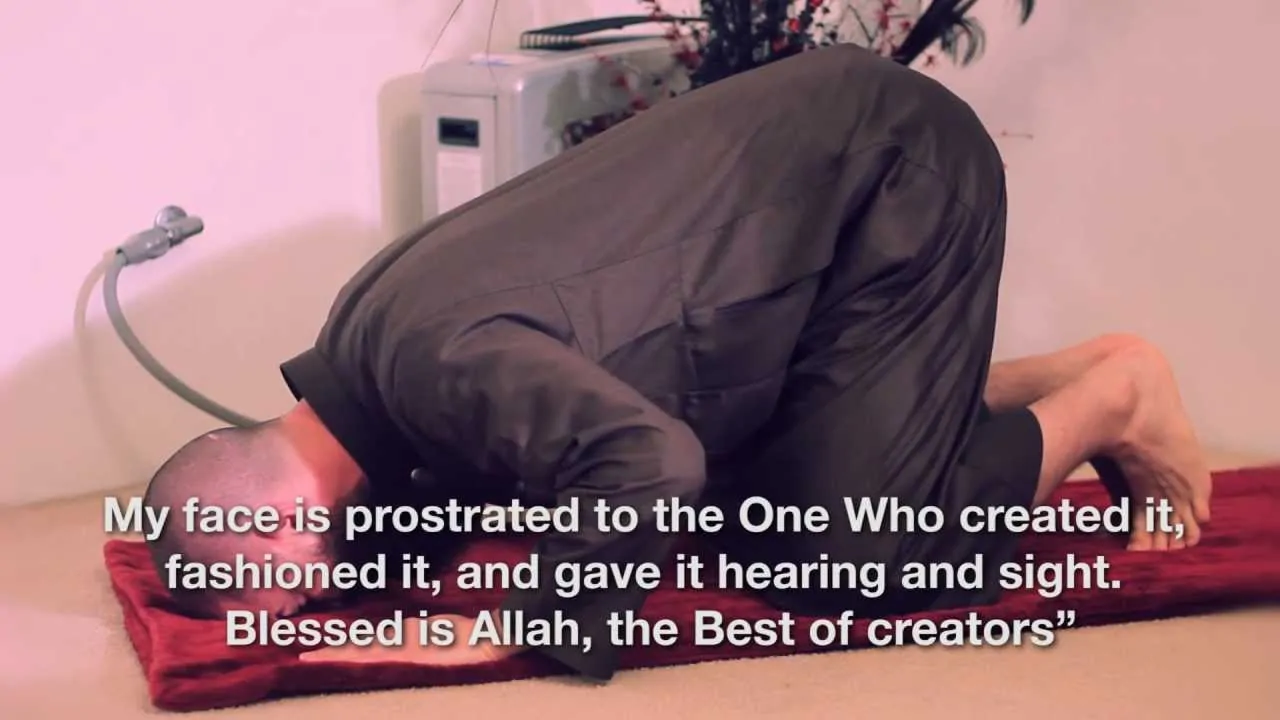
- In sujud, learn and reflect on the Prophet’s ﷺ extended supplications, embracing the depth of this position of nearness to Allah ﷻ
- Memorise a few new Quranic verses each week — even a handful — to vary your recitation and lengthen your standing with meaning
- Approach every prayer as a meeting, not a routine — each rak’ah is a fresh opportunity to be present before your Creator
The Prophet Muhammad ﷺ commanded: “Pray as you have seen me pray.”
— Sahih BukhariThis is not merely a legal ruling — it is an invitation to inherit the spiritual depth, the variety, and the wholehearted sincerity with which the Prophet ﷺ stood before Allah ﷻ every single day of his blessed life.
Perfecting the prayer is not the exclusive preserve of scholars or the most devout among us — it is a path open to every Muslim willing to take one small, intentional step forward. You do not need to master classical Arabic overnight, nor transform yourself into one of the Companions (رضي الله عنهم) in a single week. What is required is the decision to stop being predictable in your worship, to resist the pull of spiritual inertia, and to treat each of the five daily prayers as a living encounter with the One who created and sustains you. Salah is Islam’s most direct expression of our purpose on this earth — submission to Allah ﷻ with awareness, gratitude, and sincere love. Its five daily intervals are not interruptions to life; they are reminders of what life is for. Start today: expand your intention at wudu, learn one new supplication for sujud, memorise one new verse, and bring a conscious, searching heart to your next prayer. That single step, taken sincerely and for the sake of Allah ﷻ, is where true transformation begins.