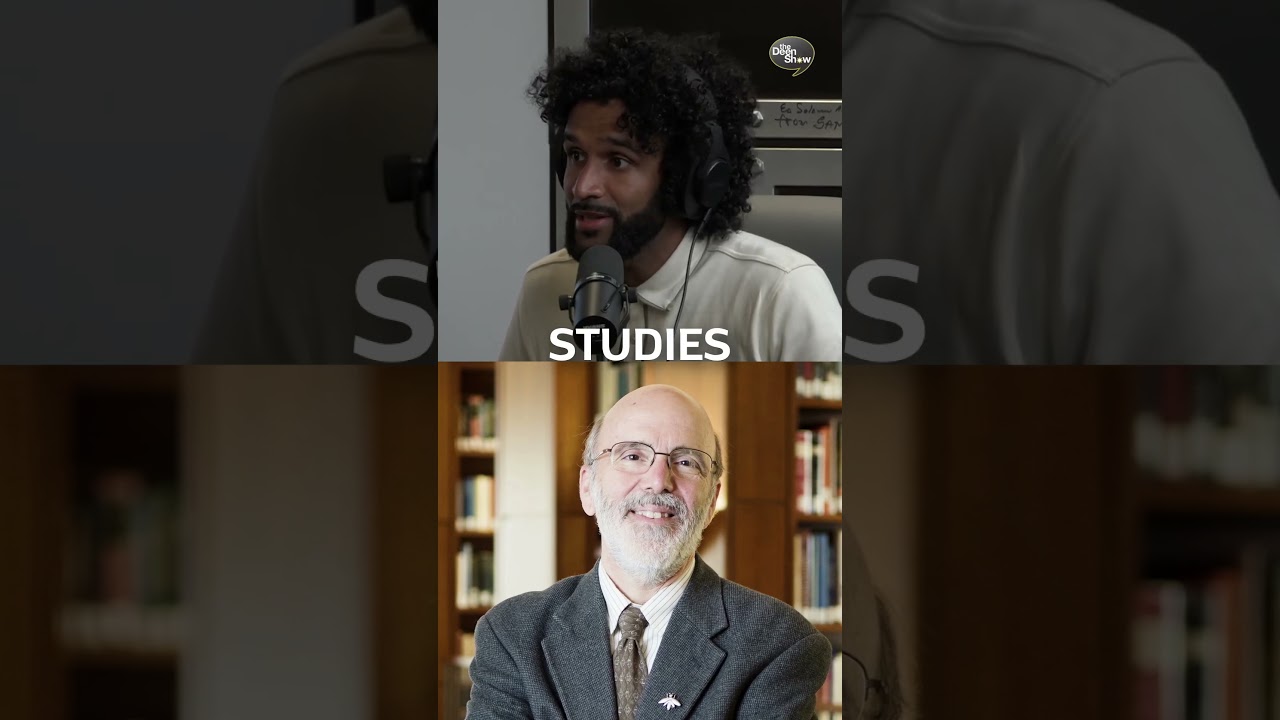
What does modern anatomy have to say about a book revealed 1,400 years ago? For one accomplished professor of anatomy, the answer was enough to change the entire course of his life. When this scientist sat down to study a specific verse from the Qur’an — not as a believer, but as a trained medical academic — what he found in its pages was not poetry or metaphor, but anatomical precision that science itself had only recently confirmed. His journey from clinical detachment to sincere declaration of faith is a testament to one of the most extraordinary qualities of the Qur’an: its capacity to speak the language of science across the centuries.
The Verse That Stopped a Scientist in His Tracks
The verse in question is found in Surah An-Nisa (4:56), where Allah says that those who reject the truth will be cast into the Fire, and every time their skins are burned away, He will replace them with new skins so that they may continue to taste the punishment. To a layperson, this may read as a vivid depiction of divine justice in the afterlife. To a professor of anatomy, it was something else entirely — a medically accurate statement about pain physiology. Modern neuroscience confirms that the sensation of pain is registered through nociceptors concentrated in the skin; once skin is destroyed by burning, those nerve endings are gone, and the experience of burning pain diminishes. The Qur’an’s description of skin being replaced to sustain the experience of punishment aligns exactly with this biological reality — a fact that was completely unknown to the science of the 7th century. After studying this connection in depth, the professor concluded that information of this nature could not have originated from any human source.
“I believe that everything that has been recited in the Qur’an 1,400 years ago must be the truth, that can be proven by the science of today.”
Evidence, Reason, and the Path to Sincere Faith
This episode is not an isolated case. The Qur’an has consistently stood as a challenge to human intellect — not by demanding blind belief, but by inviting careful reflection on what it says and what it knows. The prophet Muhammad ﷺ, who was unlettered and had no access to medical libraries or foreign scholarship, delivered a book containing precise references to embryology, cosmology, hydrology, and now anatomy. Scholars who approached these claims with academic scepticism — checking the best available sources in their respective fields — returned not with refutations, but with deeper conviction. The professor in this episode had access to the most current anatomical literature and the professional standing to evaluate these claims rigorously. His conclusion, delivered before an audience of Muslims, was not the product of sentiment or cultural pressure, but of intellectual honesty. Key insights from his testimony include:
- The Qur’anic verse on hellfire precisely describes the role of skin in registering pain — a discovery central to modern pain science.
- This anatomical knowledge was inaccessible to any human being in 7th-century Arabia, ruling out a human source for the information.
- Cross-referencing the Qur’an with peer-reviewed scientific literature in anatomy and physiology only deepened his conviction rather than diminishing it.
- His conversion was a product of scholarship, not social pressure — he investigated the evidence and followed it to its logical conclusion.
- The same principle — that the Qur’an’s information about the physical world points back to the All-Knowing Creator — applies across embryology, geography, and cosmology.
“If you find wisdom, it is because it comes only from the One who is Most Wise. If you find knowledge, it is because it comes from the One who knows all things.”
Guidance to Islam has never been a matter of geography or inheritance alone — it is, as the Qur’an itself affirms, a light that Allah extends to those who seek truth sincerely. The story of this scientist is a reminder that the path to faith can begin in a laboratory, in a library, or at a lectern — anywhere the honest mind is willing to follow evidence without flinching. For those already grounded in Islam, this account renews a sense of awe at the Book they hold; for those still searching, it is an open invitation to pick up a translation of the Qur’an and read it not as mythology, but as a text that has never been afraid of scrutiny. The greatest miracle of the Prophet Muhammad ﷺ was not a single event witnessed by one generation — it is a living Book, still confounding experts, still converting scientists, and still guiding hearts to the straight path, fourteen centuries on.