
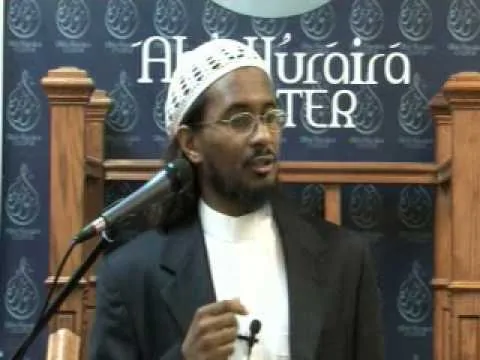
In Islam, few qualities carry the weight and eternal consequence of akhlaaq — good character, noble manners, and righteous dealings with others. It is a topic so central to the faith that the Prophet Muhammad ﷺ, who could have defined his mission as teaching the Quran, abolishing idol worship, or establishing prayer, chose instead to describe his very purpose in terms of character: “Verily, I was sent to perfect the most noble of good character.” This is not a minor narration on optional virtue — it is a declaration that repositions akhlaaq as one of the very foundations of Islamic identity, as indispensable to the believer as salah, fasting, and Hajj. Most people treat good manners as something to pursue once the obligatory acts are complete, but the prophetic tradition tells us the opposite: character is not the finishing touch on a life of faith — it is the fabric from which that life is woven.
Why Good Manners Are the Backbone of Islamic Spirituality
- Allah describes the Prophet ﷺ as “a mercy to the universe” — and scholars explain that mercy between human beings is impossible without good character; a community filled with envy, backbiting, hatred, and cursing is by definition devoid of mercy, regardless of how many rituals are observed.
- The Companions of the Prophet ﷺ, despite having the purest hearts ever created, would have “scattered from around him” had he been crude or hard-hearted — meaning even the greatest message in history required the vessel of beautiful character to be received and transmitted.
- Imam Malik’s mother advised her young son to learn from his teacher’s manners before his knowledge — wisdom vindicated when one of the Imam’s most brilliant students, having mastered his entire curriculum in the first year, remained for nineteen more years solely to absorb how Imam Malik conducted himself with scholars, rulers, children, and the ignorant alike.
- Taqwa (God-consciousness) and good manners are the two qualities that most lead people to Paradise, as the Prophet ﷺ confirmed directly when asked by his Companions.
- Every act of worship is designed to elevate akhlaaq: salah restrains shameful and reprehensible acts, Hajj prohibits vain talk and argumentation, and fasting teaches the believer to hold their tongue even when provoked.
“The most complete of believers in faith are the best of them in manners, and the best of you are the best of you to their families.” — The Prophet Muhammad ﷺ
The wisdom of Imam Malik’s student deserves deep reflection for every believer seeking Islamic guidance in this age. He mastered the textual knowledge in one year, yet devoted nineteen more to observing how that knowledge lived in a man’s character — in the courtesy extended to a scholar versus a child, in the patience shown toward a ruler versus an ordinary person, in the dignity maintained when learning was not the subject at all. He then said something that should stop us in our tracks: he wished all twenty years had been spent on manners alone. This is the tradition’s answer to the false separation between knowledge and character. Knowledge without akhlaaq produces scholars people flee from rather than gather around. And the evidence is visible in every generation: we have all encountered people of impressive religious information who are so harsh in manner that no one wishes to sit with them or benefit from what they know. The best message ever revealed — the Quran — would not have taken root even in the best hearts ever created, had it arrived packaged with bad character.
The Bankrupt Man and the Terrifying Cost of Bad Manners
Among the most sobering narrations in all of Islamic spirituality is the hadith of the spiritually bankrupt person on the Day of Judgement. The Prophet ﷺ described a man who arrives with a mountain of good deeds — years of charity, daily prayer in the mosque, the obligatory fast, Hajj, Umrah, and voluntary worship — yet who also carried bad manners: he insulted people, struck them, wronged them, and never sought their forgiveness. One by one, those he harmed step forward to claim what is owed to them from his good deeds. When his scale of good is exhausted, their sins are transferred to him, and he is cast into the Hellfire. The setting of this hadith amplifies its gravity enormously: this reckoning happens not at the beginning of the Day of Judgement but before the very gates of Paradise. This man had already survived the terror of death, the questioning in the grave, the fifty-thousand-year standing of Resurrection with the sun one mile overhead, the direct questioning before Allah, and the crossing of the Sirat — the bridge over the Hellfire described as thinner than a human hair and sharper than a sword, across which people pass at varying speeds according to their deeds: some like lightning, some like a galloping horse, some crawling, some falling. He had crossed it all. And it was his bad manners — his treatment of his fellow believers in this dunya — that stripped him of Paradise at the very final threshold.
“Good deeds do not compensate for bad manners, while good manners may compensate for bad deeds — and the heaviest thing placed on the scale of the believer on the Day of Judgement is good character.” — Compiled from the sayings of the early Muslims and the ahadith of the Prophet Muhammad ﷺ
How to Build and Protect Good Character: Practical Spiritual Guidance
- Guard the tongue above all else — backbiting, insulting, and loose speech transfer your own good deeds to those you wrong; Sufyan ath-Thawri, upon learning that people were speaking ill of him, sent them a gift of dates, thanking them for the good deeds they had unknowingly transferred to his account.
- Seek forgiveness from those you have wronged in this life — Allah may pardon sins against Himself through sincere repentance, but wrongs done to fellow believers must be settled with them directly, or they will be settled before the gates of Paradise.
- Train deliberately against your worst inclinations — just as calligraphy becomes beautiful only through sustained, disciplined practice, the soul acquires noble character by repeatedly doing the actions of a person of good character, pushing against its natural resistance, until virtue becomes second nature.
- Begin with your family — the Prophet ﷺ said the best among us are the best to their families; those who perform beautifully in the masjid but lose their temper at home have only the appearance of good character, not its substance.
- Speak with economy and precision — the wise among the early Muslims said: “Speaking is like medicine — a little cures, but too much kills,” and silence itself was considered a mark of reverence and spiritual depth.
The Prophet ﷺ himself used to supplicate: “O Allah, You have made my outward form beautiful, so make my character beautiful too.” If the most noble of all creation actively sought this du’a, it is an invitation — and a reminder — for every believer to treat the cultivation of akhlaaq as an urgent, ongoing act of worship rather than a passive assumption. Good character is not inherited; it is earned through self-knowledge, sincere striving, and the willingness to push back against pride, anger, and the careless tongue. The spiritual stakes, as the hadith of the bankrupt man makes clear, could not be higher: with good manners, a believer can attain the rank of one who fasts and prays through the night; with bad manners, a mountain of good deeds can be stripped away before the gates of Paradise. Akhlaaq is ultimately the lens through which our entire faith is expressed to the world — it is how Islam travels beyond the prayer mat and into every family home, every marketplace, every conversation, and every community we are part of. May Allah purify our hearts, perfect our manners, and make us among those who stand before the gates of Jannah with righteous deeds and noble character to enter it with ease.