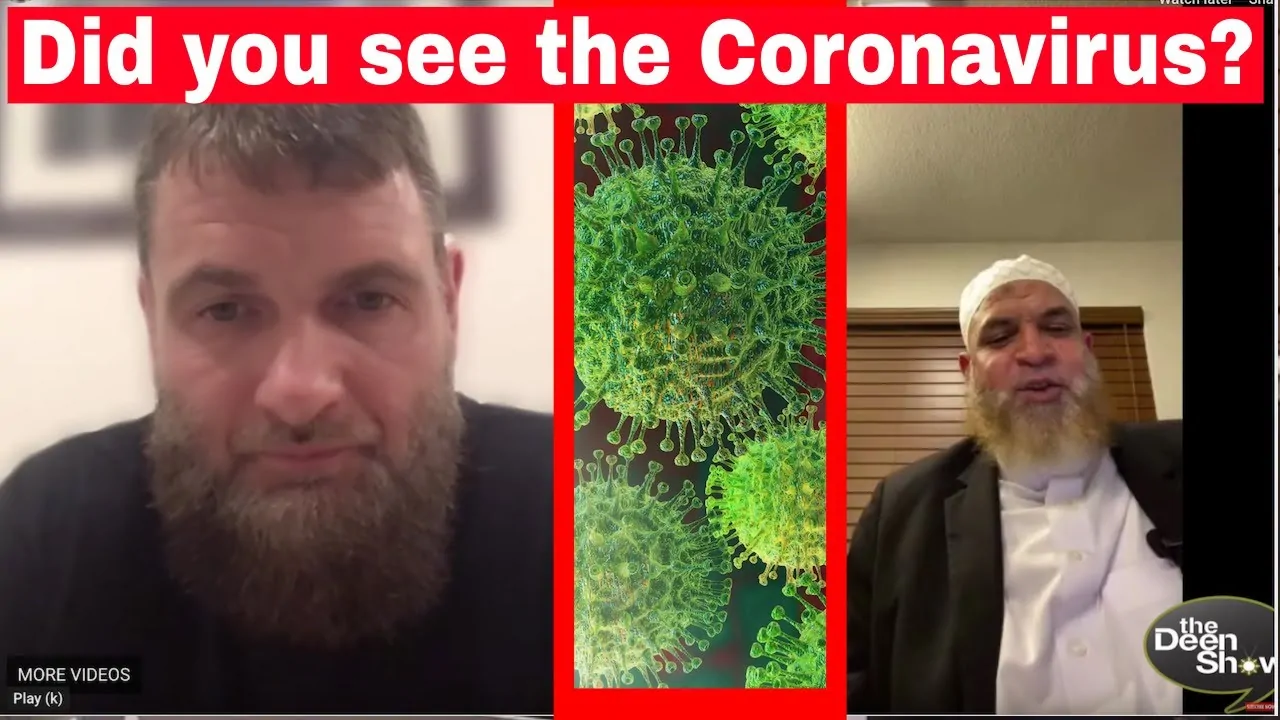
When a microscopic pathogen brought the modern world to its knees — emptying shelves, crashing financial markets, and sending billions into states of fear and isolation — the COVID-19 pandemic served as one of the most profound reality checks in living memory. For the believer, however, Islam provided exactly what was needed: not a guarantee of safety from worldly harm, but something far more valuable — a framework of faith, purpose, and certainty rooted in the knowledge that nothing occurs except by the will of Allah (SWT). In this episode of The Deen Show, Sheikh Karim Abu Zaid unpacks the Islamic response to the pandemic, showing how tawakkul (reliance on Allah), an understanding of divine decree, and the rich spiritual heritage of Islam transform a moment of global panic into an invitation for deeper guidance and genuine spiritual awakening.
Tawakkul in Times of Trial: The Believer’s Immunity
“No soul shall die until the soul lives the time it was written for it to live, and until the soul collects the provision which was destined for it to collect. So be conscious of Allah and seek your provision from lawful means.” — The Prophet Muhammad (SAW), as revealed through Jibril (AS)
This authentic Hadith anchors the Muslim’s response to crisis in something no government policy or stockpile of supplies can offer: the certainty of divine decree. Sheikh Abu Zaid explained that a true believer holds firm to the understanding that Allah (SWT) knew of every event 50,000 years before He created the heavens and the earth — He willed it, and He created it. This is not fatalism; it is what Sheikh Abu Zaid called the “provision of faith,” an immunity of the soul that allows the believer to engage with hardship completely differently from those who have no such anchor. The pandemic, in this light, is not merely a medical emergency but a test of faith — a divine invitation to examine who we truly depend upon, and a reminder that worldly security can vanish in an instant, while the bond between a servant and his Creator remains eternal. Where the world offers confusion and fear, Islam connects the believer to their Creator, their purpose, and the certainty of what lies beyond this temporary life.
Suffering, Martyrdom, and the Wisdom of Allah in Calamity
One of the most moving dimensions of the Islamic perspective on calamity is the reframing of suffering itself. Far from viewing hardship as meaningless, Islam teaches that every difficulty experienced by a believer carries the potential for profound divine reward. Sheikh Abu Zaid highlighted the Prophetic Hadith that anything which befalls a believer — even the accidental prick of a thorn — is an expiation of sins by Allah (SWT). More remarkably, a Muslim who dies in a plague or pandemic while in a state of faith is granted the rank of shaheed (martyr). History bears this out: among the Companions of the Prophet (SAW), towering figures died during the plague of Amwas in greater Syria — including companions who had been given the glad tidings of Jannah in their lifetimes. Their deaths were not tragedies stripped of meaning, but elevated stations in the sight of Allah (SWT). This understanding — that calamity can be relief, reward, and reminder all at once — is what allows the Muslim heart to hold steadiness when the world around it trembles.
- Divine decree is absolute: Allah (SWT) knew, willed, and created every event — this belief is the foundation of calm amid chaos.
- Hardship expiates sins: Every difficulty a believer endures, no matter how small, can wipe away sins through the mercy of Allah (SWT).
- Death in a plague equals martyrdom: A Muslim who dies in a pandemic while maintaining faith is granted the rank of shaheed, according to authentic Hadith.
- Calamities are reminders, not punishments: Pandemics serve as wake-up calls — for believers to renew their faith, and for others to discover the guidance of Islam.
- Islam moves you from uncertainty to certainty: Where the world offers fear and confusion, Islam connects you to your Creator, your purpose, and the eternal reality beyond this temporary dunya.
- Suffering shared is spirituality multiplied: Engaging with and supporting the wider community in times of crisis carries greater reward in Islam than retreating into isolation.
Faith in Action: Building Resilient Communities and Seeking the Means
“Tie the camel, then put your trust in Allah.” — The Prophet Muhammad (SAW)
Faith in Islam is never passive resignation; it is an active, purposeful engagement with the world grounded in the worship of the one Creator. The Prophet (SAW) dug the trench at the Battle of Khandaq — he did not simply supplicate and wait. In the same spirit, Sheikh Abu Zaid and Eddie called on Muslims to respond to COVID-19 not only spiritually but practically: developing self-sustaining communities, pursuing agricultural independence, seeking cures and solutions with the best of minds, and sharing the beauty of Islam with a world that is desperately searching for answers. The pandemic exposed the fragility of exclusive dependence on global supply chains and consumerist systems, inviting the Muslim community to build something more resilient and rooted. And yet, even in all of this, the ultimate message remains one of hope and certainty: a believer holds this world in the hand, not in the heart, knowing that true security lies only with Allah (SWT). Times of widespread fear are, above all else, invitations — to return to the Creator, to reflect on the transient nature of dunya, and to embrace the spirituality, purpose, and guidance that Islam has always extended to those willing to seek it.