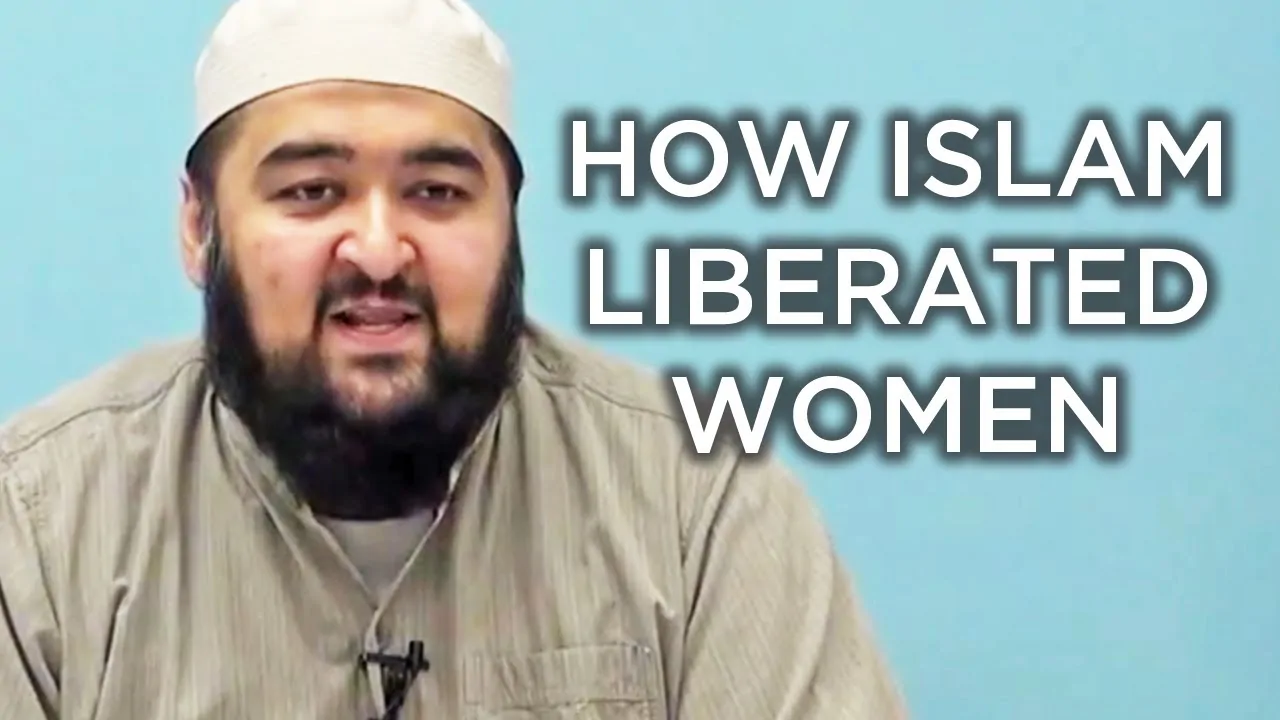
For centuries, critics have levelled the charge that Islam subjugates women — yet this claim collapses under the weight of history. Before the revelation of Islam, women across Arabia, the Roman world, and early Christendom were denied souls, stripped of inheritance, forbidden from owning property, and in some cultures buried alive as infants. Islam did not arrive into a golden age of women’s rights; it arrived into an age of profound darkness — and it brought light. Understanding how Islam liberated women requires engaging the complete picture: the Quranic verses, the Prophetic traditions, the scholarly consensus, and the pre-Islamic context against which the revelation came. To isolate a single narration and declare it the sum of Islam’s teaching on women is a methodological failure — one the tradition itself warns against. A just assessment demands we gather all the relevant evidence, weigh it together, and judge the whole.
Equal Before Allah: Spiritual Standing and Complementary Roles
The Quran establishes, with remarkable clarity, that men and women stand equal before Allah in the only measure that ultimately matters — their access to His mercy, forgiveness, and reward. Surah Al-Tawbah (9:71) describes believing men and women as each other’s protectors, united in enjoining good and forbidding evil, establishing prayer, and obeying Allah and His Messenger — upon all of whom Allah bestows His mercy equally. Surah Al-Ahzab (33:35) enumerates in parallel verse the Muslim men and women, the believing men and women, the obedient, the truthful, the patient, the humble, the charitable, and the chaste — concluding that Allah has prepared for all of them forgiveness and a mighty reward. This equality of spiritual opportunity is foundational: a woman’s soul is not lesser, her capacity for taqwa is not diminished, and her path to Jannah is no narrower than a man’s. Yet Islam also recognises that men and women are created differently — physiologically, emotionally, and in their natural strengths — and that genuine justice cannot mean forcing identical roles onto fundamentally different beings. As contemporary scholar Dr. Abdul Hakim observed, men and women are not equal but mutually superior — each excels, by divine design, in their own sphere. What Allah has prescribed is not hierarchy but complementarity, not oppression but a division of responsibility in which neither role diminishes the bearer.
“The best of you are those who have the best character, and those with the best character are those who are best to their women.” — Prophet Muhammad ﷺ (al-Tirmidhi, graded hasan)
Nine Ways Islam Liberated Women: A Historical Record
- Recognition of the soul: Large parts of the pre-Islamic Christian world denied that women possessed souls. Islam affirmed from its first revelation that every woman is an individual soul, fully accountable to Allah and equally capable of earning His mercy and entering Jannah.
- The right to education: Women were widely considered unworthy of learning across pre-Islamic civilisations. Islam declared seeking knowledge an obligation on every Muslim — male and female — recognising that an educated mother is the cornerstone of righteous generations.
- Dignity during menstruation: Jewish practice of the era required women to live separately during their cycle, treating them as severely impure. Islam clarified that the woman herself remains pure and is not to be isolated; only intercourse is restricted, while shared meals, sleeping arrangements, and everyday companionship continue completely unchanged.
- The right to inherit: Pre-Islamic women inherited nothing — wealth passed entirely to male relatives. Islam legislated specific, protected shares for daughters, wives, mothers, and sisters. In the majority of the Quran’s inheritance scenarios, women receive an equal or greater share than men; where a son receives double, it is precisely because Islamic law places the full financial burden of provision on him, not on his sister.
- Modesty as dignity, not restriction: Pre-Islamic Arabian women walked with their upper bodies uncovered, and female worth was assessed almost entirely by physical appearance, leaving women vulnerable to objectification and exploitation. The hijab Islam prescribed was not a cage but an elevation — a declaration that a woman is to be valued by her intellect, character, and contribution, not her body.
- Full property rights: Women in most pre-Islamic societies could not own property independently. Islam granted women complete legal capacity to purchase, sell, and manage assets in their own name — without a male co-signatory for commercial transactions.
- Preserved individual identity: Across much of history — including Quebec law as recently as 1981 — marriage required women to take their husband’s surname, legally dissolving their prior identity. Islam never stripped a woman of her individuality: she retains her own name, her own legal personhood, and her own direct relationship with Allah regardless of her marital status.
- Sanctity of life even in war: Islamic rules of engagement explicitly protect women and children: they are not to be harmed in battle under any circumstances. This prohibition stands in stark contrast to modern warfare’s grim tolerance of “collateral damage,” under which millions of civilians have perished.
- Financial independence within marriage: In Islam, a wife’s wealth belongs entirely to her. Her husband has no automatic legal claim over her earnings or property and cannot access her finances without her explicit permission — a protection most Western legal systems only introduced well into the twentieth century.
“The ultimate expression of freedom is to be a servant of Allah ﷻ, and the ultimate expression of enslavement is to be a slave of your own desires.” — from the Islamic tradition on true liberation
Islam’s liberation of women was not a concession wrung from reluctant men, nor a reform driven by social pressure — it was divine revelation, descending into a society steeped in female infanticide, the erasure of women’s legal identities, and the outright denial of their spiritual existence. The Prophet Muhammad ﷺ, described by his own household as a man who mended his own sandals, milked his own goats, and was always in quiet service of his family, embodied this liberation personally — never raising his hand against a woman or child, sitting with his wives as intellectual companions and sources of wisdom, and setting the standard that a man’s truest character is revealed not in the mosque or the gathering of friends, but behind closed doors, in how he treats the women of his household when no one is watching. For every Muslim today, the invitation stands: to draw so close to Allah through sincere faith and taqwa that kindness, honour, and dignity for women become not an obligation to be reluctantly discharged, but a natural, living expression of one’s spirituality — exactly as the guidance of Islam intended from the very beginning.