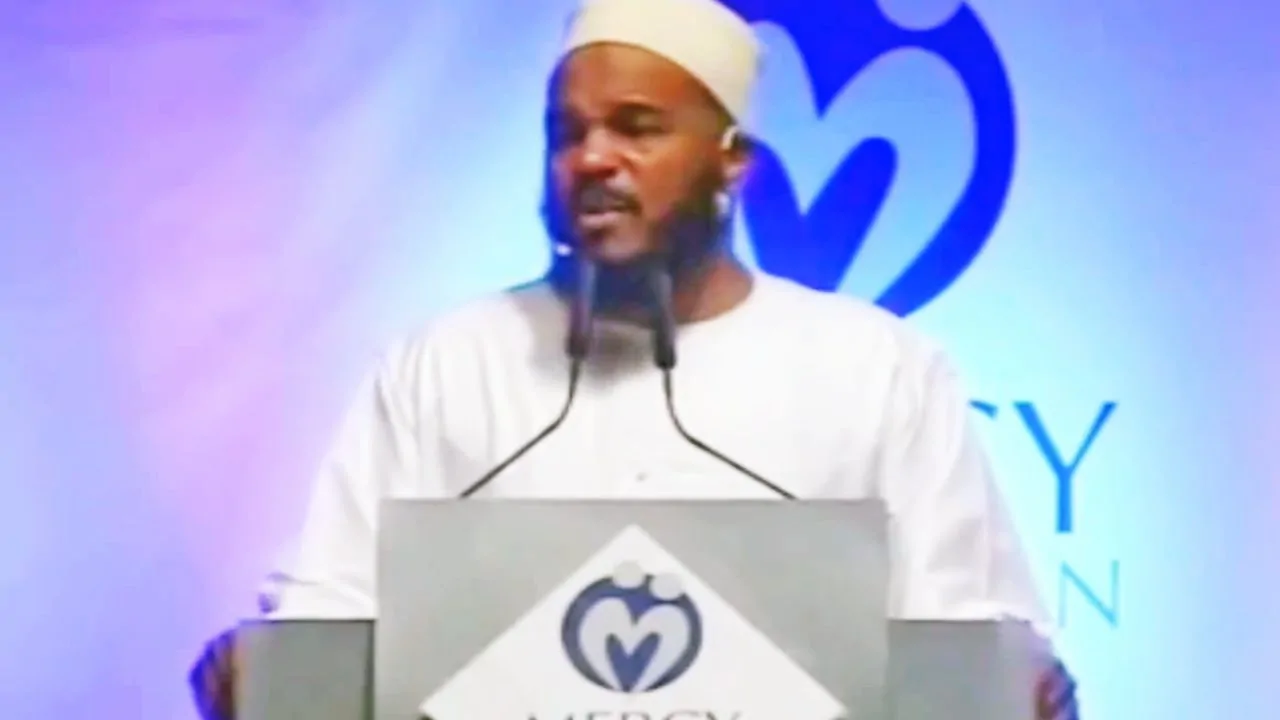
When people across the world associate Islam with honour killings, bride burning, forced marriages, or the persecution of widows, they are not encountering Islam — they are encountering the corrosive legacy of cultural inheritance mistaken for faith. In a landmark lecture delivered at the Twins of Faith conference in Kuala Lumpur (December 2011), Dr. Abu Ameenah Bilal Philips opened with two harrowing news stories: a 20-year-old woman in Dhaka burned to death over an unpaid dowry, and a widowed mother in southern Egypt strangled and dismembered by her own son simply for daring to remarry. Both perpetrators identified as Muslim. Neither act has the faintest support in the Quran or the authentic Sunnah of the Prophet Muhammad ﷺ. This is the tragedy of cultural Islam — a web of pre-Islamic legacies, borrowed customs, religious innovations, and sectarian fanaticism that conceals authentic Islamic guidance beneath centuries of inherited assumption. The stakes extend far beyond the academic: people have left Islam entirely over these very practices, believing they were rejecting a religion when in truth they were only escaping a culture that had nothing to do with the deen of Allah.
When Inherited Traditions Eclipse Divine Guidance
Dr. Philips identifies four distinct sources through which un-Islamic practices enter Muslim communities and calcify into something that feels like religion itself. The first is pre-Islamic inherited tradition — customs carried forward from before Islam reached a people. The dowry crisis across South Asia is a textbook example: in Islamic law, it is the groom who gives the mahr (bridal gift) to the bride as a symbol of his commitment and care; yet across Pakistan, India, and Bangladesh, the Hindu custom of the bride’s family paying the groom persists — a practice rooted in a culture that historically viewed women as worthless burdens — and it has produced the estimated 300 bride-burnings annually in Pakistan alone. In Egypt, the pre-Islamic Pharaonic cult of Isis left behind a cultural norm dictating that widows must never remarry; a tradition so deeply embedded that the 35-year-old woman in Dr. Philips’ second news clipping was murdered by her own son and brother for violating it — a killing rooted not in any Islamic ruling but in a pagan myth thousands of years old. The second source is adoption from surrounding non-Muslim cultures: in Malaysia, the bersanding wedding ceremony — sprinkling rose water and pandan leaves for barakah — derives directly from Hindu ritual and edges into shirk the moment participants believe these created things can channel divine blessing; as Sayyiduna ‘Umar (رضي الله عنه) affirmed at the Black Stone itself, no physical object independently carries barakah, and to believe otherwise is a serious matter of aqeedah. The tahlil gathering — reciting Surah Ya-Sin on the third, seventh, and fortieth night after death — rests entirely on fabricated narrations; there is no single authentic hadith establishing Ya-Sin as “the heart of the Quran,” nor any prophetic precedent for these timed readings. All four sources share a common response when challenged: practitioners do not engage with evidence from the Quran and Sunnah; they invoke their ancestors.
- Pre-Islamic inheritance: Dowry culture in South Asia, rooted in Hindu tradition rather than Islamic law; prohibition on widow remarriage in Upper Egypt, traced to Pharaonic Isis mythology, not any Quranic injunction.
- Adopted practices: The bersanding ceremony with rose water and flowers for barakah — borrowed from Hindu ritual and spiritually hazardous when treated as a conduit for divine blessing.
- Fabricated religious justification: The tahlil (timed Ya-Sin recitations for the deceased) and the Mawlid (the Prophet’s ﷺ birthday celebration) — neither practised by the Companions, the Tabi’in, nor the scholars of the first three generations.
- Sectarian fanaticism: Madhab loyalty elevated to the point of division, culminating in four separate congregational prayers around the Ka’bah before 1925, and historical rulings declaring it impermissible for a Hanafi Muslim to marry a Shafi’i.
- The hidden cost to faith: Websites hosting apostasy testimonials reveal that the overwhelming majority of those who left Islam did so because of cultural impositions — forced marriages, family violence, honour-based abuse — practices the Quran and Sunnah explicitly condemn, meaning the ummah is losing members over sins Islam itself forbids.
“When it is said to them: ‘Come to what Allah has revealed and to the Messenger,’ they reply: ‘What we found our parents doing is sufficient for us’ — even though their parents knew nothing, nor were they rightly guided.”
— Surah Al-Ma’idah (5:104), cited by Dr. Bilal Philips as the Quranic mirror of the cultural Muslim’s response to sincere correction — the same argument of ignorance that the pagans of Quraysh used against the Prophet ﷺ himself.
Innovation, Mysticism, and the Return to the Prophetic Standard
The third and fourth roots of cultural distortion — religious innovation and fanaticism — run deepest precisely because they carry the appearance of spirituality. The Mawlid did not originate with the Companions, the Tabi’in, or the scholars of the first three generations; it was introduced four hundred years after the Prophet’s ﷺ death by the Shia Fatimid dynasty in Egypt, and even its commonly cited date (the 12th of Rabi’ al-Awwal) lacks authentic historical verification — much as the 25th of December carries no documented link to the birth of ‘Isa ibn Maryam (عليه السلام). More spiritually dangerous is the mystical tradition that entered Islam under the broad banner of Sufism. While some Sufi-attributed virtues — voluntary worship, detachment from worldly excess, frequent dhikr — are Islamically sound, the doctrine of wahdat al-wujud (union with God) leads to outright heresy, as illustrated historically by al-Hallaj’s declaration of “I am the Truth.” In contemporary forms, this spiritual hierarchy produces extraordinary claims — including the reported belief among some followers that their sheikh will personally attend their deathbeds, receive their souls, and whisper the correct answers to the questioning angels in the grave, thereby guaranteeing Paradise regardless of one’s own sincerity and deeds. Dr. Philips draws a direct parallel to the medieval Catholic Church’s sale of papal indulgences: certificates of Paradise, issued by human authority. As for madhab fanaticism, its historical endpoint is four separate congregational prayers circling the Ka’bah simultaneously every prayer time until 1925 — Shafi’i, Hanafi, Maliki, and Hanbali congregations refusing to pray behind one another in the most sacred space on earth — structures that divided the ummah given physical form in stone. The irony is that the very imams these schools are named after never intended such rigidity; both Imam al-Shafi’i and Imam Abu Hanifah are authentically recorded as having stated the same guiding principle about their own scholarly opinions:
“If the hadith is authentic, then that is my true madhab.”
— Imam al-Shafi’i and Imam Abu Hanifah, as cited by Dr. Abu Ameenah Bilal Philips — a reminder that the great imams themselves subordinated their legal reasoning to authentic prophetic guidance, and would have been the first to correct their followers had they known how fanaticism would develop.
The distinction Dr. Bilal Philips draws is not a call to cultural arrogance or the erasure of legitimate regional diversity within Islam — food, dress, architecture, and many aspects of daily life may vary among Muslim peoples without conflict, provided they do not contradict divine instruction. The line is crossed precisely where cultural practice collides with Quranic injunction or authentic prophetic guidance, and especially where it causes spiritual harm by introducing shirk or heretical belief, or physical harm by normalising violence, abuse, or the distortion of established Islamic rites. Authentic Islamic culture belongs to no single ethnicity or geography; it is produced wherever sincere Muslims implement the Quran and the Sunnah as understood by the first generations of this ummah — the sahabah who lived alongside the Messenger ﷺ and received revelation not as inherited assumption, but as lived transformation. For Muslims today — whether navigating family pressure to observe culturally ingrained customs, or seeking to explain Islam to those who have been repelled by its cultural distortions — the path forward requires the same honest courage: to distinguish between what Allah and His Messenger ﷺ actually commanded and what has merely been passed down from pre-Islamic neighbours, borrowed from surrounding civilisations, or invented by later scholars and saints. That discernment is, as Allah reminds us in Surah Al-Jumu’ah (62:2), precisely why a Messenger was sent among an unlettered people — to recite to them the divine verses, to purify them, and to teach them the Book and the wisdom, lifting them from manifest error into the clarity and mercy of authentic guidance.