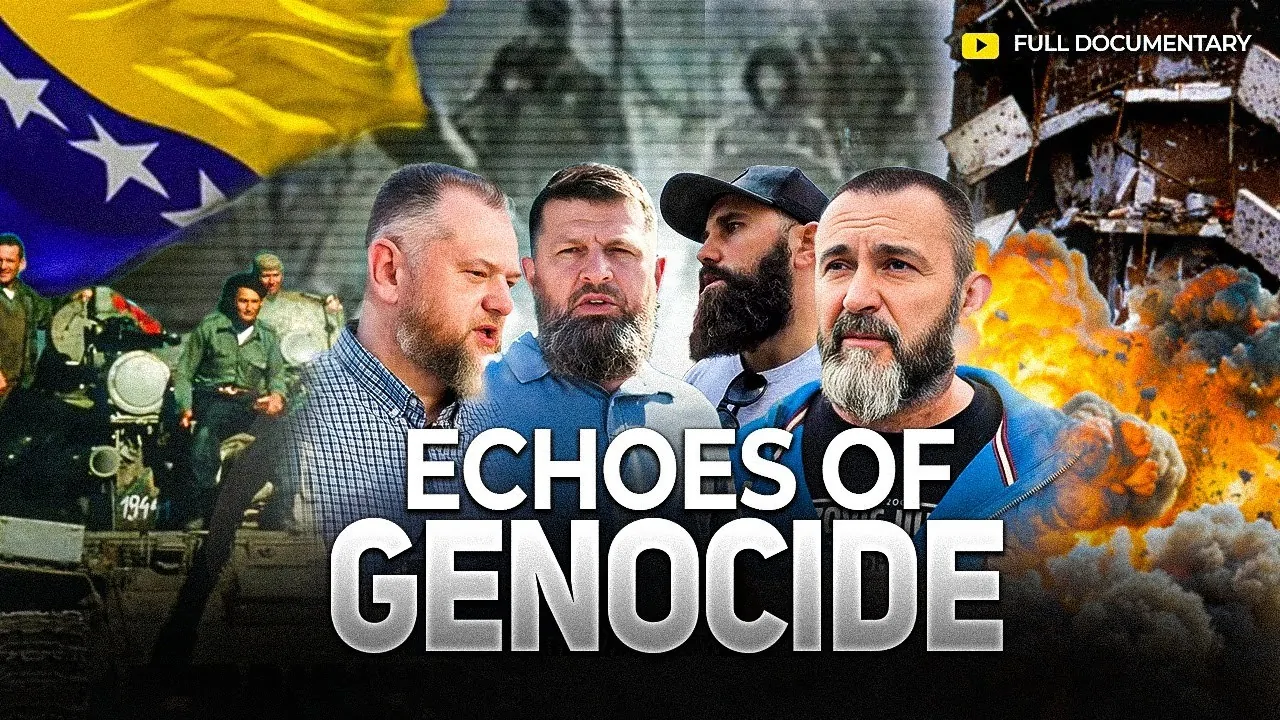
The story of Bosnia is one that every truth-seeker must confront — a land where mosques, churches, and synagogues stood side by side for centuries, where Muslim, Christian, and Jewish communities thrived in a harmony rooted in Islamic principles of coexistence and protection. Yet in the 1990s, this pluralistic society was shattered by a campaign of genocide that targeted Bosnian Muslims simply for their faith. Understanding the Bosnian Muslim genocide is not just a history lesson; it is a call to justice and a reminder of what happens when hatred is allowed to fester unchecked.
A Legacy of Islamic Coexistence Destroyed by Hatred
Bosnia — often called the “Jerusalem of Europe” — was a living mosaic of faiths for over a thousand years. When Jewish families were expelled from Spain during the Inquisition of 1492, it was the Muslim Ottoman Empire that welcomed them, and many found refuge in Sarajevo. This tradition of acceptance was nurtured under the wings of Islam, a force that preserved not just religion but the very essence of community. Neighbors were mixed — Muslims and Orthodox Christians played soccer together, attended school together, and shared daily life across the same streets. No one believed the horror that was coming.
“We were all mixed. We were all playing soccer. We were sitting in school together. We never trusted that something could happen to us — that someone could come across the street and tell you, ‘Hey, this is not your country. You’re Muslim. You got to go.'”
The Systematic Campaign Against Bosnian Muslims
Beginning in April 1992, the genocide unfolded with chilling precision. Serb forces captured strategic hilltops, bridges, and supply routes to isolate and dominate Bosnian cities, turning once-safe neighborhoods into open-air prisons. Sarajevo, Srebrenica, and Mostar became synonymous with both suffering and resistance. Snipers engaged in what was called “safari hunting,” targeting Muslim civilians — men, women, and children — as they searched for food and water. The plan was not merely military conquest; it was the deliberate erasure of an entire Muslim population from their homeland. Key elements of the genocide included:
- Systematic massacres in towns like Bijeljina, Prijedor, and Srebrenica targeting Muslim communities
- Siege warfare designed to starve and terrorize civilian populations in cities like Sarajevo
- Destruction of mosques and Islamic cultural heritage to erase centuries of Muslim presence
- Forced displacement of families and the deliberate division of Bosnia between aggressors
- Dehumanizing propaganda that labeled Muslims as “Turks” and “kebab” to justify mass killing
“They could be gone, but they are still here because of Islam — a force that preserved not just religion, but the very essence of community.”
Faith, Resilience, and the Demand for Justice
Despite the genocide, the Bosnian Muslim spirit was never extinguished. Today, Bosnia stands as a testament to the resilience of faith and the enduring truth that Islam has always been a force for peace, protection, and pluralism in Europe. Visitors speak of a profound sense of peace felt in Sarajevo’s streets — a peace born from struggle, survival, and unshakeable belief in Allah. The story of Bosnia demands that the world never forget this injustice, that we speak the truth about what happened, and that we stand firmly on the side of justice for every Muslim community facing persecution. The lessons of Bosnia are clear: when good people remain silent, evil advances — and it is upon every person of conscience to ensure that genocide against Muslims is never repeated or forgotten.