Eid Mubarak — two words that reverberate across mosques, homes, and communities in every corner of the world, carrying with them a joy that is both deeply personal and universally felt among Muslims. Yet for many people, whether those deepening their own Islamic faith or curious neighbours wondering what Muslims are celebrating, the full spiritual significance of Eid remains unexplored. Eid in Islam is not simply a cultural holiday or a day off work; it is a divinely instituted celebration of gratitude, rooted in the completion of one of the greatest acts of worship a believer can perform. Understanding what Eid is — and why it is celebrated — is to understand something essential about Islam itself: that worship and joy are not opposites, but are inseparably intertwined in the life of a Muslim who submits to Allah subhanahu wa ta’ala with sincerity and love.
The Deep Roots of Eid — A Celebration Connected to Every Prophet of God
The Arabic word “Eid” derives from a root meaning “something that keeps coming back” — a beautifully descriptive phrase for a celebration that is always anchored to a completed act of worship. Eid al-Fitr, celebrated at the end of Ramadan, honours the month-long fast through which Muslims commemorated the revelation of the Quran to the Prophet Muhammad, peace be upon him. Eid al-Adha, observed after Hajj, celebrates the completion of pilgrimage and the obedience of Prophet Ibrahim, peace be upon him. Even the weekly Friday Jumu’ah prayer was described by the Prophet, peace be upon him, as a kind of weekly Eid — a recurring celebration of connection with God. What makes this particularly significant from an Islamic and interfaith perspective is that Eid is not a new invention; it is part of a universal tradition of faith. Islamic scholarship affirms that all prophets and messengers sent by God — from Ibrahim to Musa to Isa (Jesus), peace be upon them all — shared the same four core missions: proclaiming God’s existence, worshipping Him alone, calling people toward benefit and away from harm, and upholding ethics and morality. The Quran itself confirms that fasting was “ordained on you the way it was ordained on people prior to you” — meaning the celebration that follows an act of worship is part of an ancient and unbroken lineage of monotheistic faith, not a practice unique to Muslims alone.
- Eid al-Fitr celebrates the end of Ramadan — the month in which the Quran was revealed — and is a day of deep gratitude to Allah for the blessing of divine guidance
- Eid al-Adha follows the Hajj pilgrimage and commemorates the sacrifice and obedience of Prophet Ibrahim, peace be upon him, reinforcing the universal spirit of submission to God
- Allahu Akbar (God is the Greatest) — the Takbeer recited throughout Eid is not merely a phrase but a declaration shared by every prophet throughout history, including Jesus, peace be upon him
- All prophets shared the same core mission: worship God alone, invite to good, prevent harm, and uphold moral integrity — Eid celebrates the sincere fulfilment of that mission
- Eid is inclusive by prophetic design: the Prophet, peace be upon him, brought women, children, and the elderly to the open-air prayer, making it a universal celebration of community and faith
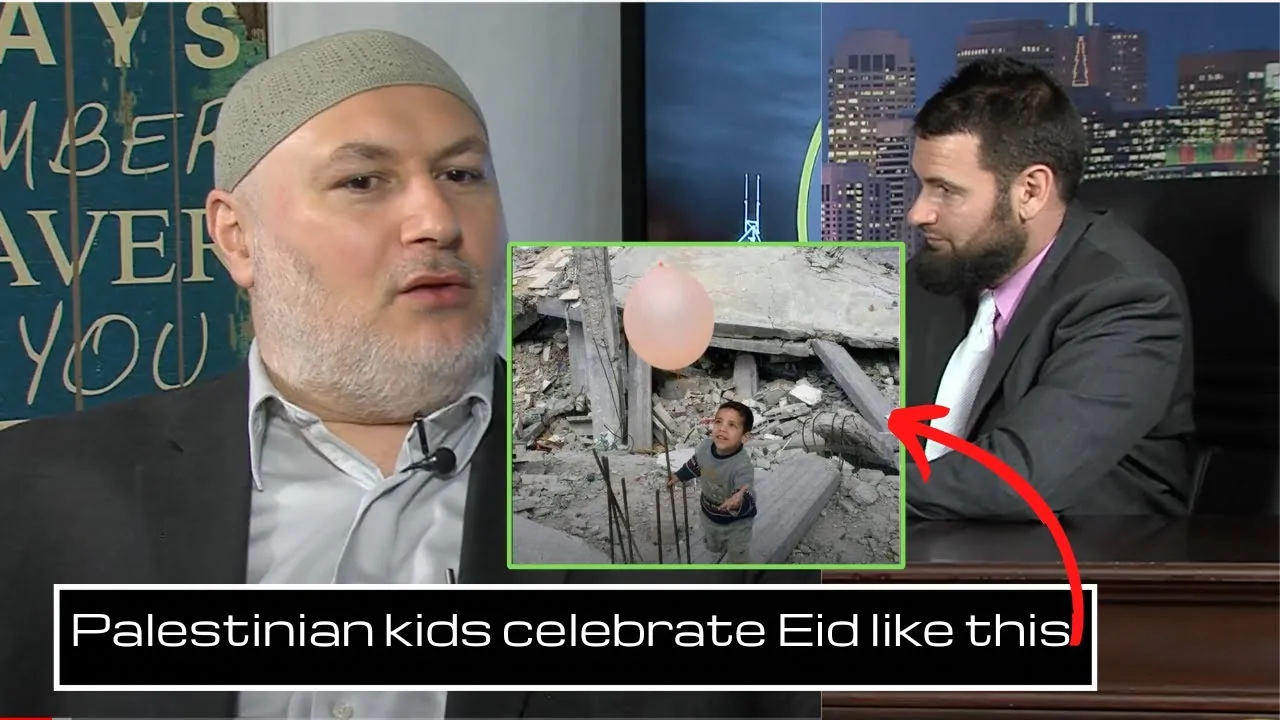
“Do not let these dark events stop you from celebrating Eid. It is our Islamic holiday and it is a day to be happy. Even people in Gaza are preparing for Eid. We will not let anyone or anything destroy our special God-given day.” — Sheikh Omar Suleiman
How to Observe Eid — Practices, Prayer, and the Prophetic Tradition
The practices of Eid are rich with spiritual meaning and prophetic guidance, beginning from the eve of the celebration itself. As soon as Ramadan ends, Muslims begin reciting the Takbeer — declaring “Allahu Akbar” as a joyful affirmation that nothing is greater than God — continuing until the Eid prayer is performed. On the morning of Eid, Muslims are encouraged to eat something light before heading to the prayer, specifically breaking the fast as an act that marks the joyful end of Ramadan; this small but meaningful act is itself a Sunnah. The Eid prayer is traditionally performed outdoors or in a large open space in accordance with the prophetic tradition of accommodating the entire community — men, women, children, and the elderly — in one unified act of worship before their Lord. The prayer consists of two rak’at with additional Takbeers: seven extra in the first rak’ah and five in the second, each a declaration of God’s absolute greatness. Following the prayer, the Imam delivers a khutbah (sermon) addressing the needs and concerns of the Muslim community, including — especially in these times — the suffering of Muslims in Gaza, Syria, and beyond. Eid is also a time to dress well, to visit family, to offer gifts, to share sweets with neighbours as a means of dawah, and to reach out to those in need — all acts that the Prophet, peace be upon him, modelled and encouraged as natural expressions of a heart genuinely grateful to its Creator.
- Break the fast early on Eid morning — eating before the prayer is a Sunnah, a joyful marker that the obligation of Ramadan has been fulfilled
- Recite the Takbeer from the evening before Eid until the prayer — encourage your family to join, filling your home and car with the declaration of God’s greatness
- Attend the Eid prayer in congregation, ideally outdoors, with the entire community including women and children — this communal act of worship is central to the spirit of the day
- Listen attentively to the khutbah — the sermon carries communal guidance, reminders of global Muslim struggles, and a call to unity and purpose
- Share sweets and gifts with neighbours — a powerful opportunity to introduce Islam’s spirit of generosity and to fulfil the rights your neighbours hold over you
- Take a different route home as per the Sunnah — a symbolic reflection of entering Ramadan as one person and leaving as a renewed, transformed believer
- Make sincere Dua for the oppressed — Eid joy does not mean forgetting brothers and sisters in Gaza and beyond; it means praying for them with even greater urgency and compassion
Carrying Eid’s Spirit Through the Year — Faith, Brotherhood, and Unbroken Momentum
“The one who repents from sin is like the one who has no sin — you have spent this entire month repenting to the Creator alone. Don’t let it slow down. Continue to do good, continue to work for the Hereafter by doing good deeds, and continue to make Dua for all those who are suffering and oppressed.” — The Deen Show
Ramadan is often described as a “faith station” — a month designed not merely to be endured, but to refuel and rebuild the soul for the year ahead. The Prophet Muhammad, peace be upon him, taught that whoever fasts Ramadan and follows it with six days of voluntary fasting in Shawwal will be rewarded as though they had fasted the entire year — a beautiful illustration of how Islamic guidance is designed for spiritual sustainability, not seasonal bursts. The habits built through Ramadan — the early mornings, the recitation of Quran, the acts of charity, the guarding of the eyes and ears from what displeases Allah — are not meant to be boxed away with the prayer mats until next year; they are the very foundation of a spiritually purposeful life. For those whose hearts are heavy as they celebrate, watching the suffering of innocent children in Gaza and Syria while dressing for Eid prayer, Islamic guidance offers a complete response: celebrate as Allah has commanded, for even those in hardship are preparing for Eid, and simultaneously carry their pain in your dua, your sadaqah, and your advocacy for justice. Donate to trusted relief agencies, speak the truth in whatever platform you have, and let gratitude for your own blessings sharpen your resolve rather than silence your conscience. Eid is not the end of something — it is the beginning: a God-given day of joy that launches the believer forward, renewed, grateful, and determined to be the best human being possible in the year that lies ahead.