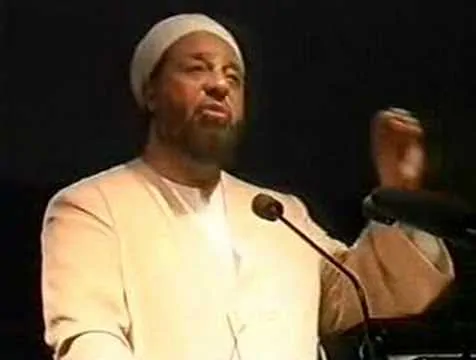
When Shaykh Abdullah Hakim Quick, PhD — a scholar who reverted to Islam in 1970 and has since traveled to more than 34 countries in service of da’wah and Islamic education — opened the floor for questions after his lecture, the responses confirmed what he had witnessed across Muslim communities worldwide: the crisis within our homes is real, it is urgent, and it can no longer be buried in silence. This Q&A session deliberately sets aside the well-documented external pressures Muslim women face — the media attacks, the anti-hijab legislation in France and elsewhere, the hostile political climates — because those are already visible to all. What this session illuminates instead is the internal struggle: the war of spirituality, purpose, and faith that unfolds quietly in Muslim marriages, behind the doors of Muslim homes, and in the hearts of those who have suffered without guidance or support for far too long.
Acknowledging the Internal Crisis: From Denial to Faithful Action
From Canada to South Africa to the broader Western world, the response to Shaykh Quick’s lecture was identical — a collective recognition that behind the outward practice of Islam, something has gone deeply wrong in many Muslim homes. Abuse is not a foreign problem imported from outside our communities; it is a reality that has been met, too often, with collective denial. Shaykh Quick was unequivocal: this denial is part of Shaytan’s strategy to weaken Islam from within, and the antidote is courage — the courage to speak, to seek help, and to stand up for those who cannot stand up for themselves. He urged Islamic organizations and centers to establish practical social service facilities staffed by qualified counselors, noting that many of the questions submitted during the session were too personal and serious to be addressed publicly — they required professional, confidential support. For every Muslim who witnesses injustice or abuse in any form, the prophetic guidance leaves no room for passivity:
“If any of you sees evil, then change it with his hands; if he cannot do that, then with his tongue; if he cannot change it with his tongue, then at least feel it in his heart — but that is the lowest form of faith.” — The Prophet Muhammad ﷺ
- Abuse is a community issue, not merely a private one — silence only empowers the abuser; it must be broken through counseling, community leadership, and proper Islamic channels of accountability.
- Social service centers are not a luxury but a necessity — Islamic organizations must go beyond religious programming to offer structured support, trained counselors, and safe referral systems for those in crisis.
- The wali’s role does not end at the nikah — family and guardians carry an ongoing responsibility to protect women within marriage; giving a daughter in marriage is not the same as giving her away entirely.
- Pre-marital counseling and written conditions strengthen marriages — sitting with an Imam or counselor before the nikah, and writing clear shurut (conditions) into the marriage contract, can prevent many conflicts that arise from mismatched cultural expectations.
- New Muslim sisters must be guided by trained female mentors — when a woman embraces Islam, she should be supported by knowledgeable Muslim sisters in the da’wah, not left in situations where Shaytan can find an opening.
Wisdom, Modesty, and the Prophetic Model for Muslim Family Life
Beyond the crisis of abuse, the Q&A addressed the everyday realities of Muslim families navigating faith, identity, and purpose in the modern world. On Islamic dress, Shaykh Quick was clear that modesty is not a switch flipped for Salah — it is a consistent expression of one’s Muslim identity, and the same integrity that covers a person in the masjid must accompany them outside of it; this obligation of modesty and lowering the gaze, he reminded the audience, applies equally to men and women. On women in the workforce, he applied the Islamic principle of hikma — wisdom — acknowledging that while the ideal arrangement places financial responsibility on the husband, the Muslim community genuinely needs female doctors, teachers, and skilled professionals; women who can pursue that service while maintaining their deen, their Salah, and their Islamic dress should be supported and protected in doing so, not discouraged with an inconsistency that demands female Muslim doctors while forbidding Muslim women from university. On the masjid, he stated plainly that every mosque must provide a space for women to pray, citing the hadith of the Prophet ﷺ which explicitly forbids preventing women from attending — a ruling too often quoted only in its second half. On polygamy, he acknowledged its permissibility under the strict Quranic condition of justice, while being honest that many men are not in the financial, emotional, or spiritual position to fulfil that condition, and that abuse within plural marriages must never be normalized. For communities facing external legal challenges to religious practice, he called for Muslim unity across different orientations, the formation of civil rights organizations modelled on CAIR in America, and the use of legal tools and public relations to defend Muslim rights — confidently, openly, without apology. And threading through every answer was the reminder that the ultimate model for Muslim family life has always been the Prophet ﷺ himself:
“The Prophet ﷺ used to run races with his wife, sew his own clothes, sweep the floor, and play with his children — and he was receiving revelation from above seven heavens. So if he can do that, why can’t we put quality time with our families into our schedule?” — Shaykh Abdullah Hakim Quick
The overarching message of this Q&A is not despair, but accountability and renewal. Shaykh Quick’s closing reflection — that Muslims must move away from denial and draw closer to the way of the Prophet ﷺ, asking Allah to forgive us for the state of weakness in which we find ourselves — is not a statement of defeat. It is a call to every Muslim, male and female, to take honest stock of their responsibilities: to their spouses, their children, their communities, and their Islam. The solutions are not theoretical; they are practical, they are rooted in the Quran and the Sunnah, and they are already being built by those who have chosen action over silence. For any Muslim reflecting on this session, the question is no longer whether this internal crisis exists — it is what each of us, guided by faith and the prophetic example, will choose to do about it.