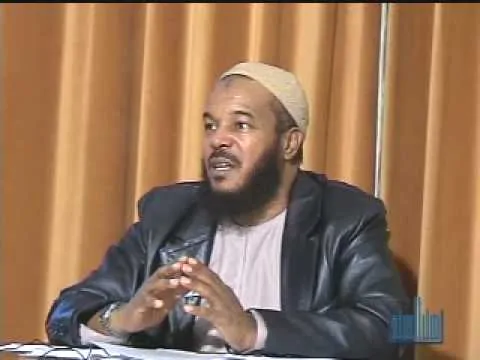
Part 7 of the Ultimate Dawah Course shifts from structured lesson into live Q&A — the crucible where dawah theory meets the complexity of real human experience. Bilal Philips, one of the most widely respected Islamic scholars and authors of our time, and a da’ee through whom Allah guided hundreds of soldiers to Islam during the first Gulf War, fields questions ranging from how to respond to a Christian’s personal miracles to the Islamic ruling on music, the obligations of a new revert, and the challenge of Islam wrapped in layers of cultural tradition. What emerges is not just a masterclass in Islamic knowledge, but a portrait of what grounded, compassionate dawah actually looks like in practice.
When “My Prayers Were Answered” — Responding to Experiential Faith With Wisdom, Not Dismissal
One of the most emotionally charged questions in this session comes from a revert whose Christian family member insists on her faith not out of ignorance, but because of lived experience — answered prayers, prophetic visions, and a miraculous recovery she attributes to Jesus. Bilal Philips responds not with confrontation but with a disarming logical parallel: if a Hindu devotee prays to Ganesha and receives what appears to be a divine answer, does that confirm Hinduism as truth? The Christian would say no — and yet by that same standard, answered prayers alone cannot serve as the determining criterion for theological truth. Islam recognises that Allah, in His infinite mercy and wisdom, responds to the sincerity of the human heart regardless of where it is directed — and that jinn, too, are capable of producing the apparitions and phenomena that different communities across every religion have experienced throughout history. Visions are not unique to Christianity. On the concept of Jesus as the “begotten Son of God,” Bilal Philips traces the word itself: begotten means born of, implying physical birth — a characteristic that is categorically incompatible with the nature of the Divine, and a term the Old Testament itself applies to others beyond Jesus.
“If a Hindu prays to Ganesha and his prayers are answered, do we accept that as proof Hinduism is true? Then we have to ask the Christian — answered prayers alone do not establish which religion is correct. It is Allah who answers prayers, regardless of the direction they are sent.” — Bilal Philips
Questions from Within: Music, Obligations, Culture, and the Modernist Challenge
The session turns inward to address questions that Muslims themselves wrestle with every day. On music, Bilal Philips offers a clarity that cuts through popular misconception: the base ruling is permissibility — the vast majority of what exists in this life is halal, and the forbidden things are few, even if Shaytan has made those few things feel indispensable. It is specifically wind and stringed instruments that the Prophet ﷺ prohibited, because of their unique capacity to captivate the heart in a way that blocks it from the Quran of Allah — while voice-based singing and percussion like the duff remain entirely permissible. On obligations for a revert sister struggling to keep pace, the message is deeply reassuring: the fard is the baseline and the guarantee. The Prophet ﷺ himself said of a man who committed to only the obligatory acts and nothing more: “He will enter Paradise if he is truthful.” The Sunnah is additional reward — not a burden on those still finding their footing in faith. On culture-laden Islam, whether in Africa, Asia, or the Balkans, the solution is a return to the Quran and Sunnah as the foundational reference, not inherited tradition. And on those who seek to modernise Islam for contemporary sensibilities, Bilal Philips is unequivocal: a religion reshaped by human hands loses both its divine purity and its timeless uniqueness — the very qualities that distinguish it from every other worldview.
- Which Bible version to use: The Revised Standard Version is most useful — it marks where verses have been deleted, providing evidence of textual change without the Muslim having to make the claim themselves.
- Sharing a past life in dawah: Speak in general terms, not specifics — mentioning particular sins in detail can introduce harmful thoughts to listeners who were never exposed to them, and what is unnecessary is better left unsaid.
- Fard vs Sunnah for new Muslims: Fulfilling the obligatory acts is sufficient for salvation. Sunnah prayers bring additional reward but carry no sin if missed — many people mistakenly treat them as equivalent.
- Music in Islam: Singing and the duff are permissible; the prohibition falls on wind and stringed instruments, which hold a particular power over the heart that competes with the Quran’s influence.
- Islam mixed with culture: Bring people back to Quran and Sunnah as primary sources — this gives them the tools to evaluate and correct cultural baggage themselves, from a foundation of knowledge rather than external pressure.
- Women travelling without a mahram for dawah: The prohibition stands even for noble purposes — the restriction exists to protect, not to limit service to Islam, and dawah opportunities exist locally without necessitating a forbidden journey.
- Separate dawah tables for brothers and sisters: Islamically preferable — two tables allow natural self-directing of enquirers to the appropriate person and avoids the issues of free mixing in a public setting.
The Dawah That Worked on the Da’ee: Bilal Philips’ Own Path to Islam
“After reading ‘Islam: The Misunderstood Religion’, I was convinced from a political level that Islam was the right way — everything good in Communism, everything good in Christianity, it was all there in Islam. But belief in God took time after years of denying His existence. Allah gave me personal signs in my life, and after reflection, I accepted Islam.” — Bilal Philips
Perhaps the most quietly powerful moment of this entire session is when the teacher is asked what type of dawah worked on him. A former communist who had spent years in ideological certainty that God did not exist, Bilal Philips describes a gradual unravelling — first a friend’s conversion that prompted curiosity, then a book that satisfied the intellect, and finally the personal signs that Allah placed in his own life to bridge the distance between intellectual conviction and genuine faith. Belief, he acknowledges, is not a switch that flips in an instant. It is something that takes root in soil prepared by reflection, sincerity, and divine guidance. This is the deepest lesson of Part 7: dawah is not a debate to be won, and Islam is not an argument to be delivered. It is a mercy extended from one searching heart to another, grounded in authentic knowledge, shaped by compassion, and ultimately in the hands of Allah alone. For every Muslim who has ever felt unequipped, hesitant, or overwhelmed by the questions that come — this course, and this session in particular, offers both the tools and the reminder that the da’ee’s own journey is often the most powerful evidence they carry.