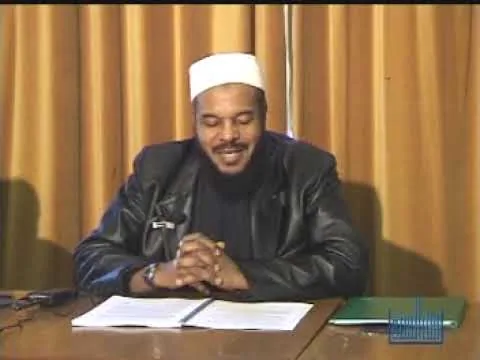
Most Muslims have experienced it — the awkward silence when a non-Muslim colleague asks about polygamy, the fumbled response when someone challenges whether Islam was “spread by the sword,” or the quiet guilt of spending years alongside non-Muslim friends without ever mentioning Islam. That gap between knowing your faith and being able to speak about it with confidence is precisely what Sheikh Bilal Philips addresses in this landmark series. Drawing on his years of experience at the Qatar Guest Centre for Islamic Information — where he personally guided hundreds to embrace Islam, including foreign troops during the first Gulf War — Philips distils a structured nine-session dawah training course into this Ultimate Dawah series, equipping Muslims of every background with the A-to-Z toolkit they need to carry the message of Islam with clarity, conviction, and purposeful wisdom.
Why Dawah Is a Duty, Not a Choice
One of the most important clarifications Bilal Philips offers from the outset is the widespread misunderstanding that dawah is merely a sunnah — something praiseworthy but optional, rewarded if done and harmless if left. The Arabic term operates in two entirely different fields: in the science of hadith, it refers to everything the Prophet ﷺ said, did, or approved; in Islamic law, it denotes a recommended act with no punishment for omission. People conflate these meanings to excuse inaction. Citing scholars such as Sheikh Ibn Baz, Philips explains that in an era where callers are scarce, evil is widespread, and ignorance dominates — precisely the era we inhabit — dawah becomes an individual obligation upon every Muslim according to their ability. The Quran issues a stark warning: Allah and all who would curse have cursed those who hide clear guidance after it has been revealed (Al-Baqarah 2:159). Passive silence is not a safe middle ground; it carries a serious spiritual consequence.
“Who is better in speech than one who calls to Allah, does righteous deeds, and says: Indeed, I am among the Muslims?” — Quran, Surah Fussilat (41:33)
- Dawah is an individual obligation when callers are few and misguidance is prevalent — this is the ruling of major scholars, not merely a personal recommendation.
- Silence is not neutral: spending years alongside a non-Muslim colleague or classmate without ever sharing the message constitutes indirect concealment of knowledge, which carries its own accountability before Allah.
- No knowledge threshold required: the Prophet ﷺ said, “Convey from me even if it is only one verse from the Quran” — and Surah al-Ikhlas, which every Muslim knows, is described by the Prophet ﷺ as equivalent in meaning to one-third of the entire Quran.
- Every dawah effort generates continuous reward: whoever guides another to Islam receives the same reward as that person’s good deeds without any reduction — a compounding investment that will arrive on the Day of Judgement from sources the caller never anticipated.
- Planning is essential: as the management principle reminds us, “If you fail to plan, you plan to fail” — Muslims serious about sharing their faith should develop a personal dawah plan tailored to their specific workplace, university, or community context.
Calling to Allah — Not to Groups, Madhabs, or Movements
Bilal Philips is equally emphatic about what dawah is not. The full Arabic phrase — da’wa ilallah, a call to Allah — defines its very essence. When Muslims fall into sectarianism, steering new converts into specific movements, madhabs, or tribal loyalties rather than into Islam as it was revealed, they distort the call they intended to carry. Philips addresses head-on the perennialist notion — that sincerity across all religions leads to God — rejecting it with the Quranic ruling that no path other than Islam will be accepted (Aal Imran 3:85). There is one God, one human nature, and therefore one religion revealed for all of humanity from the time of Adam (AS) to the last generation. Authentic dawah calls to the Quran and Sunnah as understood by the Companions and the great Imams of early Islam — not personal interpretation or modern revisionism — and it is addressed to Muslims and non-Muslims alike, following the methodology of the Prophet ﷺ himself, who never turned anyone away from the message of guidance.
- Dawah is to Allah alone: calling people to a particular madhab, movement, or personality instead of to the way of the Prophet ﷺ is a deviation from the true purpose of the call.
- The audience is universal: the Prophet ﷺ gave dawah to Muslims and non-Muslims both — the technical distinction between dawah (for non-Muslims) and islah (for Muslims) is a modern invention with no Prophetic precedent.
- One path, but a broad one: differences of opinion existed among the Companions on secondary matters; the Straight Path is wide enough to accommodate legitimate scholarly difference while remaining firm on the fundamentals of faith.
- Perennialism is clearly rejected: Islam is not one spoke in a wheel of equivalent religions — Allah revealed one religion for one human race, and the message of His Oneness is the core of every dawah conversation.
- Call with clear knowledge: the Prophet ﷺ described his path as calling to Allah “with clear knowledge” — dawah built on doubt, supposition, or half-understood arguments does not fulfil the obligation.
“The way of Allah the Mighty and Majestic is submission — the Straight Path, the religion of Allah which He sent His Messenger with. Therefore this is what must be called to, not the madhab of such and such a person nor the opinion of any individual. The Muslim caller must call people to the whole of Islam and not cause division among them, nor be a blind follower of any madhab, tribe, or leader.” — Bilal Philips, citing classical Islamic scholarship
What makes this series genuinely transformative is that it moves beyond theory into structured, actionable practice rooted in Islamic spirituality and purpose. Participants in the Qatar Guest Centre course develop a personal dawah plan, engage at least one non-Muslim in conversation before the next session, and use an encounter evaluation sheet to track their progress and refine their approach. The accompanying course manual contains more than 80 concrete ways to give dawah — from distributing literature at work to building meaningful relationships at university — dismantling every “I have no opportunity” excuse. Even the study of reversion stories is reframed not as passive entertainment but as strategic insight: what was the specific turning point that opened each person’s heart to Islam, and how can that understanding be woven into your own dawah? Whether you are a student, a professional, a new Muslim, or someone who has never spoken about their faith to a single person, this introduction to the Ultimate Dawah Course begins with the most foundational truth of all — that carrying the message of Islam is not a specialist role reserved for scholars, but a living spiritual responsibility entrusted to every believer, and that the reward Allah has attached to it is, by His infinite mercy, far greater than we will ever fully comprehend in this life.