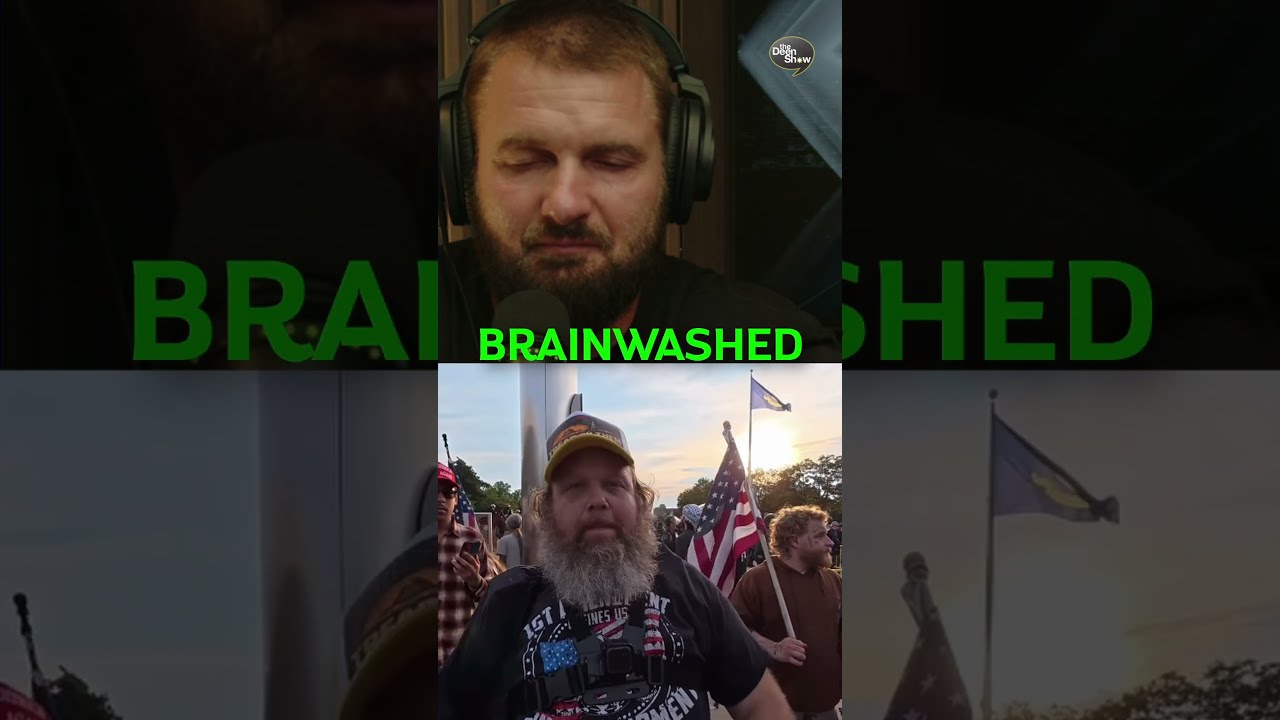
What happens when a self-described “racist Tommy Robinson lover,” steeped in years of EDL propaganda and far-right social media echo chambers, decides to walk alone into a mosque — not to protest, but to confront his fears face-to-face? The answer, as Islam Jackson’s extraordinary story reveals, is nothing short of a complete transformation of heart, identity, and purpose. This is not a story about politics. It is a story about what Islam truly is — a faith of peace, compassion, and universal guidance — and what becomes possible when a person replaces fear-driven hatred with the courage to seek truth.
Radicalized by a Screen: How Fear-Mongering Propaganda Shapes the Mind
Islam Jackson grew up in a small village in northeast England, and like many young men drawn into online rabbit holes, his entire understanding of Muslims and Islam came filtered through EDL accounts, Tommy Robinson videos, and far-right social media. He had never met a Muslim in a meaningful way, never read about the Prophet Muhammad (peace be upon him), never stepped inside a mosque — yet he was absolutely certain that Muslims were dangerous and that Islam was a threat. The radicalization was gradual, fuelled by fear-mongering clips, selective news stories, and algorithms designed to confirm his worst suspicions. His own sister was in a relationship with a Muslim man, and Jackson refused even to meet him. He spent years picking arguments with Muslims online purely out of hatred. A school teacher friend would gently offer alternative perspectives, but the propaganda was louder — until a simple, pivotal question finally planted a seed: “Have you ever thought about going to a mosque to actually ask them yourself?” That question, resisted for years, ultimately changed everything. Key truths his journey exposes about radicalization and the path out of it:
- Online radicalization operates through a feedback loop — extreme content recommends more extreme content, creating a distorted worldview with no grounding in lived reality.
- Tommy Robinson (real name Stephen Christopher) monetizes anti-Islam sentiment: when funds raised for a “campaign bus” disappeared without accountability, Jackson noticed — and began to question everything.
- People fear what they do not understand; genuine, face-to-face encounter with a Muslim community is often the only force capable of dismantling years of manufactured hatred.
- Islam is the fastest-growing religion on earth, with two billion followers spanning every race, ethnicity, and nationality — the idea that it is foreign or threatening collapses the moment you sincerely engage with it.
- When an EDL member knocked on the mosque door and announced himself as such, expecting confrontation, the Imam’s response was a calm smile and the words: “Please come in.”
“If you learn about Islam — go to a mosque and talk to an actual imam — there’s nothing but peace and love from Islam. I can say that from the bottom of my heart. Learn about the life of Prophet Muhammad, peace be upon him.”
— Islam Jackson, former EDL supporter and new Muslim
Du’a Answered: Finding Faith, Purpose, and Healing Where Hatred Once Lived
Islam Jackson’s visit to the mosque was planned to last half an hour. He stayed three hours, mesmerized. The imam listened without anger, explained the deen with patience, and invited him to watch the prayer. Standing in the prayer hall for the first time, Jackson experienced something he still struggles to articulate — an overwhelming sense of peace and spiritual belonging, as though he had found the place he was always meant to be. He began praying in the Islamic way, initially out of raw desperation in a prison cell, facing a remand he had been told was certain. He prayed to Allah — and was released. Every du’a since, he testifies, has been answered: reconnection with his daughter, reconciliation with his father, a path out of addiction. In January of this year, he took his shahada in front of the imam — a full, conscious commitment to Islam as his faith, his identity, and his purpose. He is now in the process of legally changing his first name to Islam. The mosque where he prays every week is the same mosque he once stood outside and protested against being built. The circle is complete. The episode draws a sharp and sobering contrast: Elon Musk — one of the world’s most influential and resourceful men — continues to publicly champion Tommy Robinson despite mounting evidence of criminal conduct, misuse of donated funds, and the testimonies of insiders who have seen through the facade. Islam Jackson’s message to Musk and every supporter who has been fed the same propaganda is direct and generous: the courage it takes to knock on a mosque door costs nothing, and what you will find behind it is not a threat — it is the mercy, peace, and guidance that flows from submitting to the Creator of the heavens and earth.
“No one is born hating another person because of the color of their skin, or his background, or his religion. People must learn to hate. And if they can learn to hate, they can be taught to love — for love comes more naturally to the human heart than its opposite.”
— Nelson Mandela
Islam — the very word means submission to God, the same Creator that Jesus (peace be upon him) called upon in Aramaic, using the name “Allah.” It transcends race, culture, and geography. It is a universal call, present in every human fitrah — that innate disposition to know and return to the One who created us. Islam Jackson’s story is living proof of what answering that call looks like in practice: a man who once picketed a mosque now prays in its front row, at peace with himself, reconnected with his family, and free from the hatred that had consumed him for years. For every person whose heart has been flooded with far-right propaganda, whose fear of Islam was manufactured by social media algorithms and figures who profit from division — the door of the mosque remains open. Walk through it. Ask your questions honestly. You may find, as Islam Jackson did, that the life you were searching for was waiting there all along, and that what felt like the end of a journey into confrontation was, in truth, the beginning of everything.