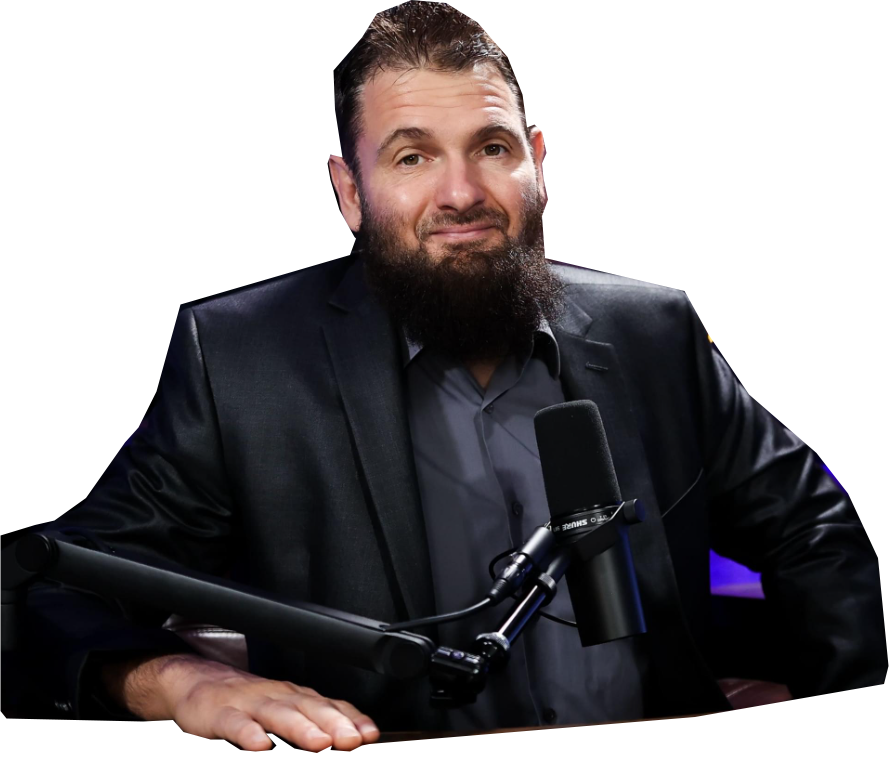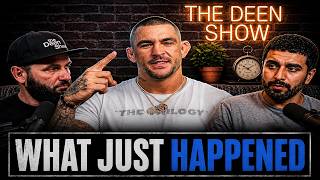
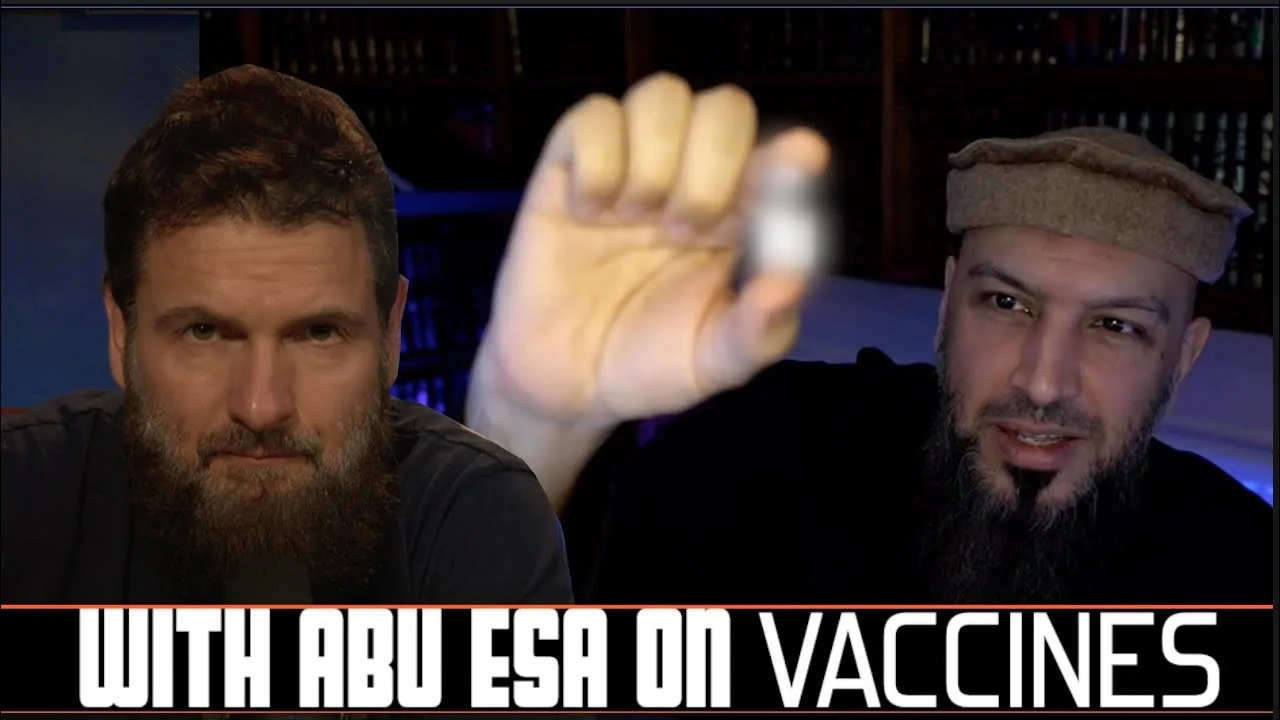
When a clinical pharmacist who also teaches Islamic jurisprudence at the Maghrib Institute sits down to discuss vaccines, the conversation will not be simple — and that is precisely the point. In this episode of The Deen Show, host Eddie connects with Shaykh Abu Eesa for a rare, grounded dialogue on one of the most polarizing health topics of our time. Rather than a debate, this is an exchange rooted in evidence, Islamic principle, and the recognition that sincere questions deserve honest answers. For Muslims seeking guidance on navigating health decisions through the lens of faith, and for non-Muslims curious about what Islam genuinely teaches about medicine and reason, this conversation is both timely and essential.
Pro-Evidence, Not Anti-Vaccine: The Distinction That Changes Everything
Shaykh Abu Eesa brings a uniquely powerful perspective: a career spanning community pharmacy, pharmaceutical manufacturing, quality control, and clinical practice in a neonatal intensive care unit — combined with deep study of Islamic law and years of teaching at the Maghrib Institute. His position is neither reflexively pro-vaccine nor anti-vaccine, but firmly pro-evidence. In a landscape where nuanced voices are routinely silenced by binary labels, he draws a distinction that too often gets lost: questioning the safety of specific ingredients or the independence of regulators does not make someone anti-medicine or anti-science. He notes that doctors and pharmacists themselves are among the most cautious about over-medication — the UK’s National Health Service is structurally incentivised to prescribe as little as possible, producing a healthcare culture markedly different from the profit-driven US model, where paying $200–300 for a brief appointment creates entirely understandable cynicism. Meanwhile, Islam has always championed holistic wellbeing: practices like cupping (hijama) and acupuncture predate modern medicine by millennia, and the prophetic guidance on diet, fasting, and cleanliness reflects a faith tradition that regards the preservation of health as a divine trust — one that demands we engage with evidence carefully, not blindly.
“I just believe in being pro-evidence. Somebody who wants to get mercury out of fish — he’s not anti-fish.”
- Questioning vaccine ingredients or scheduling is not the same as being anti-science or anti-medicine — labelling sincere inquiry as “anti-vax” shuts down legitimate dialogue.
- Holistic health practices — nutrition, cupping, fasting, lifestyle medicine — are fully consistent with Islamic teachings on preserving health (hifz al-nafs), one of the five essential objectives of Islamic law.
- Healthcare economics shape public attitudes: financial incentives embedded in private systems produce legitimate skepticism that deserves understanding, not dismissal.
- Independent, conflict-free regulatory bodies are a moral necessity — science must not be captured by the financial interests of those it is meant to oversee.
- Spreading fabrications and misinformation about health, on any side of any debate, is categorically forbidden in Islam: truth-telling is an obligation, not an option.
Islam’s Medical Legacy and the Obligation to Seek Truth With Integrity
One of the most illuminating moments in this conversation is Shaykh Abu Eesa’s reminder that Muslims are not latecomers to immunisation — they are its pioneers. The Ottoman Empire played a decisive role in developing systematic inoculation against smallpox centuries before Edward Jenner formalised the practice for the Western world. Far from existing in tension with medicine, Islam built many of the intellectual foundations upon which modern medical science rests. This history reframes the entire vaccine discussion: a practicing Muslim who demands transparent evidence, insists on rigorous independent research, and asks hard questions about conflicts of interest in pharmaceutical regulation is not betraying Islamic values — they are living them. Equally, a Muslim who chooses to trust a particular vaccine after careful, informed study is exercising the same principle of evidence-based reasoning. What Islam cannot accommodate, in either direction, is the deliberate fabrication and spreading of falsehoods — a line Shaykh Abu Eesa draws with unmistakable clarity, grounded not in politics but in the Quranic imperative that truth, when brought face to face with falsehood, is always the stronger.
“If Allah has not obligated vaccines upon a person, how can we say anything against someone who says ‘I’d rather not’? Our problem is those who spread fabrication and lies — that is a major problem, and Islamically, Muslims can never stand for that.”
What this episode ultimately offers is not a verdict on vaccines, but a model for how Muslims — and all thoughtful people — should engage with difficult, contested questions sitting at the intersection of faith, science, and public health. The Deen Show has long served as a platform for cutting through misinformation and presenting Islam not as a tradition retreating from the modern world, but as a comprehensive way of life that equips its followers with both the intellectual and spiritual tools to engage every domain of human knowledge with integrity and purpose. Shaykh Abu Eesa’s dual formation — in the laboratory and in the masjid — is a living expression of that integration. His call is simple and deeply Islamic: pursue the evidence, reject falsehood, protect the vulnerable, and never let tribalism replace the disciplined, God-conscious search for truth. In an age of algorithmic outrage and hardened certainty, that kind of measured, humble, faith-anchored reasoning is not just admirable — it is, in the fullest sense, the way of the believer.