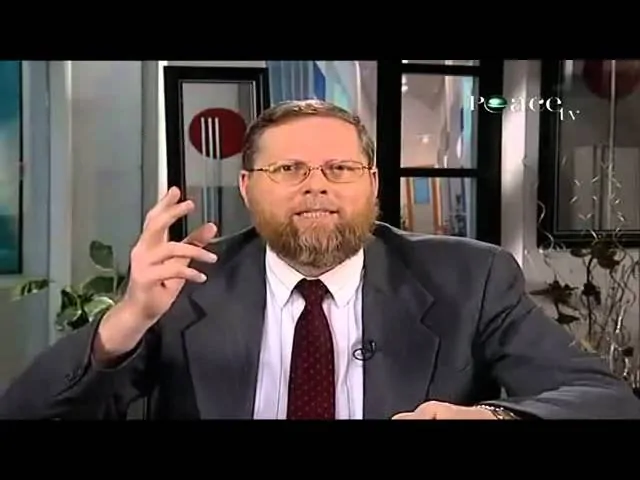
In this second instalment of Dr. Laurence Brown’s five-part lecture series on the evidence for the prophethood of Muhammad (ﷺ), the discussion moves from character to concrete, verifiable signs — the kind that invite serious reflection from anyone willing to examine Islam with an open heart. Dr. Brown, a physician, retired US Air Force officer, and ordained interfaith minister with a doctorate in divinity and a PhD in religion, brings rare analytical rigour to a subject that has guided billions toward faith, purpose, and spiritual certainty. Picking up from part one, this episode explores two distinct categories of prophetic miracles: those that occurred around the Prophet (ﷺ) as evidence of divine favour, and those performed through him by the will of Allah — together forming a body of evidence that, examined honestly, points unmistakably toward guidance from beyond the human.
Signs of Divine Protection: The Miracles Surrounding the Prophet (ﷺ)
Dr. Brown opens by noting that the miraculous signs surrounding the Prophet (ﷺ) follow a pattern familiar across scriptural traditions — from Allah saving Daniel from the lions and Jonah from the whale, to the virgin birth of Jesus Christ (peace be upon him). From the very night of Muhammad’s birth (ﷺ), a Jewish scholar in Medina — over 200 miles from Mecca, with no possible means of receiving news — was heard crying out that the star of Ahmad, the foretold Prophet, had risen. In adulthood, as he bore the message of revelation, the attempts on his life were numerous and relentless: a disbeliever snatched the Prophet’s own sword and held it to him demanding, “Who will save you now?” — the man’s hand became paralysed and the sword dropped. Abu Jahl advanced with a boulder to crush the Prophet’s skull while he prayed in prostration, only to be repelled by a terrifying vision no one else could see. Abu Lahab’s wife, intent on stoning him, stood directly beside him and could not perceive him. And on the eve of the Hijra, with a mob of assassins encircling his home, the Prophet (ﷺ) walked out through their midst reciting Quran — not one among them saw him pass.
- Multiple assassination attempts — by sword, boulder, poison, and mob — were thwarted by direct divine intervention across many years
- The Prophet (ﷺ) never raised a false alarm: every plot he identified proved real; he named none that were not
- Despite constant threats, he dismissed his bodyguards entirely — an act explicable only through unshakeable trust in Allah’s promise to protect him
- The warrior Suraqa ibn Malik, a renowned horseman, was thrown by his own horse three consecutive times while pursuing the Prophet (ﷺ) during the Hijra
- The Prophet (ﷺ) then foretold that Suraqa would one day wear the crown and bracelets of the Emperor of Persia — prophecy fulfilled decades later when the Muslims conquered Persia
- The Nestorian monk Bahira identified the young Muhammad (ﷺ) as the foretold final messenger by the Seal of Prophethood on his back, when the Prophet (ﷺ) was still a child travelling with a caravan
“Allah will defend you from men who mean mischief.” — The divine promise upon which the Prophet (ﷺ) placed his full trust when he released his bodyguards, recorded in the Quran (5:67) and demonstrated across the full span of his prophetic mission
Miracles Channelled Through the Prophet (ﷺ): From Badr to the Night Journey
The second category of evidence encompasses miracles performed through the Prophet (ﷺ) by Allah’s permission — a tradition of divine empowerment that runs through every true prophetic lineage. At the Battle of Badr, the Muslims faced an army four times their size, with no cavalry and inferior armour; yet enemy casualties outnumbered Muslim losses five to one — the precise inverse of what military logic would predict. As the Prophet (ﷺ) threw a handful of earth toward the enemy lines calling upon Allah, a desert storm arose and threw the Qurayshi ranks into confusion. Allah later affirmed in the Quran: “When you threw, it was not your act but Allah’s.” Beyond battle, an army of 1,400 was fed to satisfaction and filled their saddlebags from a few handfuls of mixed provisions; a quantity of water sufficient for one sufficed for 1,400 to drink and perform wudu; healings extended to broken bones, war wounds, inflamed eyes, poisonous stings, and restored sight to the blind. Rain came in response to supplication during drought, and when asked to spare the city from flooding, it parted and surrounded the community without falling upon them. And towering above all of these in singularity was the Isra wal-Mi’raj — the Night Journey — in which the Prophet (ﷺ) was transported from Mecca to Jerusalem and through the heavens in one night, returning with a description of Jerusalem so precise that those who had visited personally confirmed it could only come from someone who had seen it with their own eyes, and with knowledge of a caravan two days distant whose people, animals, and events he described in detail without any natural means of knowing them.
- Battle of Badr: outnumbered 4:1 with inferior weapons and armour, the Muslims were victorious and enemy losses were 5:1 against all expectation
- Feeding of 1,400 men from a few handfuls of food — with enough remaining to fill every saddlebag — attested across multiple chains of narration
- Water for 1,400 men to drink and perform ritual purification produced from a quantity sufficient for only a few
- A dry goat produced milk; a weary camel was revitalised; a stick of wood became a sword — blessings channelled through the Prophet (ﷺ) and attributed always to Allah
- The healing record includes a broken leg (Abdullah ibn ‘Atik), a war wound (Salama), Ali’s inflamed eye, Abu Bakr’s venomous sting, and sight restored to a blind man
- The Night Journey to Jerusalem and the heavens stands as a sign verified by the Prophet’s (ﷺ) precise geographical knowledge of a city he had never visited
“When you threw, it was not your act but Allah’s.” — Quran 8:17, revealed after the Battle of Badr, affirming that the Prophet (ﷺ) acted as a vessel of divine will, not through his own power
For the sincere seeker of truth, the cumulative weight of this evidence — spanning decades, attested by companions and enemies alike, covering two distinct categories of miraculous sign — is not easily set aside. Even those who opposed Islam most fiercely acknowledged the character of Muhammad (ﷺ), calling him Al-Amin: the trustworthy. The prophecy given to Suraqa ibn Malik, made by a man fleeing persecution with a small band of followers, promising a warrior-enemy that he would one day wear the crown of the Persian Emperor, would have been considered madness from anyone but a divinely guided prophet — and yet it came to pass, exactly as spoken. Islam does not ask for blind acceptance; it invites every person of reason to weigh the evidence honestly, through the lens of spirituality, logic, and the sincere search for guidance. The series continues in part three, and for those whom this episode has moved to ask deeper questions about faith, purpose, and the nature of prophethood, the journey that millions before them have taken across fourteen centuries of Islamic history awaits.