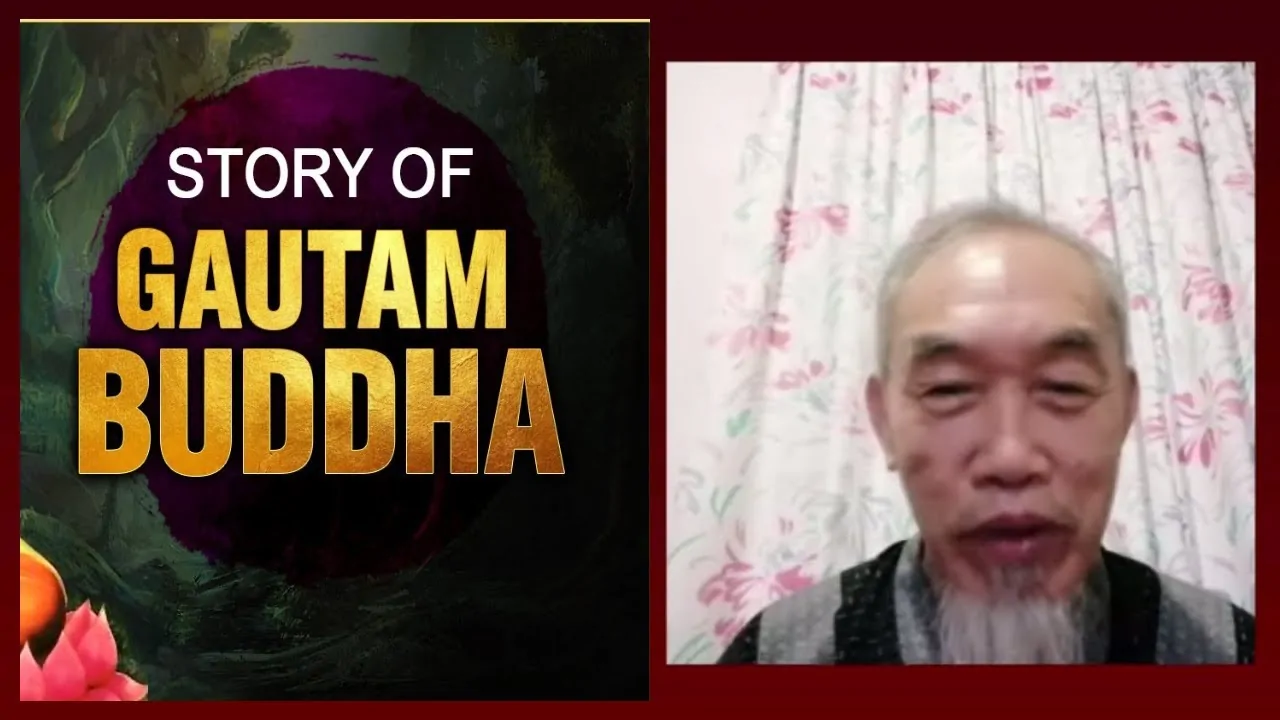
Few questions cut to the heart of spiritual inquiry quite like this one: could Gautama — the man history knows as the Buddha, “the Enlightened One” — have been a prophet sent by God? On The Deen Show, Shaykh Hussain Yee, a former Buddhist and Christian who spent years traversing man-made religious traditions before finding certainty in Islam, takes this question seriously and with remarkable depth. Drawing on lived experience and Islamic scholarship, he traces Gautama’s life, explores striking parallels between Buddhist teachings and the defining pattern of prophethood, and unpacks how a message that may have originated in divine guidance was gradually — as has happened in every generation — distorted into idolatry, commercialism, and blind ritual. Woven throughout is a broader call: Islam’s universal message of mercy, purpose, and guidance is not for Muslims alone; it is, as the very letters of the word declare, a commitment to love all of mankind.
Gautama’s Awakening and the Prophetic Pattern in Islamic Thought
Islamic tradition affirms that Allah sent over 124,000 prophets throughout human history — only 25 are named in the Qur’an, while countless others remain known to their Creator alone. Shaykh Hussain Yee notes that every prophet shared a defining mission: to convey glad tidings (bashiran) and to warn (nadhiran). What makes Gautama’s story compelling through this lens is how closely his life mirrors the prophetic journey. Born a prince and shielded from reality inside palace walls, he experienced a divine awakening — what Muslims would call hidayah — when he first witnessed human suffering: poverty, illness, and old age. Compelled to seek truth, he made what resembles a form of hijra, leaving behind privilege to search for answers. He rejected extreme asceticism because it violated his innate sense of dignity and balance. Eventually, he entered khalwa — spiritual seclusion — just as the Prophet Muhammad ﷺ retreated to the cave of Hira and Prophet Musa (peace be upon him) ascended the mountain for divine communion. The word “Buddha” itself derives from “bud,” meaning awakening — what Muslims would recognise as hidayah from Allah. And crucially, Gautama’s teachings consistently concluded with the concept of “sukkha,” a Sanskrit term meaning glad tidings and warning — precisely the hallmarks of prophethood in Islamic theology. While Islam cannot definitively confirm his status without Qur’anic or hadith evidence, the parallels are too profound to dismiss without sincere reflection.
“We know that our Prophet ﷺ mentioned there are 124,000-odd prophets that have been sent. Of course, only 25 are recorded in the Qur’an — but there are many whose names are not known; only Allah knows best. Why we say it is not impossible is because of the teaching. Every prophet was sent as a bearer of glad tidings and a warner. And if you look into the teaching of Gautama, you find he always ended with ‘sukkha’ — in Sanskrit, this means glad tidings and warning, good news and bad news.” — Shaykh Hussain Yee
When Pure Guidance Becomes Man-Made Religion — and What Islam Preserves
History reveals a recurring and painful pattern: divine guidance arrives through a prophet, but once he departs, later generations — driven by commercial interest, cultural drift, or blind imitation — distort the original message beyond recognition. Shaykh Hussain Yee draws a direct parallel between what happened to Gautama’s teachings and what occurred after Prophet Isa (Jesus, peace be upon him): neither called people to worship them, yet both became objects of veneration and idolatry. Just as the father of Prophet Ibrahim (peace be upon him) profited from selling idols, later followers of Gautama commercialised his image, transforming a call to spiritual awakening into a business of idol worship. The Qur’an repeatedly guards against this very danger, commanding believers never to say or do anything without knowledge (Surah Al-Isra) — because blind following is the gateway through which every previous tradition has been corrupted. This is the living safeguard Islam provides. And it is why Islam’s comprehensiveness is so striking to sincere truth-seekers: a Muslim must believe in Isa, Musa, Ibrahim, the Torah, the Injil, and all the prophets — none are rejected. When you enter Islam, as Shaykh Hussain Yee explains from his own journey through Buddhism and Christianity, you do not lose anything; you gain the complete, uncorrupted picture. The key lessons from this conversation include:
- Allah sent prophets to every nation — Gautama’s teachings of glad tidings and warning closely parallel the Qur’anic definition of prophetic mission
- Buddhism, like other traditions, was distorted over time through commercialism, idol worship, and uncritical following — not through the original teachings of its founder
- The Qur’an commands believers to think and reflect; blind following without knowledge is identified as the primary cause of religious corruption across all traditions
- Islamic education (tarbiyah) must transmit values and understanding, not merely ritual — memorising the Qur’an without comprehension cannot build sincere, grounded faith
- Islam’s belief system uniquely encompasses all prophets and revealed scriptures, making it the most comprehensive framework for those genuinely seeking divine guidance
- Muslim leaders must engage proactively — leader to leader, following the prophetic example — to present Islam with clarity, courage, and mercy to a world that desperately needs it
The Mercy of Islam and the Timeless Call to Awakening
“Having mercy means you are prepared to go through all the pain and suffering just to save others — to bring people from darkness to light, even when they are not ready to accept it, even when they go against you. Because of the mercy you have, you keep on praying for them, you keep on inviting them.” — Shaykh Hussain Yee
The name Islam itself encodes this universal mission. As Shaykh Hussain Yee shared: I-S-L-A-M — “I Shall Love All Mankind.” The Prophet Muhammad ﷺ was not sent as a mercy to Muslims alone, but as rahmatun lil ‘alamin — a mercy to all the worlds. That mercy, as this conversation powerfully illustrates, is not the shallow language of empty slogans; it is a commitment to endure hardship, to pray for those who oppose you, to keep inviting even when rejected — because guidance ultimately rests with Allah, not with us. Whether one comes from a background in Buddhism, Christianity, or is born into a Muslim family yet has drifted from Islam’s substance into mere ritual without understanding, the invitation remains the same: awaken, reflect, and follow the guidance that Allah in His infinite mercy has preserved — complete and unchanged — in the Qur’an and the Sunnah of His final messenger ﷺ. Gautama’s story, whatever his ultimate spiritual station, is a reminder that the human soul — in every age, in every culture — is instinctively drawn toward truth, toward its Creator, and toward the purpose for which it was made. Islam answers that call completely.