There are questions that every soul — regardless of culture, creed, or century — has been compelled to confront: What is the end of this world? What awaits us after death? Is there a day when all accounts will finally be settled? Surah al-Haqqah, the 69th chapter of the Qur’an, answers these questions not with philosophical abstraction but with vivid, urgent, undeniable certainty. Its very opening — al-Haqqah, “the Inevitable Reality” — repeated three times in quick succession, is itself a rhetorical thunderclap, compelling the listener to sit up and pay attention. For believers walking the path of Islam, this surah is not merely recitation; it is a mirror, a warning, and an affirmation of the haqq — the absolute truth — that defines our faith, our purpose, and our spirituality on this earth.
Civilisations That Defied Their Lord — and the Consequence Allah Decreed
The surah opens by grounding its cosmic claims in history. The people of Thamud, who rejected the Prophet Salih (peace be upon him), were annihilated by a single overwhelming blast. The ‘Ad — powerful, arrogant, and dismissive of their messenger Hud (peace be upon him) — were erased by a screaming, violent wind that Allah unleashed upon them for seven consecutive nights and eight days, leaving their bodies like hollow trunks of fallen palm trees, with not a single remnant surviving. Pharaoh and those who came before him, along with the people of the overturned cities, perished because they disobeyed the messengers of their Lord, and He seized them with a seizure exceeding in severity. Yet even amid this destruction, Allah’s mercy was present: when the floodwaters rose, He carried the believers in the sailing ship — an event He explicitly preserved as a reminder “that a conscious ear would be conscious of it.” Each of these accounts is not legend; it is divine guidance embedded in scripture, a pattern of consequence woven into human history to awaken the hearts of those who seek truth and faith.
“And as for ‘Aad, they were destroyed by a screaming, violent wind — which Allah imposed upon them for seven nights and eight days in succession, so you would see the people therein fallen as if they were hollow trunks of palm trees. Then do you see of them any remains?” — Surah al-Haqqah (69:6–8)
- Denial of divine messengers follows a recurring pattern — civilisation after civilisation chose arrogance over submission, and each faced a consequence proportionate to its defiance.
- Power and prosperity offer no protection against Allah’s decree — both the mighty ‘Ad and the technologically formidable Thamud were erased without remainder.
- Allah’s mercy coexists with His justice — while the deniers were destroyed, the believers were preserved in the ark, and that act of salvation was itself made a reminder for all who came after.
- History within the Qur’an is active guidance — these narratives are not included for academic interest but to shape the decisions of those who hear them today.
The Day Every Soul Stands Exposed — and the Two Eternal Destinations
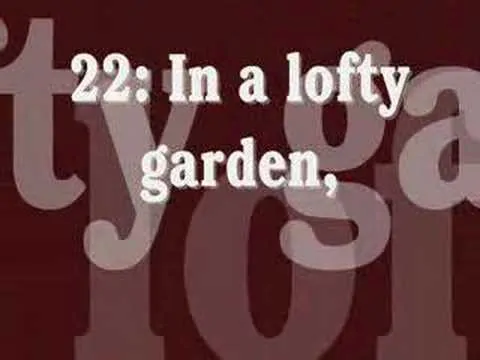
With the historical record established, Surah al-Haqqah pivots to the future — the Day that all of human history has been building toward. A single blast of the Trumpet, and the earth and mountains are lifted and crushed in one blow. The sky splits open, its fabric weakened and fragile. The angels stand at its edges, and eight of them bear the Throne of Allah above them on that Day. There is no privacy, no concealment, no spin — every soul is exhibited exactly as it is. The Qur’an then presents two portraits in absolute contrast: the person given their record in the right hand, radiating joy — “Here, read my record! Indeed, I was certain that I would be meeting my account!” — who dwells in an elevated garden with fruit hanging close, invited to eat and drink in satisfaction for what they sent forth in the days past. Then the other: the one given their record in the left hand, overcome with despair — wishing for death, lamenting that their wealth and authority have all perished — seized, shackled, driven into the Fire and bound in a chain of seventy cubits, because they neither believed in Allah, the Most Great, with sincerity, nor encouraged the feeding of the poor. The contrast is total and the detail deliberate. Within Islam, accountability is not vague or abstract — it is personal, complete, and utterly just, and the surah makes unmistakably clear that neglecting social conscience is as spiritually consequential as abandoning prayer.
- The Day of Judgement is singular and certain — belief in it (al-yawm al-akhir) is a foundational pillar of Islamic faith, and this surah’s very name declares it inevitable.
- Preparation is a present-tense responsibility — the record received on that Day reflects the deeds “put forth in the days past,” making every moment of this life a deposit toward eternity.
- Generosity toward the poor is inseparable from faith — the condemned are explicitly identified as those who “did not encourage the feeding of the poor,” linking social conscience directly to one’s standing before Allah.
- Worldly power evaporates completely — “My wealth has not availed me. Gone from me is my authority” is one of the Qur’an’s most sobering refrains, dismantling the illusion that status confers divine favour.
- Both joy and regret are described with emotional immediacy — the surah invites the believer to feel the weight of both outcomes viscerally, so that guidance translates into a changed life, not merely agreed-upon theology.
The Qur’an’s Divine Origin — An Oath by All That Exists
“So I swear by what you see and what you do not see — indeed, the Qur’an is the word of a noble Messenger. And it is not the word of a poet… nor the word of a soothsayer… [It is] a revelation from the Lord of the worlds. And if Muhammad had made up about Us some [false] sayings, We would have seized him by the right hand; then We would have cut from him the aorta.” — Surah al-Haqqah (69:38–46)
Surah al-Haqqah closes with one of the Qur’an’s most direct and powerful self-attestations. Allah swears by all that is seen and all that is unseen — an oath encompassing the entirety of existence — to affirm that this scripture is the speech of a noble Messenger, not the invention of a poet’s imagination nor the murmuring of a soothsayer. Had the Prophet Muhammad (peace be upon him) fabricated even a single word against Allah, we are told, the divine response would have been immediate and absolute — with no one able to prevent or intercede. This is not merely theological assertion; it is a challenge to every sceptic across every age. The surah then names the Qur’an as a reminder for the righteous, a source of regret for those who denied it, and — above all — the truth of absolute certainty. For anyone seeking genuine spirituality and guidance in a world saturated with noise, distraction, and competing ideologies, Surah al-Haqqah offers an anchor: a revelation whose divine origin is sworn upon by its own Author, whose preservation across fourteen centuries stands as living evidence of its claim, and whose final command rings with timeless clarity — “Glorify the name of your Lord, the Most Great.” This surah does not invite passive belief. It calls for a life genuinely transformed by the knowledge that the Inevitable Reality is coming, that every deed is recorded without exception, and that the most rational, most purposeful, most spiritually sound response to that truth is to live with sincere faith in Allah, compassion toward His creation, and the certainty that what we send forward into the unseen will be waiting for us — held in the right hand or the left.