
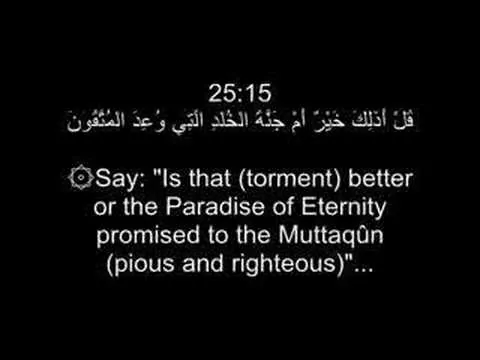
Surah al-Furqan — the twenty-fifth chapter of the Qur’an — opens with one of the most majestic declarations in all of divine scripture: an affirmation that the Book sent to Prophet Muhammad ﷺ is not merely a spiritual guide but an unambiguous criterion separating truth from falsehood, guidance from misguidance, and the path to Paradise from the road to ruin. In a world saturated with competing ideologies, false deities, and the whispers of unchecked desire, this surah arrives as a timeless anchor for the believer’s faith — a reminder that the Creator of the heavens and earth, the One Who formed every living thing with precise determination, has not left humanity without direction. For anyone seeking clarity on the purpose of life, the nature of God, and the reality of what awaits, Surah al-Furqan speaks with a directness that cuts through every layer of doubt, offering the spiritually searching soul exactly the solid ground Islam promises.
The Qur’an as Divine Criterion: Silencing the Objections of Every Age
“Blessed is He who sent down the Criterion upon His Servant that he may be a warner to the worlds — to Whom belongs the dominion of the heavens and the earth. He has not had a son, nor has He a partner in dominion. And He created all things and determined them with precise determination.” (Surah al-Furqan, 25:1–2)
From its very opening verses, Surah al-Furqan confronts the recurring objections raised by those who reject revealed guidance — objections that, remarkably, mirror the skepticism encountered in every era of human history. The disbelievers of Makkah accused the Prophet ﷺ of fabricating the Qur’an, dismissed it as “legends of the former peoples dictated morning and evening,” questioned why a messenger would eat food and walk in the marketplace like an ordinary man, and demanded treasures or miraculous gardens as proof of prophethood. Allah’s response is measured and decisive: the Qur’an was revealed by “He who knows the secret of the heavens and the earth,” and every prophet before Muhammad ﷺ likewise ate food and walked among their communities — because authentic divine guidance must come through one who shares the human condition, not above it. The surah also dismantles idol worship with surgical clarity, exposing false gods as entities “who do not possess for themselves harm or benefit, and do not possess death, life, or resurrection.” True sovereignty belongs exclusively to Allah, Whose creation of all things with precise, purposeful determination leaves absolutely no room for partners, rivals, or intermediary deities of any kind.
- The Qur’an is confirmed as revelation from the One “who knows the secret of the heavens and the earth” — not human invention or borrowed folklore
- Human prophethood — messengers who ate food and walked in markets — is a sign of divine mercy, bringing guidance to ordinary lived experience
- False deities, whether carved idols, accumulated wealth, or one’s own unchecked desires, can neither benefit nor harm; they are created, not Creator
- Demanding miraculous signs while rejecting clear revelation is an act of arrogance rooted in pride, not genuine inquiry
- Tawhid — Allah’s absolute oneness — is the surah’s bedrock: no son, no partner, no equal in dominion over existence
- Allah’s forgiveness and mercy are emphasised even amid stern warnings, affirming that the door of repentance remains open
Accountability, Regret, and the Devastating Cost of Wrong Companionship
The central and later portions of Surah al-Furqan draw the sharpest possible contrast between two eternal destinies and the choices, companions, and attitudes in this life that determine them. Hell is described with vivid force: those thrown therein will hear its raging and roaring from a great distance, and once inside they will be chained in narrow confinement, crying out for destruction — only to be told there is no single destruction for them, but many. On the Day of Reckoning, every false deity worshipped besides Allah will disown its worshippers entirely, declaring, “Glory be to You — it was not for us to take protectors besides You.” The deeds of those who denied will be made “as scattered dust,” no matter how outwardly impressive — works done without sincere faith and submission dissolve before the absolute justice of Allah. History itself witnesses this pattern: the peoples of Nuh, ‘Ad, Thamud, and those who passed by the destroyed settlement of Lut all received unmistakable signs and still chose denial, and each was brought to utter ruin. Among the most harrowing images in the entire Qur’an is the one the surah then delivers — the wrongdoer on the Day of Judgement biting his own hands in anguish, his greatest regret not his sins themselves, but the companions who pulled him away from the path of faith:
“And the Day the wrongdoer will bite his hands and say, ‘Oh, would that I had taken with the Messenger a way. Oh, woe to me! Would that I had not taken so-and-so as a friend! He led me astray from the message after it had come to me. And ever is Satan, to man, a deserter.'” (Surah al-Furqan, 25:27–29)
Ibad al-Rahman: A Complete Portrait of the Faithful Life
Surah al-Furqan closes with what many scholars of Islam consider the most comprehensive portrait of the ideal believer found anywhere in the Qur’an — the description of Ibad al-Rahman, the servants of the Most Merciful. These are souls who walk the earth with humility and composure, who respond to provocation with words of gentleness rather than aggression, who spend their nights alternating between prostration and standing before their Lord, who supplicate earnestly for protection from the Fire, who balance their spending between extravagance and miserliness, who guard against shirk and major sins and turn to sincere repentance when they fall, and who make heartfelt du’a for spouses and children who will be a comfort to their eyes and leaders of the righteous. Their reward is the highest rank in Paradise, greeted therein with peace — fulfilling what the surah calls “a promise upon your Lord that must be held accountable.” The surah ends with the Prophet ﷺ himself lamenting to Allah: “My Lord, indeed my people have taken this Qur’an to be abandoned.” That lament is not merely a historical record — it is a living summons to every believer in every generation to take the Criterion seriously not as a text recited on occasions but as a living guide shaping how we walk, how we speak, how we choose our companions, and how we orientate our entire existence toward the Day when the heavens will split open, sovereignty will belong completely to the Most Merciful, and the only currency that will matter is a heart that returned, again and again, to His guidance.