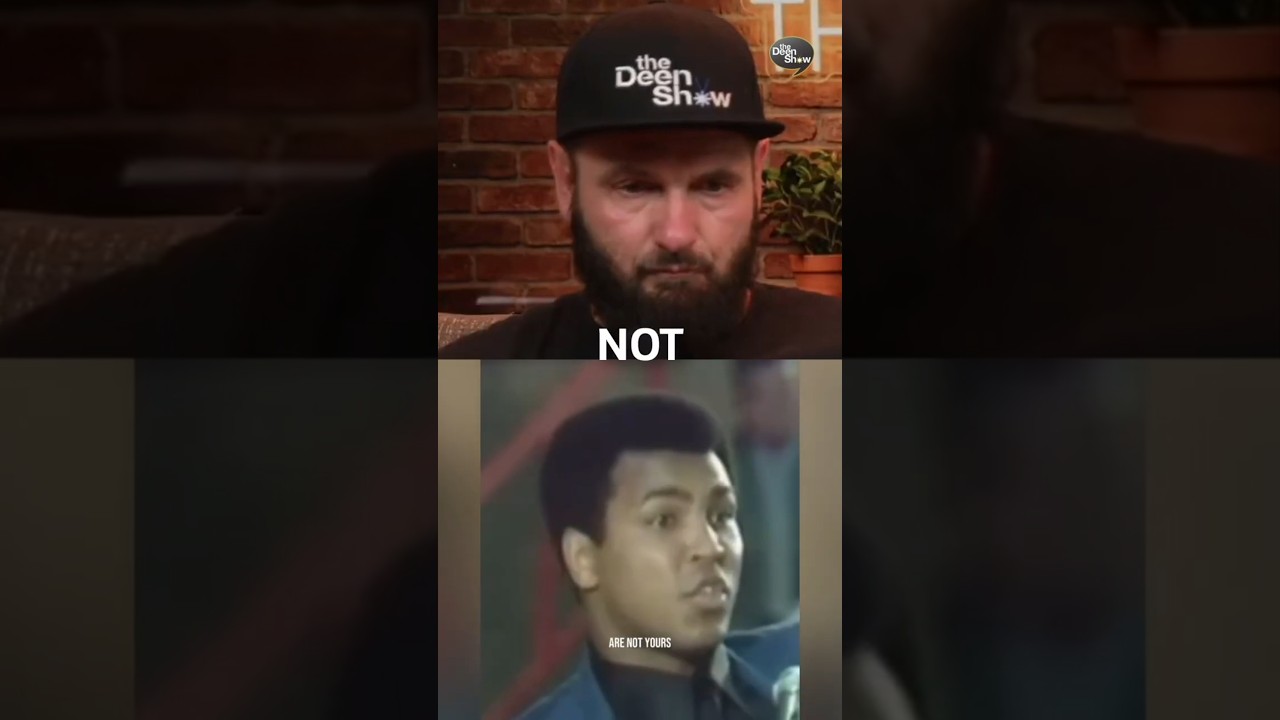
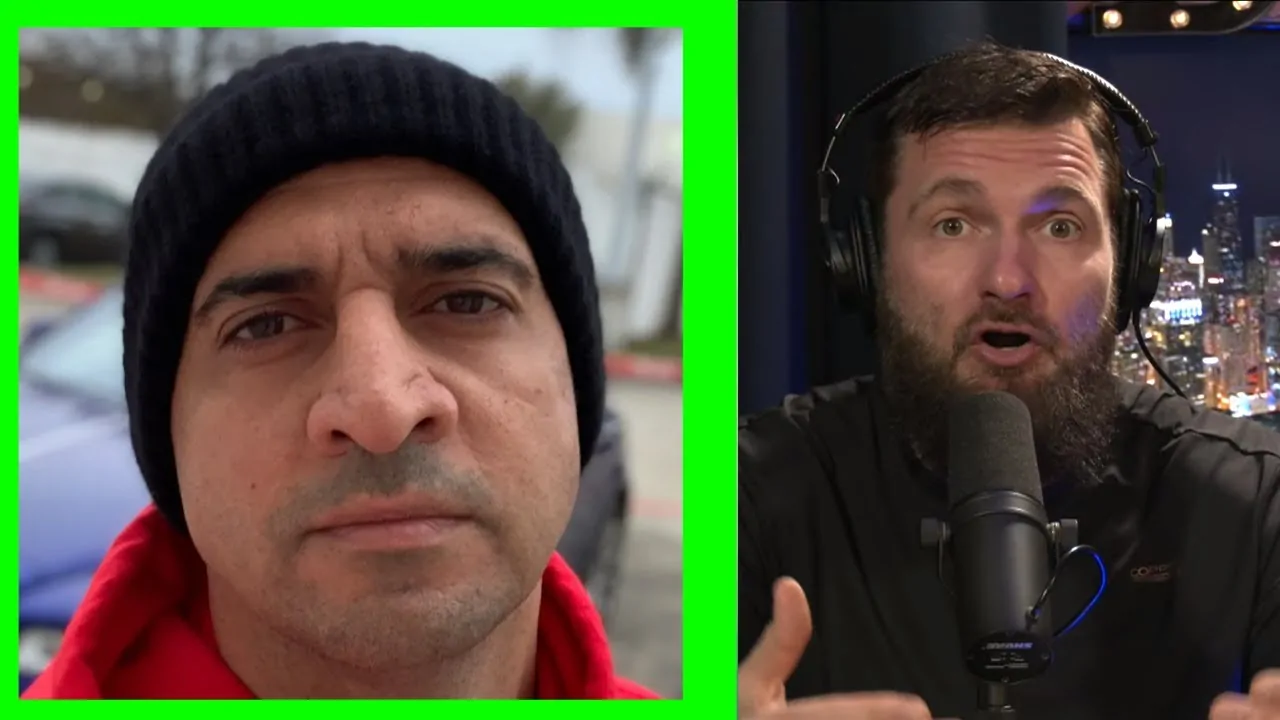
When prominent entrepreneur and YouTuber Patrick Bet David publicly insinuated that Prophet Muhammad (peace and blessings be upon him) was a “slave trader” — a statement so historically unfounded that it insults nearly two billion Muslims and the Creator who sent him — host Eddie of The Deen Show responded not with rage alone, but with scholarship, sincerity, and a heartfelt invitation to truth. In this vital episode, Eddie systematically dismantles the claim, exposing it as academically indefensible and morally reckless — the product of either profound ignorance or a deliberate anti-Islam propaganda industry that has thrived for decades by distorting facts about Islam, its Prophet, and its global community of believers. Far from a “slave trader,” Prophet Muhammad (peace and blessings be upon him) was sent by the Creator of the heavens and the earth bearing a single, defining title: a mercy to all of mankind.
Islam’s True Historical Mission: Liberation, Not Oppression
Context is everything. Slavery was a deeply entrenched global institution long before the birth of Prophet Muhammad (peace and blessings be upon him) — it was the norm in pre-Islamic Arabia, throughout the Roman Empire, and across every ancient civilization. Islam did not invent slavery; it inherited a world saturated in human oppression and, through divine guidance, began its systematic and principled eradication. The Quran explicitly designated the freeing of enslaved persons as one of the most exalted acts of worship: “And what will make you comprehend what the steep path is? It is the freeing of a slave” (Surah Al-Balad, 90:12–13). More striking still, Prophet Muhammad (peace and blessings be upon him) conveyed directly from God Almighty — in a hadith qudsi — that among those God will stand against on the Day of Judgment is any man who “sells a free person and consumes his price.” This was not passive reform; it was a divine command that closed one of slavery’s primary avenues. The story of Bilal (may Allah be pleased with him) — a man tortured for declaring the Oneness of God, then purchased and freed by the Prophet’s companion — became the template for a movement. Thousands of formerly enslaved individuals rose under Islamic civilization to become governors, military commanders, and revered scholars, a transformation without parallel in the ancient world. The contrast with other traditions is telling: no text in the Gospels prohibited or denounced slavery outright, whereas the entire legislative trajectory of Islam was designed to close its doors permanently and replace bondage to creation with devotion to the Creator alone.
- Islam did not originate slavery — it was a universal social norm inherited from pre-Islamic Arabia, Rome, and ancient civilizations worldwide
- The Quran elevated emancipation as worship — freeing an enslaved person was among the greatest acts of nearness to God Almighty
- A divine hadith explicitly forbids selling free people — closing one of slavery’s most destructive avenues at the source
- Islamic law mandated equal treatment — those in servitude received the same food, clothing, and dignity as their guardians
- Physical harm meant immediate freedom — any master who struck someone under their care was obligated to release them
- Former enslaved people became leaders — governors, scholars, and commanders rose from bondage through the transformative power of Islamic guidance
- 30–40% of enslaved Africans in the transatlantic slave trade were Muslim — brought to America in chains, they helped build the very nation where this false narrative is now being spread
“My choice of Muhammad to lead the list of the world’s most influential persons may surprise some readers and may be questioned by others, but he was the only man in history who was supremely successful on both the religious and secular level.” — Michael H. Hart, non-Muslim historian and author of The 100: A Ranking of the Most Influential Persons in History
What the World’s Greatest Minds Discovered When They Studied the Prophet of Islam
The most powerful refutation of anti-Islam propaganda comes not from Muslim apologists but from non-Muslim scholars, historians, and intellectuals who studied the life of Prophet Muhammad (peace and blessings be upon him) with genuine sincerity and emerged transformed by what they found. Reverend Bosworth Smith marvelled that the Prophet was “Caesar and pope in one — but without the pope’s pretensions and without the legions of Caesar, without a standing army, without a palace, without a fixed revenue.” The philosopher Thomas Carlyle rebuked fabrications directly: “The lies which well-meaning zeal has heaped around this man are disgraceful to ourselves only.” Annie Besant — women’s activist and author of over 300 books — declared it “impossible for anyone who studies the life and character of this great prophet of Arabia to feel anything but reverence for that mighty prophet, one of the great messengers of the Supreme.” Even Mahatma Gandhi, whose entire life was built on non-violence, studied the Prophet’s biography and concluded that Islam spread not through the sword, but through “the rigid simplicity, the utter self-abnegation of the Prophet, the scrupulous regard for pledges, his intense devotion to his friends and followers, his intrepidity, his fearlessness, his absolute trust in God.” Eddie’s guidance to Patrick Bet David is direct and offered with love: consult the right sources. You would not go to the KKK to learn Black history; do not go to Islam-haters to learn about Islam. Read a translation of the Quran — Sahih International or The Clear Quran. Read Mercy to the Universe. Read Karen Armstrong’s biography of the Prophet. Then invite a Muslim scholar onto your show for honest, dignified dialogue, because Muslims and conservative Christians share far more common ground than either side has been led to believe.
“He must be called the savior of humanity. I believe that if a man like him were to assume the dictatorship of the modern world, he would succeed in solving its problems in a way that would bring it much-needed peace and happiness.” — George Bernard Shaw, playwright and Nobel Laureate
In a world fractured by division, mistrust, and manufactured hatred, the call at the heart of this episode is one of education, empathy, and honest dialogue grounded in faith and purpose. Christians, Jews, and Muslims are not going anywhere — and the future of our shared civilization depends entirely on whether influential voices choose to build bridges or throw careless blows at what is sacred to billions. When a platform as large as Patrick Bet David’s attributes to the Prophet of Islam (peace and blessings be upon him) a label that no credible historian would endorse, the damage is real: it fuels hatred, deepens division, and makes peaceful coexistence harder for everyone. But the antidote, as Islam has always taught, is knowledge — iqra, the very first word revealed in the Quran, meaning “read.” May God Almighty open the hearts of all who genuinely seek truth, grant them the spiritual guidance and intellectual courage to follow it wherever it leads, and make this conversation — however uncomfortable — a seed of genuine understanding between communities that the world so desperately needs to see united.