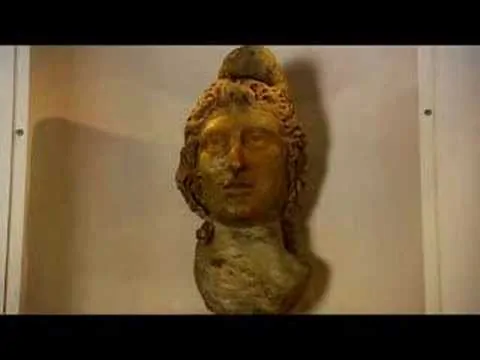
The question of how Paul reshaped the message of Prophet Jesus (peace be upon him) is not merely an academic footnote — it is one of the most consequential theological inquiries in human history, and one that Islam has long provided a clear answer to. The Qur’an affirms that every prophet, from Ibrahim to Musa to ‘Isa, brought the same essential message: worship Allah alone, without partners or intermediaries. Yet within a generation of Prophet Jesus’s departure, a man named Paul of Tarsus — who never met him, never sat in his company, and had in fact previously persecuted his followers — would emerge as arguably Christianity’s true theological founder. Archaeological excavations stretching from Roman London to Hadrian’s Wall have since unveiled something deeply troubling for mainstream Christian theology: a thriving mystery cult called Mithraism, devoted to the god Mithra, which shared an almost uncanny number of ritual, narrative, and doctrinal elements with the Pauline Christianity taking shape at the very same time — including a saviour figure sent by a supreme deity, communal ritual meals of bread and wine, a promise of life after death, and eventually the celebration of December 25th as a sacred birth date.
The Apostle to the Gentiles: A Gospel Shaped to Fit the Audience
Paul describes himself as the “Apostle to the Gentiles” — a self-appointed title for a mission to the very pagan world whose religious ideas he would quietly fold into his proclamations. Scholars and historians note that Paul was supremely practical in his conversion strategy, openly willing to adapt his message to whatever audience he encountered, borrowing familiar spiritual symbols to lower the barrier to belief. This pragmatic flexibility, while effective at winning converts across the Roman Empire, represents a stark departure from the prophetic tradition affirmed in Islam, where the message of divine unity — tawhid — was never negotiable and never adjusted to accommodate pre-existing pagan sensibilities. The similarities between Mithraism and Pauline Christianity were so pronounced that early Church fathers were compelled to publicly denounce the cult — yet the defensiveness of their reaction only betrayed how deeply the parallels unsettled them. Among the most striking overlaps documented by historians and archaeologists:
“For though I am free from all men, I have made myself a slave to all, that I might win the more. To the Jews I became as a Jew, in order to win Jews; to those under the law I became as one under the law — though not being myself under the law — that I might win those under the law. To those outside the law I became as one outside the law… I have become all things to all men, that I might by all means save some.” — Paul, 1 Corinthians 9:19–22
- Mithra was revered as a Lord of Light and saviour figure — sent by a supreme deity to redeem mankind — mirroring Pauline theology’s portrayal of Jesus as a pre-existent divine being dispatched by God to save humanity from sin
- Mithraic worshippers held ritual communal feasts of bread and wine, a practice so strikingly similar to the Eucharist that early Church father Justin Martyr accused Mithraists of diabolical imitation — yet the historical timeline raises the question of who was imitating whom
- Mithraism offered initiates a promise of life after death — rare among pagan cults of the era — directly paralleling the Pauline doctrine of salvation through faith and bodily resurrection
- One tradition holds that Mithra’s birth was witnessed by shepherds, and later Church councils chose December 25th — Mithra’s established sacred birth date and the winter solstice — as the official anniversary of Jesus’s birth
- The rise of Mithraism and the spread of Pauline Christianity occurred almost simultaneously across the Roman Empire, intensifying the scholarly debate about the true direction of theological borrowing between the two faiths
What Jesus Actually Taught: The Law Paul Dismantled
From an Islamic standpoint, the deeper significance of this historical and spiritual evidence is not merely polemical — it is a confirmation of what the Qur’an has consistently affirmed: that the original message of Prophet Jesus (peace be upon him) was pure monotheistic guidance, and that subsequent generations altered, obscured, and overlaid it with human invention. The Prophet Jesus himself, according to the very Gospels that Christians hold sacred, was unambiguous about the permanence of divine law and the purpose of his mission. He did not come to dissolve the commandments — he came to embody them. Yet Paul, operating through private visions and letters dispatched to communities he was actively moulding, systematically dismantled the legal and ethical framework Jesus had affirmed, replacing it with a theology of faith alone — a theology that, as scholars observe, was far more palatable to the Gentile, pagan world Paul was trying to convert. The contrast between what Jesus declared and what Paul practised is not a matter of interpretation — it is written plainly in their own words.
“Think not that I am come to destroy the law, or the prophets: I am not come to destroy, but to fulfil. For verily I say unto you, till heaven and earth pass, one jot or one tittle shall in no wise pass from the law, till all be fulfilled. Whosoever therefore shall break one of these least commandments, and shall teach men so, he shall be called the least in the kingdom of heaven.” — Jesus, Matthew 5:17–19
For the sincere seeker of truth, this historical record raises questions that demand honest engagement rather than defensive dismissal. Islam does not ask anyone to accept these conclusions on blind faith alone — the Qur’an itself repeatedly invites humanity to reflect, to examine, and to follow the evidence wherever it leads with integrity and purpose. The pattern across religious history is consistent: prophets arrive with clear guidance, that guidance becomes mixed with human invention and cultural borrowing, institutional power reshapes the original message, and Allah sends renewed guidance to restore what was lost. The story of Mithraism and Pauline Christianity is not simply a tale of ancient religious syncretism or scholarly curiosity; it is a window into why divine guidance ultimately required the final, perfectly preserved revelation of the Qur’an. When the message of ‘Isa (peace be upon him) could be blended almost seamlessly with a pagan mystery cult — when the theology of salvation could be assembled from borrowed ritual, repurposed mythology, and the spiritual entrepreneurship of a single self-appointed apostle — the need for a scripture that Allah Himself has guaranteed to protect becomes not just understandable, but undeniable. The call to every seeker is not to certainty through denial, but to genuine faith through knowledge: afala ta’qiloon — will you not then reason?