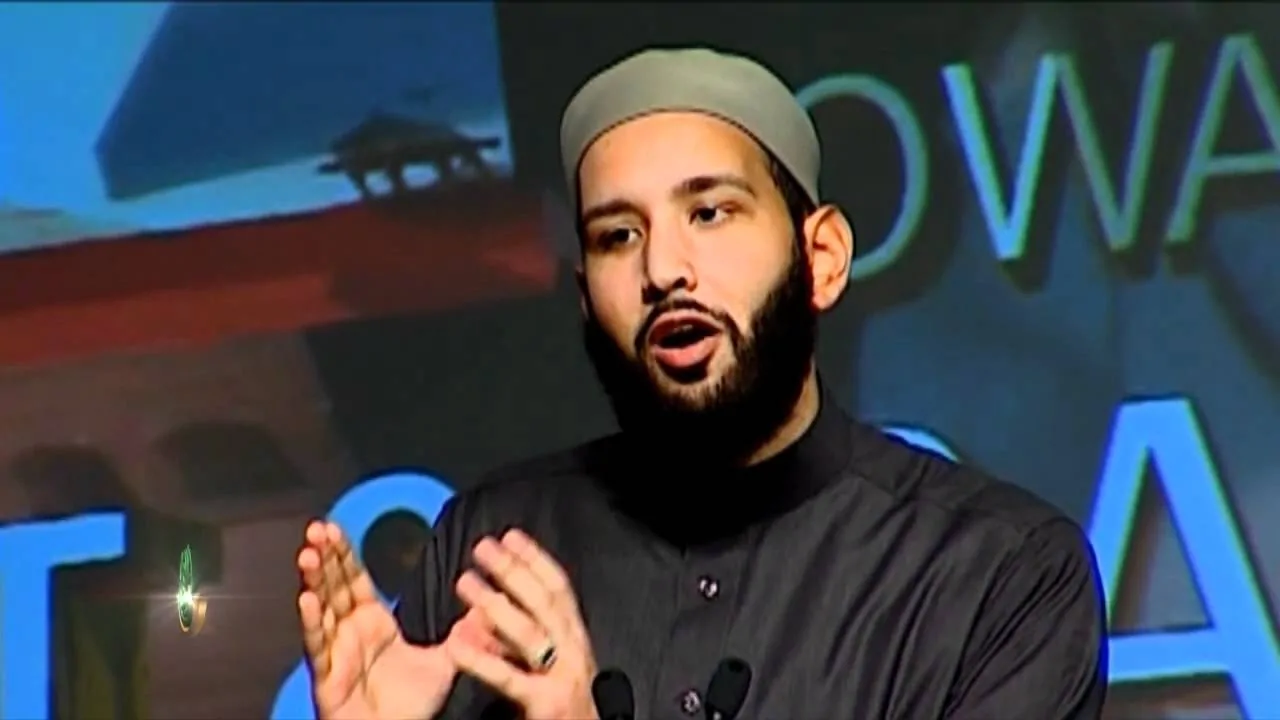
In May 2011, just days after the killing of Osama bin Laden, Sheikh Omar Suleiman stood before a packed audience at the ICNA Convention and did what few scholars dared to do: address the most controversial question on every Muslim’s mind with directness, nuance, and firm grounding in Islamic guidance. The US military’s announcement that bin Laden had been buried at sea “in accordance with Islamic law” had ignited confusion, debate, and emotional reactions across Muslim communities in America. Sheikh Suleiman’s response — drawing on the Qur’an, the Sunnah, and classical scholarship — offered believers a framework rooted not in reactive emotion, but in enduring principle. His core message was simple and sobering: these are two separate questions, and Islam demands we treat them separately.
Condemning Actions Without Judging Souls — The Islamic Framework
Sheikh Suleiman was careful to draw a firm line between two things Muslims were conflating in the heat of the moment: opposition to bin Laden’s ideology, and the Islamic ruling on his burial. On the ideology, he was unequivocal. Bin Laden’s methodology bore the unmistakable hallmarks of the Khawarij — a group described by the Prophet Muhammad ﷺ in grave terms, people who appeared outwardly pious, who recited Quran constantly and whose eyes grew red from weeping, yet who showed complete disregard for innocent human life and passed sweeping verdicts of disbelief (takfir) upon fellow Muslims. Islamic scholars had confronted bin Laden’s views well before 9/11, and his intellectual track record was clear. To condemn his beliefs and his actions is not an apologetic concession — it is a religious obligation. But to condemn the individual himself to the Hellfire is a line that belongs solely to Allah subhanahu wa ta’ala, and Islam is the only faith in which wrongly passing such a verdict risks reflecting back on the one who passes it.
“We can condemn the actions. We cannot condemn the person to Hellfire — because only Allah subhanahu wa ta’ala knows what took place in the last moments of his life.” — Sheikh Omar Suleiman, ICNA Convention 2011
- Islam forbids passing a verdict of eternal damnation on any individual, no matter how grave their crimes — this is the exclusive knowledge of Allah alone
- Condemning bin Laden’s ideology as aligned with the Khawarij mentality is a scholarly obligation, not a concession to political pressure
- Muslims must not react with raw emotion — “you cannot repel evil with evil” is a foundational principle of Islamic guidance
- Believers do not celebrate death; Islam calls us toward peace and justice, not toward reveling in the killing of a human being
- Ironically, the most balanced public statement at the time came from the Vatican — a reminder that measured, principled response is a mark of true faith and spiritual maturity
What Islamic Law Actually Rules on Sea Burial
On the specific question of the sea burial — was it truly in accordance with Islamic law, as the US government claimed? — Sheikh Suleiman was equally direct: no, absolutely not. Classical Islamic jurisprudence (fiqh), across all four major madhabs, contains no provision permitting the burial at sea of a person who died on land. The narrow scholarly exception to this rule applies only when a person dies at sea, the distance to land is too great, and decomposition would occur before the body could be properly interred in the earth. That exception plainly did not apply here. Sheikh Suleiman also pushed back firmly on the opposite extreme — the “apologetic” response that scrambled to justify the sea burial through Islamic concepts of mercy or necessity. This, too, went too far. An unmarked grave on land, in a location kept undisclosed, was an entirely viable, Islamically sound, and practically straightforward alternative. The Shari’ah was never the obstacle; it was the political decisions of those holding power that drove this outcome, not any genuine engagement with Islamic law.
- Sea burial is only permissible in Islamic law when a person dies at sea and the body cannot be preserved long enough to reach land for proper burial
- A person who dies on land must be buried in the earth — this is the clear, consistent position of classical Islamic scholarship
- An unmarked, undisclosed land burial was a fully viable alternative that would have satisfied both Islamic rulings and security concerns
- Claiming the sea burial followed Islamic law was factually inaccurate and created unnecessary confusion and distrust in Muslim communities
- Muslims should neither distort their faith’s rulings to appear accommodating, nor overlook those rulings out of political sympathy in either direction
“There is nothing within our books of Islamic law that allows a person who died on land to be buried at sea.” — Sheikh Omar Suleiman, ICNA Convention 2011
What Sheikh Suleiman left his audience with, ultimately, was not a fatwa to memorize but a call to reorder their priorities. Muslims should not become so consumed by the circumstances surrounding one man’s death that they lose sight of the living — the innocent men, women, and children across the Muslim world being killed, displaced, and denied their rights daily, who are far more deserving of our attention, our du’a, and our collective advocacy. The lessons from this episode run deeper than Islamic law or political commentary; they are lessons in spiritual discipline. Faith, at its most authentic, demands that we hold to the guidance of Allah and His Messenger ﷺ whether it is convenient or not, whether it flatters the crowd or not. It demands that we speak the truth — clearly, calmly, and without extremes in either direction — because that steadiness is itself an act of worship, and it is the only ground on which true understanding between people of different faiths and backgrounds can ever be built.