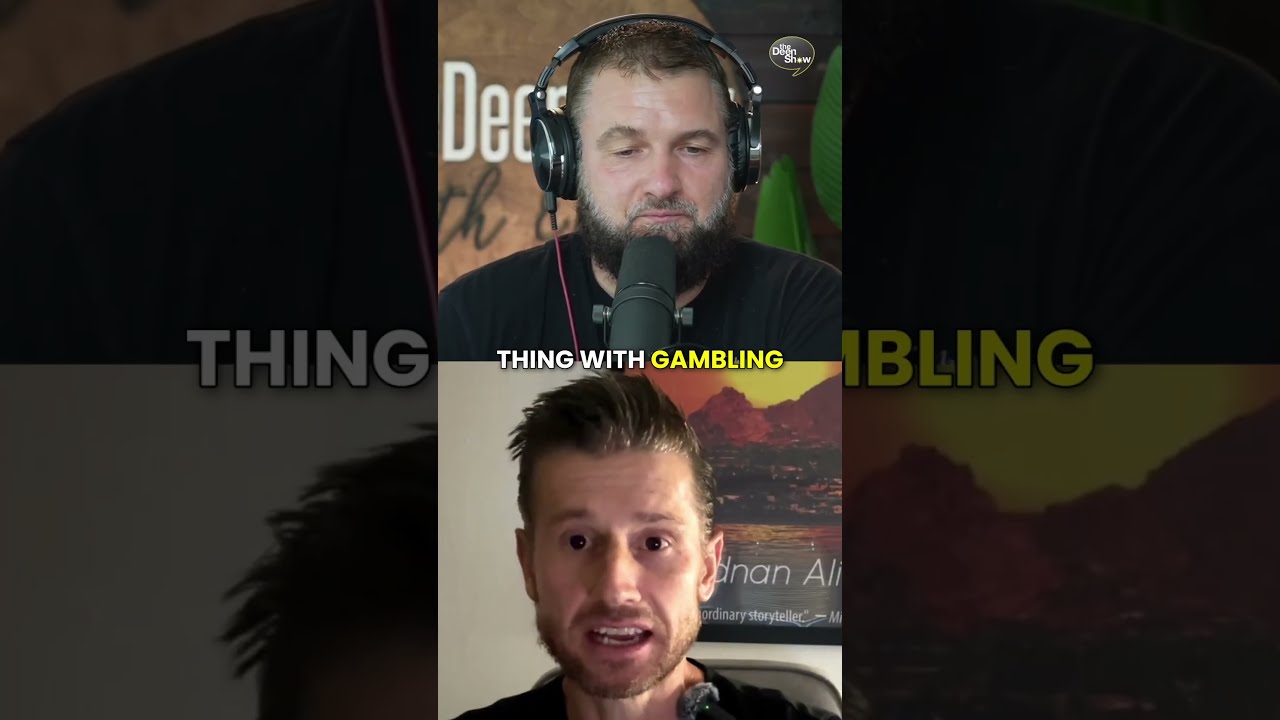
When US Marine Corps Force Recon veteran Richard “Mac” McKinney drove toward a mosque in Muncie, Indiana with a plan to cause harm, he picked up a Quran not as a seeker but as a soldier — looking for justification. What he found instead became the catalyst for one of the most remarkable transformations in recent American Muslim history. Years later, he is not only a devout Muslim but the president of that very same Islamic center. His story, documented in the Oscar-nominated short film Stranger at the Gate and shared by actor Jon Bernthal on the Joe Rogan Experience, has now reached millions — and in this episode of The Deen Show, Mac sits down to respond directly to the kind of anti-Islam rhetoric, exemplified by a viral Alex Jones clip, that once fuelled his own hatred. This is a conversation about Islam, faith, purpose, and what happens when a man opens the Quran with sincerity rather than suspicion.
A Warrior’s Transformation: From Planning Violence to Leading a Congregation
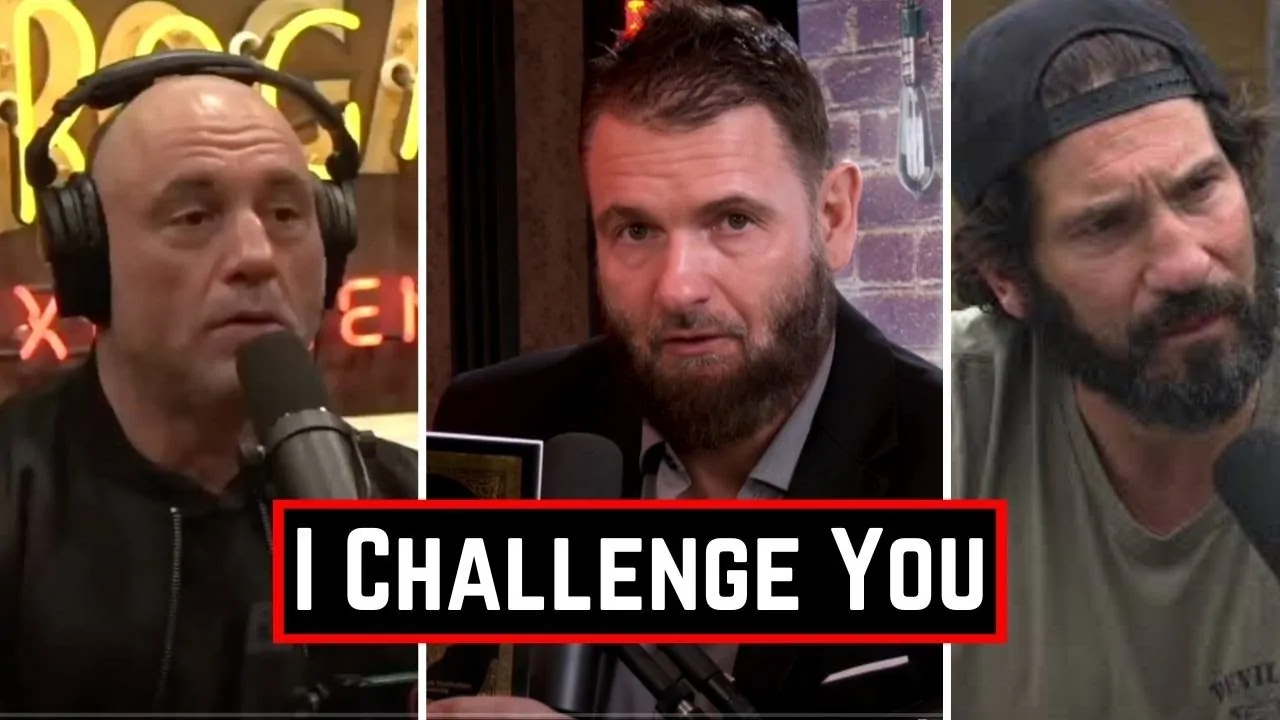
Mac’s journey is inseparable from the misinformation that shaped his worldview as a combat veteran of Desert Storm and Somalia. Encountering a growing Muslim community in his town, he became consumed by fear and hostility — the kind stoked by voices that paint Islam as an inherently violent ideology. He devised a plan to bomb the local mosque. But when a community member handed him a Quran and invited him to find what he was looking for, something unexpected happened: the more he read, the more his certainty in hatred dissolved. He returned to the mosque — first tentatively, then persistently — attending so regularly that, as he recalls with quiet humility, he was there “more than most of the Muslims were.” Jon Bernthal, visibly moved after watching the documentary, brought Mac’s story to Joe Rogan’s audience, whose stunned reaction — a simple, breathless “whoa, wow” — captured exactly what so many feel when they encounter the real narrative of Islam beyond the propaganda. Mac describes the moment as deeply humbling: proof that lived testimony, grounded in the guidance of this faith, carries a weight no talking point can manufacture.
- Mac McKinney is a US Marine Force Recon veteran who planned to bomb a mosque but converted to Islam after reading the Quran — and later became president of that Islamic center
- Jon Bernthal (The Punisher, The Walking Dead) shared Mac’s story on the Joe Rogan Experience after encountering the documentary Stranger at the Gate, which was campaigning for award nominations in Hollywood
- Mac’s personal mantra — “Control-Alt-Delete: Control yourself, Alter your thinking, Delete all negativity” — reflects Islam’s core emphasis on inner spiritual discipline and the renewal of the self
- After 9/11, fear prompted many Americans to research Islam directly for the first time; countless found not confirmation of their fears but a path of guidance, purpose, and profound spiritual peace
- Mac serves as an honorary board member of “We Are Many — United Against Hate,” speaking at schools about overcoming hatred in all its forms — racial, religious, and ethnic
“I not only drank the Kool-Aid — I served it out. And now I feel sorry for someone like that, because they’re missing out on not being Muslim. They’re missing out on life and how good it is.” — Richard “Mac” McKinney
The $10,000 Challenge: Correcting the Record on What the Quran Actually Teaches
The episode then turns to a clip of Alex Jones describing Islam as an “expansionist cult” that teaches deception, forced conversion, and mass killing — claims he attributes to having “read the Quran.” Mac’s measured, compassionate response is striking precisely because he once held these identical views. He issues a direct $10,000 challenge to Jones: find anywhere in the Quran an unconditional, open-ended permission to kill innocent human beings — a challenge that remains unanswered. Mac explains what critics like Jones consistently miss: the Quranic verses about warfare were revealed in specific historical contexts of extreme oppression, functioning as directives for a besieged community defending itself — not blank mandates for aggression. The Prophet Muhammad ﷺ, centuries before the Geneva Convention, established explicit protections for non-combatants: women, children, the elderly, and the sanctuaries of every faith, including churches and synagogues. Mac and the host highlight the little-known historical fact that the principles foundational to the Geneva Convention itself are traced in part to the actions of Algerian Muslim leader Abdelkader al-Jazairi — whose bust stands outside the Geneva Convention building in Switzerland. When scholars have conducted blind tests, reading passages from both the Quran and the Old Testament without identifying the source, audiences consistently misattribute the more violent passages: they guess Quran, but the verses are from the Bible. The point is not to weaponise scripture against Christianity — Mac is clear he respects Christians deeply and is himself married to a devout Christian woman — but to expose the double standard that lets fear-mongering go unchallenged when it targets Islam specifically.
“God does not forbid you from dealing kindly and fairly with those who have neither fought you nor driven you out of your homes. Surely God loves those who are fair.” — Quran 60:8
What this episode ultimately demonstrates is that the loudest voices against Islam are often the least informed about it — and that the Quran, read with sincerity rather than suspicion, has a remarkable track record of answering its own critics. Mac McKinney did not come to Islam through a lecture or a formal debate; he came because he read the words himself and could not unsee what they revealed. Joe Rogan’s stunned admiration, Jon Bernthal’s genuine respect, and Mac’s own quiet compassion toward those who still carry the hatred he once did — all of it reflects Islam’s timeless reality: a faith of justice, mercy, and radical spiritual transformation. For anyone genuinely seeking truth, guidance, and a purpose rooted in the worship of one God — the same God whom Jesus ﷺ called upon in Aramaic as Allaha — that invitation, as it has always been, remains open.