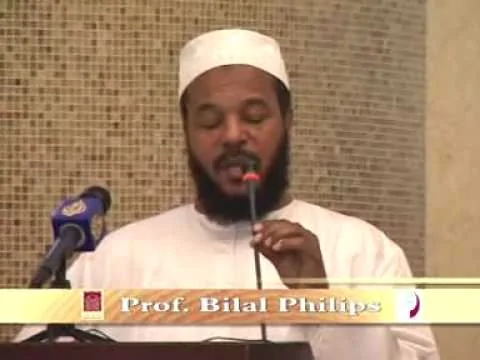
In a world of competing faiths and philosophical uncertainty, one question cuts through the noise with urgent clarity: is there actually a true religion, and does it matter which path we follow? Dr. Abu Ameenah Bilal Philips — Islamic scholar, author, founder of Islamic Online University, and himself a convert who journeyed through Communism, Christianity, and finally Islam — poses this challenge not to provoke, but to reason. Despite the spread of secular culture, surveys across more than 14 countries show that seven in ten Europeans believe in God, with figures rising as high as 97% in Poland and 87% in Russia. Even among natural scientists — astronomers, geologists, those who study creation most intimately — the majority affirm God’s existence. The question, Dr. Bilal argues, is not really whether God exists. The deeper and more consequential question is whether God, having created this world, simply left humanity to wander without guidance — or whether He revealed a clear, purposeful way of life.
Why a Rational God Would Not Leave Humanity Without a Path
Consider the logic: a factory owner who hires workers but provides no job description invites chaos, not productivity. Applied to God’s creation, the analogy cuts far deeper. If the Creator of the universe established human beings on this earth without informing them of their purpose, it would reflect not wisdom but profound negligence. Dr. Bilal contends that common sense demands God must have revealed religion — not a plurality of contradictory paths designed to confuse, but one coherent way. Multiple competing revelations from the same God would make Him, as Dr. Bilal puts it, “the author of confusion.” That singular, revealed religion is Islam — a name that uniquely refers not to a founder, a race, or a geographical origin, but to the very essence of what it demands: submission to the will of God. Unlike faith traditions whose names were assigned externally or attached to individuals long after the fact, Islam’s name is found within its own scripture. The Quran (5:3) records God’s own declaration: “This day I have perfected your religion for you, completed My favour upon you, and have chosen for you Islam as your religion.” The religion could not have begun with Prophet Muhammad, peace be upon him — it predates him entirely. It was the faith of Adam, of Moses, of Jesus, peace be upon them all. Whoever, wherever, and whenever sincerely submits to God alone has always been following this primordial path.
“If there is in fact one true religion, then for that one religion to compromise and say ‘it’s all okay, you can believe whatever you want’ — that would be treacherous. If there is one true religion, that religion has to stand up and say: this is the true religion.” — Dr. Abu Ameenah Bilal Philips
- Belief in God is near-universal: Polls across Europe, Russia, and the scientific community show the majority affirm God’s existence — the real debate is about organised revelation, not God Himself.
- A purposeless creation defies reason: Just as no sensible employer hires workers without a job description, a wise and all-knowing God would not create humanity without clear guidance.
- Islam’s name is its essence: Uniquely among world religions, Islam is not named after a person, a tribe, or a place — it means “submission to the will of God,” confirmed within the Quran itself (5:3).
- The message of all prophets was one: From Adam to Noah to Moses to Jesus to Muhammad, peace be upon them all, the core command was always the same — worship God alone and avoid false gods (Quran 16:36).
- True religion cannot be passively inherited: Submission is a personal, intellectual, and spiritual choice — it cannot be passed down by lineage or absorbed by cultural proximity alone.
- Sincerity and open-mindedness are prerequisites: Just as we research before starting a business, finding the truth about religion requires the willingness to examine evidence beyond what parents or society have handed down.
The Defining Marks of the True Religion — and the Mercy Within Them
Dr. Bilal identifies several characteristics by which the true religion of God can be evaluated on rational grounds. The most foundational is the worship of God alone — not prophets, saints, or sacred objects, but the One Creator. The Quran (1:4) encodes this in the words Muslims recite in every prayer: “You alone do we worship, and from You alone do we seek help.” False religion, by contrast, ultimately redirects worship toward God’s creation — however philosophically it may be justified, honest reflection exposes the substitution. The second mark is universality: the true religion must be applicable to every human being, in every era and every land, because God is the God of all humanity. Critically, Dr. Bilal addresses the mercy woven into this framework. Those who never clearly received the message — those who lived in remote places, those who died in childhood, those whose communities only encountered a distorted version of divine truth — will not be judged unjustly. The Quran (Surah An-Nisa) is explicit: God will not punish anyone until the message has been delivered. Furthermore, forgiveness requires no priest, no sacrament, no human intermediary — a person turns directly to God in sincere repentance, and no sin is too great to be pardoned, save the persistent, unrepentant worship of other than God. Every child, moreover, is born into this world with a natural awareness of God — the fitra — imprinted in the soul before birth, testified to in the primordial covenant of Surah Al-A’raf, where all of Adam’s descendants affirmed God’s lordship. Even the committed atheist, in genuine peril aboard a failing aircraft, instinctively cries out to God — not from culture, but from something written deeper than memory.
“Islam is not restrictive at all — it is protective. For every prohibition there are thousands of permissions. It is the forces of this world that have made the few forbidden things appear to be the most precious and the most beloved.” — Dr. Abu Ameenah Bilal Philips
The question of whether there is a true religion is not merely academic — it is arguably the most consequential question any human being will ever face, reaching to the very purpose for which we were created. Dr. Bilal Philips’ personal journey — from Jamaica to Toronto, from his father’s Presbyterianism and mother’s Anglicanism through Communism, through Christianity, and into Islam in 1972 — is itself a living argument for what sincere, open-minded inquiry can produce when a person refuses to inherit faith passively and instead demands honest evidence. We apply rigorous research to business decisions and career choices, yet often treat the question of our eternal fate with casual indifference, assuming there will always be time later. But as Dr. Bilal soberly reminds us, none of us is guaranteed old age. The invitation of Islam is not to blind tradition but to honest examination — to look at the arguments, weigh the evidence across competing claims, and arrive at a conclusion one can stand before God with. For those who answer that call with sincerity and submit their will to the One who created them, the Quran (2:62) offers a promise that transcends race, era, and geography: they shall have their reward with their Lord, and they will not be overcome by fear or grief.