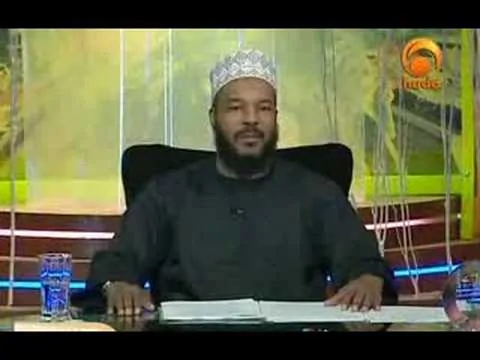
Every human being, at some point in their life, asks the question that matters most: who is Allah, and what does it mean to truly know Him? Islam does not leave this question to speculation. In Surah Al-A’raf (7:180), Allah commands: “The most beautiful names belong only to Allah, so call on Him with them.” This instruction from the Quran forms the heart of this episode in the In the Names of Allah series — and it establishes something profound about the very purpose of our existence. Since Allah created jinn and humankind specifically for His worship, and since meaningful worship requires genuine knowledge of the One being worshipped, knowing Allah through His names is not an optional enrichment of faith; it is its very foundation. A life lived in full awareness of Allah’s names is, by definition, a life lived in worship — “Say: indeed my prayers, my sacrifices, my living and my dying are for Allah, the Lord of all the worlds.”
The Highest Branch of Knowledge — And the Quranic Evidence for It
The standing of this knowledge within Islamic scholarship is extraordinary. Classical scholars categorised the verses of the Quran into three broad types: laws, promises and warnings, and the names and attributes of Allah. Consistent with this, the greatest single verse in the Quran is Ayat al-Kursi (2:255) — a comprehensive description of Allah’s attributes, affirming what is true of Him and negating what is false. The greatest chapter by spiritual weight is Surah Al-Ikhlas, which the Prophet Muhammad (peace and blessings be upon him) declared equal to one-third of the Quran — precisely because it is a concentrated statement of tawhid and divine attributes. The knowledge of Allah’s names was also the very distinction Allah bestowed upon Adam (peace be upon him): teaching him the names of all things elevated him above the angels and made him worthy of their prostration. This episode also clarifies what the Prophet’s hadith truly means when it says “whoever counts the 99 names will enter Paradise.” Counting — ihsa — is not mere recitation. It encompasses:
- Memorising the names as a deliberate, conscious act of faith and devotion
- Understanding their meanings — reflecting deeply on what each name reveals about Allah’s perfection and majesty
- Believing in them sincerely — affirming each name without distortion, denial, or likening Allah to His creation
- Acting in accordance with them — knowing Al-Razzaq (the Provider) means relying on Him alone; knowing Al-Raheem (the Most Merciful) means never despairing of His mercy; knowing Al-Ghafoor (the All-Forgiving) means returning to Him in repentance
- Calling upon Him by them in supplication — “Ya Raheem, arhamni” (O Most Merciful, have mercy on me); “Ya Ghafoor, ighfir li” (O All-Forgiving, forgive me)
“The excellence of a field of knowledge is determined by its subject matter; thus, since the Creator is the highest and most excellent subject of consideration, knowledge of His names must be the highest and most noble branch of knowledge.” — Classical Islamic scholarship, cited in this series
Guarding the Faith: Three Forms of Deviation in Relation to Allah’s Names
Understanding what it means to honour Allah’s names demands equal clarity about what violates them. The Quran warns: “But shun those who deviate regarding His names, for they will be punished for what they do” (7:180). Three specific forms of deviation are examined in this episode. The first is deriving false names from Allah’s names — as the pre-Islamic Arabs corrupted “Allah” into the idol Al-Lat, “Al-Aziz” into Al-Uzza, and “Al-Mannan” into Al-Manat — transforming divine attributes into instruments of shirk. The second is numerology: the abjad system, condemned by Abdullah Ibn Abbas (may Allah be pleased with him) as a branch of magic, assigns numerical values to Arabic letters and uses them for fortune-telling, amulet-writing, and fabricated spiritual prescriptions. Entering Muslim practice through Hellenistic and pre-Islamic influences, this pseudo-science persists today — from writing “786” as a substitute for Bismillah, to movements like that of Rashad Khalifa, who claimed to calculate the exact date of the Day of Judgement through Quranic numerology, directly contradicting the Prophet’s own testimony that neither he nor Angel Jibril knew when the Hour would come. The third deviation involves invoking Allah’s names outside the Sunnah: repeating a single name in rhythmic chanting, or following fabricated formulas that promise specific worldly outcomes if a name is recited a prescribed number of times. None of these practices were known to the Prophet or his companions, and results that coincidentally follow them are by Allah’s will alone — not by the virtue of the formula.
“Whoever introduces into this affair of ours something that is not from it will have it rejected.” — Prophet Muhammad ﷺ (narrated in Sahih al-Bukhari and Sahih Muslim)
The names of Allah are not instruments to be manipulated — they are a mercy, a guidance, and an open door through which every believer can draw closer to their Creator. To learn them sincerely, to understand what they mean, to allow them to reshape how we live, how we ask, and how we place our trust — this is the spiritual path that leads to Paradise. The greatest knowledge any human being can possess is knowledge of who Allah is, and that knowledge, pursued honestly and lived faithfully, is the beginning and the end of what Islam calls purpose. For Muslims and seekers alike, this series is not simply an academic exercise in theology; it is an invitation to build a living, breathing relationship with the One who is Al-Hayy, Al-Qayyum — the Ever-Living, the Self-Sustaining.