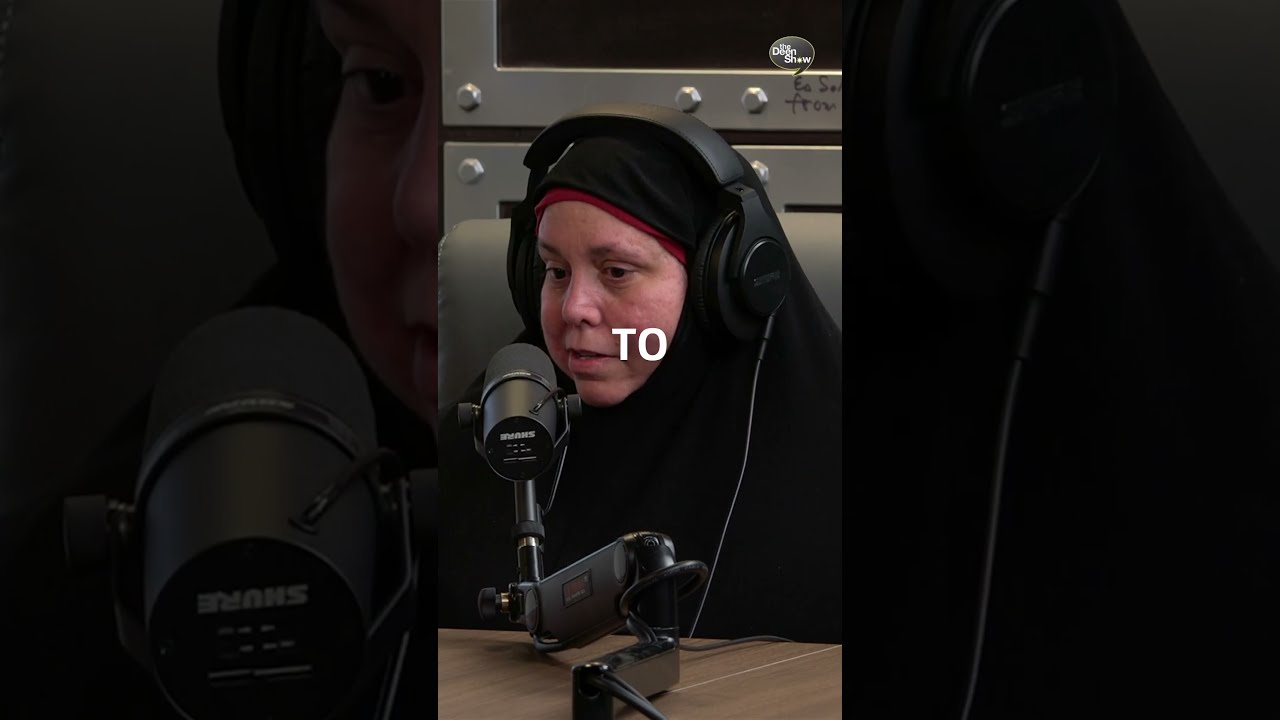

One of the most pressing questions young Muslims face growing up in a Western-influenced world is deceptively simple: is it haram to have a boyfriend or girlfriend? The answer from Islamic guidance is clear and unequivocal — yet the reasoning behind it is consistently misunderstood, dismissed as cultural restriction, or eroded by relentless media pressure that has normalised premarital relationships from childhood. In this episode of In the Light of Islam, Dr. Bilal Philips addresses this question directly, drawing from Quranic ayaat, classical scholarly commentary, and real-world observation to explain not just what Islam prohibits, but why these boundaries are a mercy — and a protection — rather than a burden.
What the Quran and Classical Scholars Establish About Chastity and Unlawful Relationships
“Made lawful to you this day are al-tayyibaat… desiring chastity (i.e., taking them in legal wedlock), not committing illegal sexual intercourse, nor taking them as girlfriends.” — [al-Maa’idah 5:5]
The Quran explicitly prohibits both overt promiscuity and the subtler, socially accepted practice of taking an exclusive boyfriend or girlfriend — a distinction Ibn Katheer carefully highlights in his tafsir of both Surah al-Nisaa’ (4:25) and Surah al-Maa’idah (5:5). This prohibition applies equally to men and women; the condition of chastity and guarding one’s honour is enjoined on both, and Imaam Ahmad ibn Hanbal went so far as to rule that a person engaged in such conduct may not lawfully marry a chaste spouse until they have sincerely repented. What makes this guidance so urgent today is the sheer scale of cultural conditioning working against it — films that embed romance into every genre, cartoons that teach infatuation to children before they can read, and a broader environment where sexual activity among primary school-aged children has become a documented statistical reality rather than a shocking exception. Islam does not merely identify the act of zinaa as haram; it closes the pathways that lead to it, precisely because it understands human psychology and the incremental nature of moral compromise.
- Boyfriend/girlfriend relationships are haram in Islam — the emotional and social bonds themselves constitute the first steps toward the prohibited, regardless of whether physical intimacy has occurred.
- The prohibition is Quranic, not merely cultural — both Surah al-Nisaa’ and Surah al-Maa’idah address this directly, and classical scholars from Ibn ‘Abbas to al-Hasan al-Basri are unanimous in their interpretation.
- Mixed gatherings where unrelated men and women freely converse — including shared dinners among couples — are understood as the structural precondition for adultery, even when no harmful intent exists at the outset.
- Being alone with a non-mahram is forbidden, whether in a homework session, an office, or any closed setting — the Prophet ﷺ identified this directly as an invitation to Shaytan.
- The media environment is not neutral — every genre, from war films to children’s animation, carries an undercurrent message normalising unlawful male-female intimacy, and Muslim parents must actively counter this influence.
Love Marriage, Attraction, and the Halal Path to a Lasting Union
A critical misconception this episode directly addresses is the idea that Islam opposes “love marriages.” It does not. Islam fully permits — and actively encourages — marrying someone to whom you are genuinely attracted, provided the path to that marriage is honourable. If a person sees someone, feels drawn to them, and pursues that connection through proper channels — approaching the family, expressing the intention to marry, meeting in supervised settings — this is entirely legitimate Islamic practice. The Prophet ﷺ himself advised prospective spouses to look at one another before committing, affirming that mutual attraction is a sound and valid foundation. What Islam rejects is the confusion of infatuation with real love, and the substitution of halal commitment with prolonged haram companionship under the pretext of “getting to know each other.” A marriage proposal being accepted by parents does not transform haram interactions into halal ones — the same boundaries that existed before continue to apply until the nikah is completed. True love in the Islamic spiritual tradition is not a feeling generated by illicit proximity; it is a bond built through shared faith, patient sacrifice, and mutual striving toward Allah’s pleasure — qualities that can only flourish within the protection of lawful marriage.
Equal Standards for Sons and Daughters — A Community Responsibility
“When a man and woman are alone together, the third is Shaytan.” — Prophet Muhammad ﷺ
Islam’s boundaries around gender interaction — whether in workplaces, schools, or family gatherings — are not arbitrary social customs but a coherent, proactive spiritual safeguard rooted in a deep understanding of human vulnerability. Dr. Bilal Philips makes a pointed observation many Muslim families need to hear: the common double standard of rigorously protecting daughters while remaining lenient with sons is a mistake, one rooted in the visible consequences of female vulnerability rather than genuine Islamic principle. Boys are just as spiritually at risk as girls, and a community that invests in Islamic tarbiyah for its daughters while allowing its sons to navigate secular environments full of unchecked haram relationships is laying the groundwork for unstable, painful marriages in the next generation. The faith calls us — as parents, educators, and community members — to raise both sons and daughters to be conscious of Allah, to understand the wisdom in the guidance He has revealed, and to see the boundaries Islam has set not as restrictions on human flourishing, but as the very conditions under which real love, lasting marriage, and a life of spiritual purpose become genuinely possible.