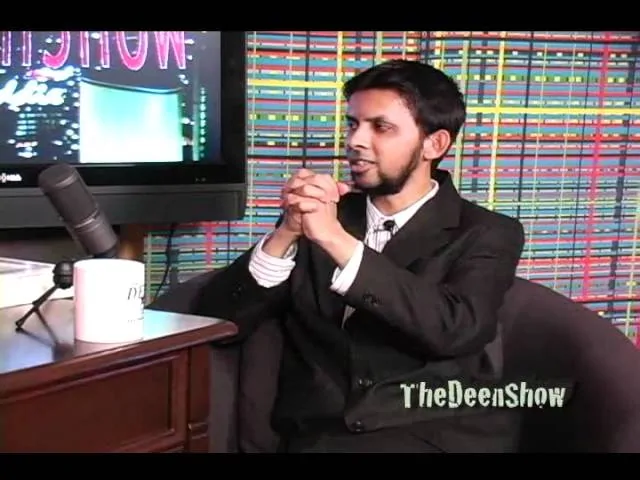
For over fourteen centuries, more than 1.5 billion Muslims across every continent have held a singular conviction: that the Quran is not the composition of any man, prophet, or civilization, but the literal, verbatim speech of Allah — the Creator of the heavens and earth. This is not a matter of blind cultural inheritance; Islam itself demands rational inquiry. The Quran repeatedly calls human beings to ponder, reflect, and use their God-given intellect. As scholar Dr. Sabil explained on The Deen Show, the evidence for the Quran’s divine origin spans multiple disciplines — from the heights of classical Arabic linguistics to the frontiers of modern science — and each strand of evidence converges on one inescapable conclusion: this book could not have come from any human hand.
The Unmet Challenge of the Quran’s Linguistic Supremacy
At the time of Prophet Muhammad’s ﷺ prophethood, the Arabian Peninsula was home to some of the most gifted poets and orators in human history — an era of towering linguistic genius where mastery of Arabic verse was the highest mark of cultural prestige. It was precisely to this audience of linguistic experts that the Quran issued a challenge unprecedented in scale and still unanswered today. Arabic literary composition falls into three known categories: poetry (shi’r), prose (mathal), and rhymed prose (saj’) — yet the Quran defies classification into any of them, occupying a literary dimension entirely its own, like a four-dimensional structure that no three-dimensional architect can replicate. The challenge was tiered and progressively reduced: first, produce a book like the entire Quran; then ten chapters; then a single chapter — even the shortest, containing only three verses. Despite having every motive to do so — they fought 27 battles and endured enormous bloodshed rather than write three sentences — the opponents of the Prophet could not attempt it, because they knew from the moment they heard it that they were incapable. That challenge remains open today, available to 15 million Arabic-speaking Christians living in Arab lands, to every poet and scholar with modern computing power at their fingertips — and no credible response has ever been produced.
“Say: If mankind and the jinn were together to produce the like of this Quran, they could not produce the like thereof, even if they helped one another.” — Quran 17:88
- The Quran’s linguistic challenge (tahaddi) has remained open for 1,400 years with no credible response from any individual, civilization, or collaboration
- Arabic was at its absolute peak eloquence during the Prophet’s time, making the failure to meet the challenge by the era’s masters all the more decisive
- The Quran transcends all three classical categories of Arabic composition, placing it in a dimension no human author can enter or replicate
- The Prophet ﷺ was unlettered — he could not read or write — yet produced a text that left the Arab world’s greatest literary minds speechless
- Opponents chose war, exile, and the deaths of thousands over composing three simple sentences — a tacit and profound admission of defeat
- Islamic history records no round-table attempt, no coalition of poets who sat together and tried; the challenge was simply beyond them
Preserved Across Centuries, Confirmed by Modern Science
The Quran makes a bold prophecy about itself in chapter 15, verse 9: that Allah Himself will guard it from any corruption, addition, or loss. History has vindicated that promise in a way unmatched by any other scripture on earth. Today, over 10 million Muslims — children, adults, scholars across every nation — have memorized every word of the Quran in an unbroken chain of oral transmission stretching back to the Prophet ﷺ himself, a phenomenon with no parallel in the Bible, the Torah, the Hindu Vedas, or any other religious or secular text. Alongside this miracle of preservation, the Quran contains approximately 500 verses dealing with observable natural phenomena, and not one has been contradicted by established modern science. These include a description of the Big Bang in chapter 21, verse 30 — the heavens and earth as a joined mass that was split apart — confirmed by 20th-century astrophysics using the Hubble telescope; detailed and accurate stages of embryonic development that Western science only verified using electron microscopes; and the description of layered ocean darkness at depths requiring modern submarines to confirm, including internal waves between the upper and lower sea that oceanographers only discovered after satellite imaging. When world-renowned scientists such as embryologist Dr. Keith Moore, marine scientist Professor Schroeder, and Professor Marshall Johnson encountered these Quranic verses for the first time, each independently arrived at the same stunned conclusion: such knowledge could not have originated with a human being living in seventh-century Arabia. Chapter 4, verse 82 of the Quran issues yet another challenge: “Had this book been from other than Allah, you would have found many contradictions in it.” After fourteen centuries of scrutiny — theological, scientific, philosophical, and historical — no genuine internal contradiction has ever been established.
- Preservation: The Quran exists today word for word, letter for letter, as it was revealed — the only scripture on earth with this verified degree of textual integrity
- Big Bang cosmology: Quran 21:30 describes the heavens and earth as a single joined entity that was split — a description matching the modern Big Bang paradigm discovered only in the 20th century
- Embryology: Detailed stages of fetal development — from a clot, to a chewed-like morsel, to ensouled form — described 1,400 years before the microscope, astonishing leading embryologists including Dr. Keith Moore and Dr. Maurice Bucaille
- Oceanography: Internal waves, layered darkness at 200-meter depths, and the barrier between salt and fresh water bodies are all described with scientific precision in the Quran and only recently confirmed by marine science
- Zero contradictions: A book of 6,000+ verses, revealed over 23 years, authored through a man who could not read or write, contains no internal contradictions — something no human-authored work of that scale has ever achieved
- Verses in the Quran openly and candidly rebuked the Prophet ﷺ himself — a human author would have concealed such passages, but Allah revealed them as a sign that the messenger was faithfully conveying, not composing
“Muhammad could not have known these facts about human development in the 7th century because most of them were not discovered until the 20th century… God transmitted through Muhammad bits of His knowledge that we have only discovered for ourselves in recent times.” — Professor Keith Moore, renowned embryologist and author of The Developing Human
The evidence for the Quran’s divine origin is not a demand for blind faith — it is an invitation to honest, rigorous inquiry, extended to every sincere seeker regardless of background or belief. Whether one approaches the question through linguistics, history, preserved transmission, scientific precision, or internal consistency, each avenue leads back to the same reality: this book transcends what human capacity can produce or explain. A man who could not read or write, living in a desert society in the seventh century, delivered a text that silenced the greatest Arabic poets of his age, survived fourteen centuries without alteration, and encoded precise natural facts that humanity would not independently discover for over a thousand years. Islam does not ask anyone to abandon their intellect — it asks them to use it fully, sincerely, and without prejudice. For the person willing to approach the Quran with an open heart and a genuine desire for truth, the path to faith is not a leap in the dark; it is a walk toward light that has been shining, without interruption, since the day the first verse was revealed.