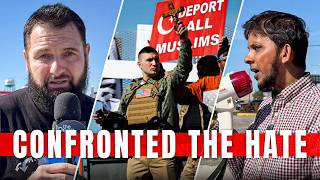
In an age where inflammatory rhetoric about Islam spreads faster than truth, two of the most provocative questions in interfaith dialogue are being asked more boldly than ever: does Islam harbour hatred toward Jewish people, and what does it truly mean to say that Jesus was a Muslim? These are not abstract theological puzzles — they carry real-world consequences. As Eddie discusses in this episode of The Deen Show, a young Palestinian boy in Chicago was stabbed 26 times by someone who had been consuming a diet of hateful conservative talk radio. Words, narratives, and the rhetoric we normalise all carry moral weight. Islam, properly understood through its scripture and prophetic tradition, offers not just clear answers to these questions but a comprehensive framework of justice, mercy, and spiritual guidance rooted in the unbroken chain of prophethood.
What It Truly Means to Say Jesus Was a Muslim
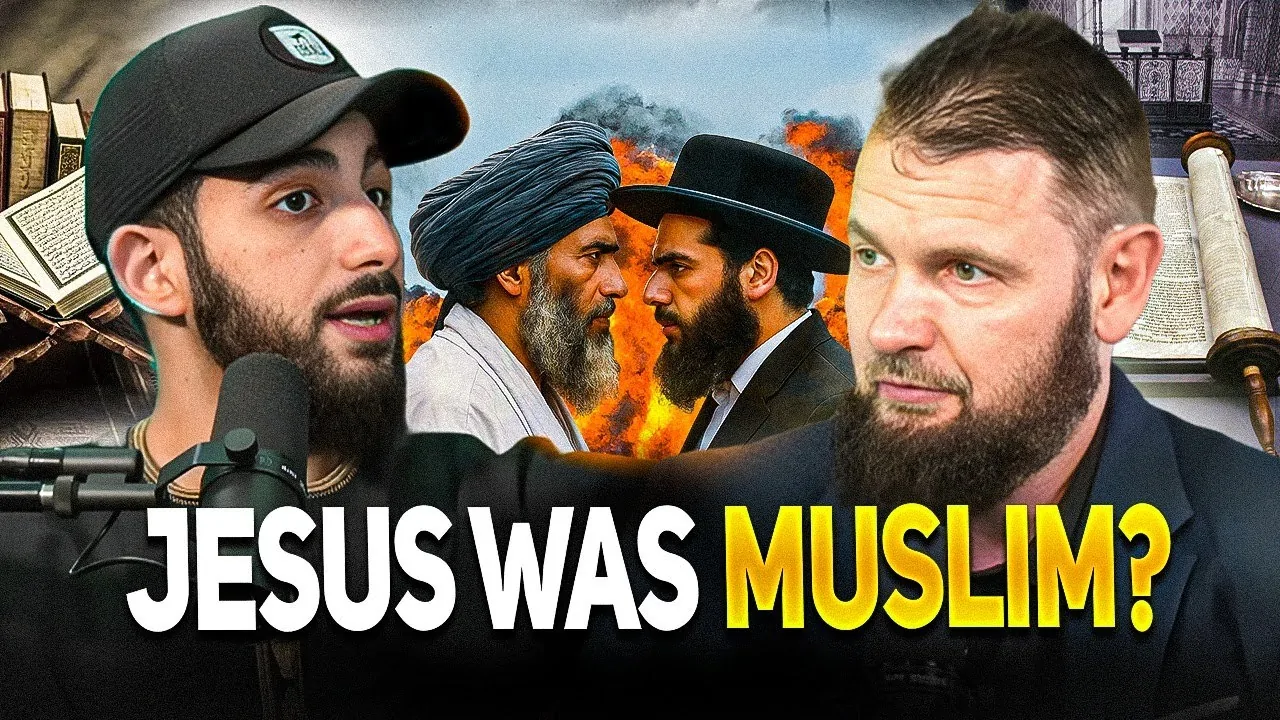
When Muslims say “Jesus was a Muslim,” the instinctive reaction is often disbelief — but this reaction stems entirely from a misunderstanding of what the word Muslim actually means. In classical Arabic, Muslim means “one who submits,” derived from the root Islam — submission to the one true God. It is not a tribal label, a modern sectarian brand, or an attempt to claim ownership of another tradition. It is a description of a universal spiritual reality. Every prophet — Adam, Noah, Abraham, Moses, David, Solomon, Jesus, and Muhammad (peace be upon them all) — submitted their will entirely to the Creator. By that precise definition, they were all Muslims. Abraham (peace be upon him) predates every named religious tradition: there was no Judaism, no Christianity, no Islam as a labelled institution when he walked the earth. He could not have been a Jew or a Christian. He was, by every honest reckoning, a pure monotheist — a submitter to the one God. Jesus (peace be upon him) never heard the word “Christian” in his lifetime; when a student was asked what religion Jesus followed and couldn’t answer, they deflected to his race instead — as confused as someone answering “Arab” when asked about their religion. The only rationally sound answer is that Jesus followed the same way of submission that all the prophets before him followed, the very tradition Allah commanded Prophet Muhammad (peace be upon him) to uphold: the pure monotheism of Abraham.
“When you say Jesus was a Muslim, we’re coming from a place of trying to help you and others better understand — because it’s very dangerous. A lot of this rhetoric is very dangerous. When you have an emotional person listening to you…”
- Muslim means “submitter”: To be a Muslim is to submit one’s will to the one true God — a definition that encompasses every prophet sent to humanity across all ages and peoples.
- Abraham is the common root: Jews, Christians, and Muslims all claim Abraham (peace be upon him), yet he predates all three named traditions; the only honest description of his faith is pure monotheistic submission.
- Race is not religion: Confusing Arab ethnicity with Islamic faith, or Jewish ethnicity with the religion of Judaism, is a fundamental category error — one that obscures serious theological questions with misleading identity politics.
- The Quranic chain of guidance: Allah commands Prophet Muhammad (peace be upon him) to follow the way of Abraham, and tells him to follow the guidance of the previous prophets and messengers — affirming one unbroken tradition of divine revelation across all of history.
Does Islam Hate Jews? The Quranic Standard Is Justice for All People
The accusation that Islam or Muslims harbour inherent hatred toward Jewish people is one of the most persistent and most damaging distortions of Islamic faith and spirituality. The Quran is explicit on this point: “Allah does not forbid you from those who do not fight you because of religion or drive you from your homes — from being just toward them and acting justly. Indeed, Allah loves those who act just.” This is the foundational Islamic position — fairness and goodwill toward all who live peacefully, regardless of their faith. The prophetic record confirms this with vivid clarity: Prophet Muhammad (peace be upon him) rose in respect when a Jewish funeral procession passed him, responding to his companion’s surprise with a simple, disarming question — “Is it not a human soul?” A Jewish father once encouraged his own ailing son to follow the Prophet’s counsel. These are not footnotes — they are defining moments that reveal the true character of prophetic conduct and the depth of Islamic humanitarianism across centuries of coexistence.
“This is not a message of hatred. This is not a message of violence towards any groups or any minorities or any people. Rather, it is a message of truth and advice and genuine care for the people around us.”
- Opposition is to oppression, not to peoples: Muslims oppose injustice, the slaughter of innocents, and the oppression of communities — not any ethnic or religious group as a collective.
- Love is grounded in goodness, not identity: Islamic theology teaches that alliance and disassociation are based on moral conduct — good is loved and evil is opposed, regardless of who commits it, even within the Muslim community itself.
- The Prophet was a mercy to all of mankind: The Quran describes Prophet Muhammad (peace be upon him) as rahmatan lil-‘alamin — a mercy to the worlds — and the Quran itself records his profound grief that people would not accept guidance, so intense was his care for their wellbeing.
- Islam is principled, not passive: The Islamic tradition affirms the right to self-defence and the obligation to oppose oppression, while unequivocally rejecting collective punishment, hate-fuelled violence, and rhetoric designed to incite harm against innocent people.
At its heart, this conversation is an open invitation — to slow down, to think with clarity, and to encounter Islam as it actually is rather than as it is caricatured by those with an agenda. The word Muslim contains within it a universal truth: that every sincere soul who has ever surrendered to the Creator, sought His guidance, and strived to live with justice and mercy, belongs to one unbroken tradition of faith stretching back to the very beginning of human history. The prophets of God were not rivals divided by labels — they were brothers in purpose, united in their submission to the One who sent them. Islam does not demand blind allegiance or the abandonment of reason; it calls for honest, courageous engagement with truth. Whether you are Muslim, Christian, Jewish, or still searching, the message is simple: come with sincerity, ask your questions, and you will find not hatred, but guidance — and in that guidance, purpose.