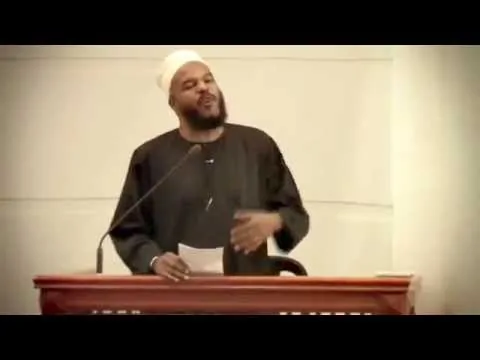
The Muslim Ummah today is not suffering merely from a shortage of military power, political alliances, or financial resources — it is suffering from a spiritual disease that has shattered the body of Islam into competing fragments: the disease of nationalism. When the cause of Palestine is framed as an “Arab cause” rather than an Islamic one, when an Arab non-believer is treated as closer to a nationalist’s heart than a non-Arab Muslim, something has gone catastrophically wrong at the level of identity and faith. Over a billion Muslims across the earth, and yet the Ummah cannot unify, cannot stand as one — not because of external enemies alone, but because nationalism, that ancient jaahiliyyah (pre-Islamic tribal ignorance) dressed in modern political clothing, has replaced the brotherhood of iman with the tribalism of race, language, and ethnicity. This is the diagnosis the Quran and the scholars of Islam have given us, and until we accept it honestly, no demonstration, no donation, and no dua alone will change our condition.
Arab Nationalism Is a Jaahili Call — Scholars Have Never Been Ambiguous
The Islamic scholarly tradition has spoken clearly and consistently on this matter. The late Shaykh Abd al-Aziz ibn Baz (rahimahullah) was asked directly about the call for nationalism — the ideology that belonging to a race or language supersedes belonging to a religion — and his answer left no room for ambiguity. The nationalist poet Fakhri al-Baroodi captured the ideology perfectly in verse: “No border separates us and no religion divides us — the language of al-daad unites us.” This is not a harmless cultural sentiment; it is a theological position that places ethnicity above divine guidance. When that framework is adopted, an Arab kafir becomes closer and dearer than a non-Arab Muslim — a direct inversion of the Islamic principle that the most honoured before Allah is the most righteous, not the most ethnically pure (Quran 49:13). Shaykh Ibn Baz also observed that Islam was the very force that preserved Arab language, literature, and culture. To reject Islam in favour of Arab identity is not to elevate Arabness — it is to destroy it.
“This is a jaahili call, and it is not permissible to join it or encourage those who promote it. Rather it must be put an end to, because Islamic sharee’ah opposes it and rejects it. Islam is the only thing that preserved Arabness in language, literature and culture. Rejecting Islam leads to destroying Arabness in language, literature and culture.” — Shaykh Abd al-Aziz ibn Baz (Fataawa, 4/173)
- Nationalism that prioritises race or language over religion is classified by scholars as kufr, not merely a cultural preference
- Abu Jahl and the enemies of the Prophet ﷺ were Arab — Arab identity alone has never been a measure of righteousness or closeness to Allah
- Comparing nationalism to Islam, Ibn Baz said, is like comparing dung to pearls — the comparison itself insults the religion
- The solution to Palestine, Iraq, Afghanistan, and every other crisis in the Muslim world cannot come through an Arab coalition — it must come through an Islamic awakening
- Mocking or undermining the Prophet ﷺ — whether in jest, ignorance, or nationalism — falls under the same ruling: it is kufr, and no excuse of joking removes that ruling (Quran 9:65–66)
The Lesson of Salahuddin — Divine Help Is Earned, Not Merely Requested
History offers us a precise and sobering parallel. The Crusaders occupied Palestine for one hundred years — a full century in which not a single adhan was called from any masjid in al-Quds. That occupation did not end through political petitions or demonstrations; it ended when Allah brought forth Salahuddin al-Ayyubi, a leader who united a fragmented Ummah not on ethnic grounds, but on the foundation of Islam and justice. The Muslims of that era had their own fragmentation and political disunity — but they were far more consistent in practising the religion than the Muslims of today. The divine equation has not changed: “If you support the religion of Allah, Allah will support you” (Quran 47:7). Victory — even in the face of military defeat — belongs to those who deserve it. The Prophet ﷺ described a man on a journey, raising his hands to the sky in supplication, desperately calling on Allah — yet his food was haram, his drink was haram, his clothing was haram, his body grown from haram earnings. How is Allah to help such a person? This is not a question of divine cruelty; it is a question of spiritual readiness. The believers in Gaza who have held firm against one of the most powerful militaries on earth, who did not scatter and surrender from the very first strike — what sustains them? It is the awliya (friends of Allah) among them, those whose hearts are anchored in genuine faith and fear of Allah. Their firmness is not a political strategy; it is a divine gift granted to those who have earned Allah’s friendship.
- Seeking Allah’s help while neglecting His obligations is a contradiction — sincere supplication must be grounded in sincere practice
- A billionaire who took his own life despite $9 billion in wealth is the secular parable: without iman and taqwa, the human heart self-destructs regardless of worldly status
- “Hearts find rest only in the remembrance of Allah” (Quran 13:28) — this is not sentiment; it is spiritual law
- The Ummah’s fragmentation today is significantly worse than in Salahuddin’s era — the urgency for internal spiritual reform is proportionally greater
- Demonstrations and charitable giving are honourable — but they cannot substitute for the foundational requirement of establishing Islam in one’s own life first
Becoming a Friend of Allah Starts with Fajr in the Masjid
“Whoever shows animosity to a friend of Mine, I declare war upon him. My servant does not draw nearer to Me with anything more beloved to Me than the religious duties I have imposed upon him. And My servant continues to draw nearer to Me with voluntary works until I love him. And when I love him, I become his hearing with which he hears, his sight with which he sees, his hand with which he strikes, and his foot with which he walks. Were he to ask Me, I would surely give him; and were he to seek refuge in Me, I would surely grant it.” — Hadith Qudsi (Sahih al-Bukhari)
The path to becoming a wali — a friend of Allah, for whom Allah declares war on his enemies — begins not with grand gestures but with the most basic obligations. For men, this means Salah in congregation in the masjid. And here the honest confrontation becomes uncomfortable: when only 25 or 28 people out of 800 or a thousand Muslims attending a Jumu’ah gather can confirm they prayed Fajr in the masjid that very morning — the most blessed day of the week — we are looking at an Ummah in which the Prophet ﷺ’s own warning about hypocrisy has become statistically visible. He ﷺ identified the inability to consistently pray Salah in the masjid as a distinguishing characteristic of the hypocrites. To go into the streets demanding justice for Gaza while not fulfilling the first pillar of support for Allah’s religion in our own daily lives is, as the scholar in this khutbah says plainly, a delusion. The help of the Ummah — our brothers and sisters in Gaza, in Iraq, in Afghanistan — is bound to our own sincerity. Their fate and ours are not separate. We begin with the obligations: with Salah, with halal earnings, with fear of Allah in private. Then the voluntary acts — the extra prayers, the fasting, the remembrance — draw us closer still, until our hearing, our sight, our hands, and our feet move in alignment with what pleases Allah. When that happens at the level of the Ummah, the promise of Allah becomes operative: “Were he to ask Me, I would surely give him.” May Allah grant us the courage to start with what is basic, to make Islam a true way of life and not merely a cultural identity, to earn the divine friendship that makes our enemies His enemies, and to be worthy of standing before Him with the kalimah on our lips — just as the Prophet ﷺ, even in his final moments, was carried to the masjid to fulfil what he never abandoned.