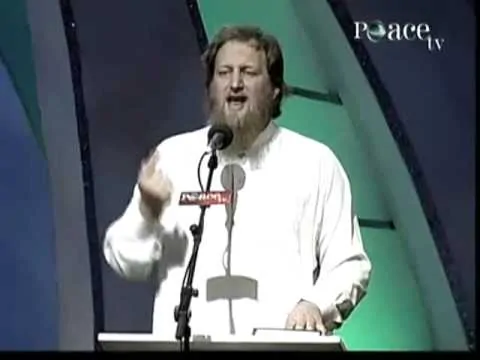
Many Muslims today follow cultural traditions rather than authentic Islamic teachings, often without realizing the difference. In this thought-provoking lecture, brother Abdur Raheem Green — a British convert who left Christianity and Buddhism before embracing Islam — tackles the critical issue of culture confusion and explains why distinguishing between inherited customs and divine guidance is essential for every Muslim.
Islam Is Not a Family Heirloom
One of the biggest challenges facing Muslim communities, especially in the West, is that many people are Muslim by tradition rather than conviction. They follow Islam because their parents did, not because they have studied, understood, and consciously chosen it. This distinction matters because culture can lead people astray, while authentic Islam — based on the Quran and the Sunnah of the Prophet Muhammad (peace be upon him) — is the only path that leads to success in this life and the next.
“Before the time of Islam, the Arabs would bury their daughters alive. That was their culture. If you know they have made a mistake, will you follow their mistake? Make your choice — do you submit to Allah, or do you submit to your culture?”
The Danger of Religious Innovation
- The Prophet (peace be upon him) warned that the worst matters in religion are those newly introduced — innovations (bid’ah) that were never taught by him or practiced by his companions
- Practices like female genital mutilation and reverse dowry payments are cultural corruptions that directly contradict Islamic principles
- Adding to the religion implies that it is deficient — a claim that contradicts Allah’s declaration that He has perfected this faith
- The solution is education: studying the Quran, the authentic hadith, and the example of the Prophet and his companions
“Islam is evidence-based. The first word revealed was ‘Read.’ We don’t just practice anything — we practice based on the evidence of the Quran and the authentic Sunnah that has been proven directly to be from the Prophet.”
Knowledge Is the Solution
The history of Muslim civilization shows a clear pattern: when scholarship flourished and learning was the culture, Muslims were strong, respected, and influential. When they abandoned knowledge for entertainment and blind tradition, weakness and division followed. The revival of the Muslim community begins with returning to an evidence-based approach to faith — reading, studying, and building a culture of learning that separates what Allah has revealed from what human beings have invented.