
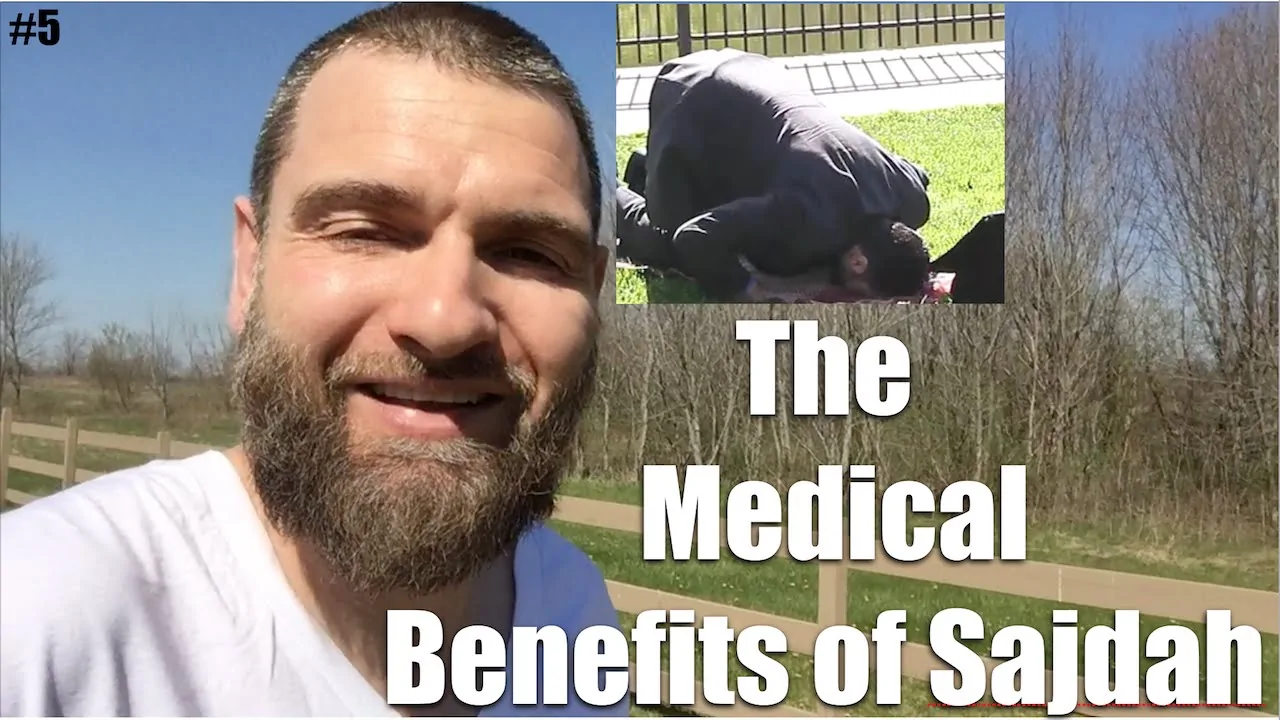
Modern science has a name for what Muslims have been doing five times a day for over 1,400 years. Researchers now call it “earthing” or “grounding” — the act of bringing the human body into direct physical contact with the earth to absorb free electrons that neutralise harmful free radicals, reduce inflammation, and restore biological equilibrium. For the global Muslim community, this phenomenon carries a far more profound name: Sajdah (prostration). In Islam, the act of placing the forehead, palms, knees, and toes on the ground in complete submission to Allah (SWT) is the spiritual pinnacle of Salah — and, as an ever-growing body of scientific research is now confirming, it is also among the most powerful healing postures the human body can assume. The convergence of 1,400-year-old divine guidance and 21st-century science is not a coincidence; it is a testament to the perfection of this deen.
The Science of Earthing — What Modern Research Has Rediscovered
The principle behind earthing is elegantly simple: when the human body makes direct contact with the earth’s surface, free electrons are transferred from the ground into the body. These electrons act as potent natural antioxidants, neutralising the positively charged free radicals that drive cellular damage and chronic inflammation. Researchers including Dr. Joseph Mercola have documented that this grounding effect is “one of the most potent antioxidants we know of.” For Muslims performing Sajdah, the forehead — the seat of the brain’s forelobe and its analytical and executive functions — makes direct contact with the ground, creating precisely this discharge pathway for the electrostatic charges that accumulate in the central nervous system from daily exposure to electromagnetic fields, Wi-Fi, pollution, and environmental stressors. Left undischarged, these charges manifest as headaches, neck aches, and muscle spasms. Sajdah, performed multiple times across five daily prayers, provides the body with a regular, cost-free, side-effect-free release.
- Free electrons transferred from the earth neutralise free radicals, slowing cellular damage and reducing systemic inflammation
- Grounding thins the blood naturally — so powerfully that those on blood-thinning medication are advised to reduce dosage when grounding regularly — significantly lowering the risk of heart attack and stroke
- Electrostatic charges that build up from modern technology and environmental exposure are safely discharged through physical contact with the earth, eliminating tension-type headaches and muscular spasms
- Grounding improves left-hemisphere brain circulation, which in turn boosts the body’s overall circulation — delivering more oxygen and nutrients to cells while removing metabolic waste more efficiently
- Scientific research consistently links grounding to better sleep quality, reduced cortisol, lower inflammation markers, and measurably improved mood and mental resilience
- Muslims perform this grounding prostration up to 34 times per day across five prayers — far exceeding what any modern “earthing” practitioner would prescribe
“The nearest a servant comes to his Lord is when he is prostrating himself, so make supplication (in this state).”
— Sahih al-Bukhari
Sajdah’s Documented Physical Benefits — A Complete Therapy for the Body
- Sinus drainage and head health: Increased blood flow to the face during Sajdah flushes the sinus passages, reducing the risk of chronic sinus inflammation and infection
- Lung purification: The prostration position allows approximately one-third of residual air trapped in the lungs to escape — air that cannot be expelled while standing, sitting, or in any other common posture
- Spinal and muscular strengthening: The unique geometry of Sajdah exercises and progressively strengthens both the neck and back muscles; repeated 34 times daily, this constitutes a consistent, medically sound therapeutic movement protocol
- Reduced risk of hernia and haemorrhoids: The anatomical posture of full prostration reduces intra-abdominal and pelvic pressure, offering protection that no pharmaceutical can replicate
- Full-body muscular activation: The complete cycle of Qiyam (standing), Ruku (bowing), Sajdah (prostration), and the final seated Tashahhud engages and stretches numerous major muscle groups, supporting long-term physical mobility and structural health
- Neurological calming: The final seated position at the close of prayer produces a measurably calming effect on both the nervous system and the mind, leaving the worshipper in a state of serene composure
The Heart of the Matter — The Spiritual Healing That Completes the Picture
“There is a piece of flesh in the body; if it is sound, the whole body is sound, and if it is corrupt, the whole body is corrupt. Verily, it is the heart.”
— Sahih al-Bukhari and Sahih Muslim
The Prophet Muhammad (SAW) told us, as narrated by Ibn Majah, that prayer is a cure for many diseases — and while the physical evidence alone is extraordinary, he (SAW) was pointing to something even deeper. Spiritual toxins — anxiety, disconnection from one’s Creator, the heedlessness of a heart untethered from its purpose — are the silent diseases most people never treat. They reach instead for Xanax, antidepressants, and endless distractions, finding temporary relief but never true rest. Allah (SWT) tells us in the Qur’an: “Verily, in the remembrance of Allah do hearts find rest” (Surah Ar-Ra’d 13:28). Those who have experienced the transformation of beginning regular Salah describe with striking consistency a profound inner shift: a restlessness and anxiety that no medication could silence finally found stillness through the prostration. This is because Allah (SWT) does not need our worship — if all of humanity were to abandon prayer, His dominion would not diminish by an atom’s weight. We are the ones who need Salah. Prayer is the prescription written for us, not for Him.
What makes Islam such an enduring and complete guidance for humanity is precisely this wholeness: every act of worship prescribed by Allah (SWT) and demonstrated by Prophet Muhammad (SAW) carries benefit at every level of human existence simultaneously — spiritual, psychological, and physical. Modern science arriving at the concept of “earthing” is not a discovery that Islam required for validation; it is yet another confirmation of what divine revelation established centuries ago. The believer who presses their forehead to the ground in Sajdah — five times each day, in humility and love before their Creator — is at that very moment performing the world’s most sophisticated act of spiritual surrender, natural antioxidant therapy, cardiovascular support, and neurological healing, all at once, all for free. As science continues to rediscover what revelation long ago established, let it deepen our gratitude for this deen, and let every Sajdah be performed with greater presence, sincerity, and awe of the One who designed us, sustains us, and knows better than anyone what truly heals us.