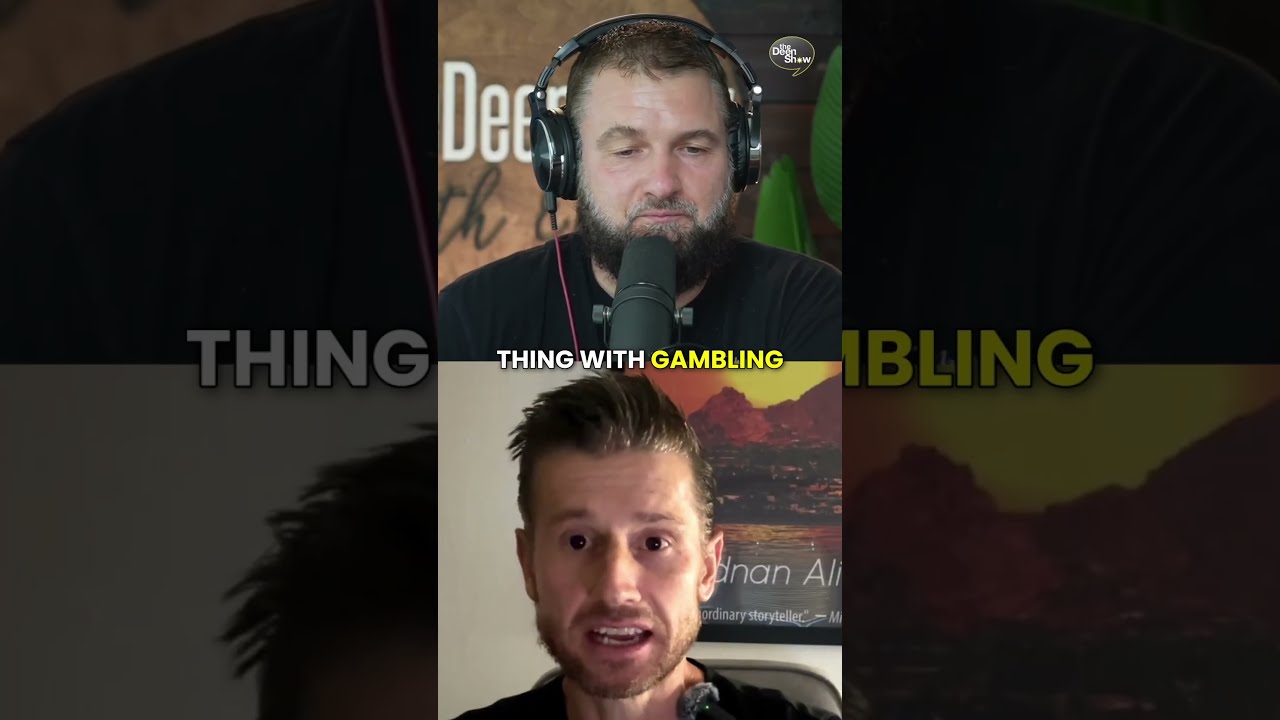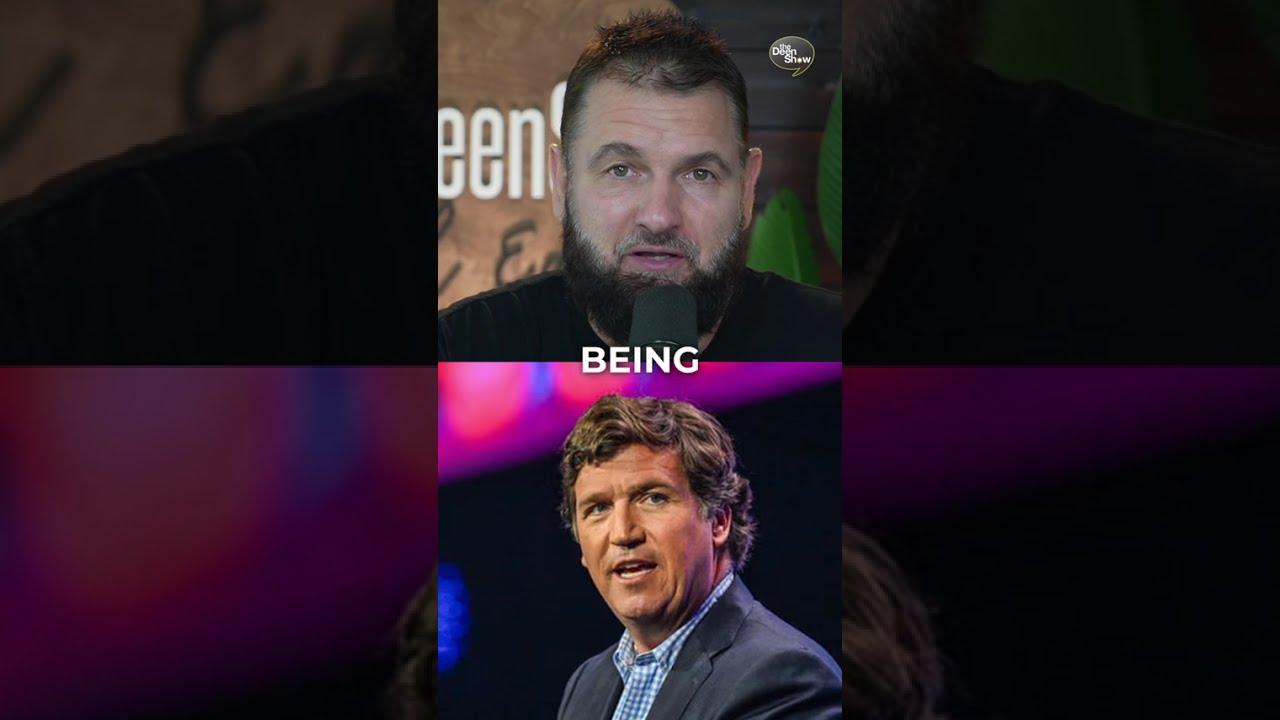

When world champion boxer Badou Jack stopped mid-day at Mike Tyson’s training ranch to make Salah — and Tyson himself joined in — it became one of the most quietly powerful viral moments in recent sporting memory. Not because it was staged, but precisely because it wasn’t. In this episode of TheDeenShow, Jack — WBA light heavyweight champion, WBC super middleweight champion, 2008 Olympian, and a central figure in the Mayweather boxing camp — opens up about that unforgettable prayer gathering, his personal journey with Islam, and his insider perspective on the most talked-about boxing matchups of the moment: Floyd Mayweather vs. Logan Paul, the KSI crossover rivalry, and the legendary exhibition between Mike Tyson and Roy Jones Jr. But more than the headlines, what emerges is a portrait of a man who has found in Islam not just a religion, but a compass — for his career, his humility, and his service to humanity.
The Prayer That Stopped the World: Salah at Mike Tyson’s Ranch
“To the Creator of the heavens and earth — it’s the same God that Jesus worshipped, that Moses. This is the one Creator of the heavens and the earth. There’s only one God, and you’re thanking the one who gave you the ability to do all the beautiful things that human beings are able to do.” — Badou Jack
Badou Jack has known Mike Tyson since moving to Las Vegas in 2011 — Tyson walked him to the ring for his first televised fight in 2012 — so when Jack was invited onto the co-main card for the Tyson vs. Roy Jones Jr. exhibition and visited Tyson’s ranch during training camp, the connection was deep and genuine. During that visit, Jack and Amir Abdullah — his strength and conditioning coach and manager — needed to pray Dhuhr, the midday prayer. Tyson’s documentary crew was filming everything for his Hotboxin’ app, and when Ahmed asked whether they could capture the prayer, Tyson’s response was immediate: “I want to pray with you guys.” Jack describes the moment with unmistakable warmth — Tyson had never prayed in his own ranch before, yet something in witnessing sincere worship stirred his fitra, the innate human disposition toward the Divine. The host rightly observes: good company doesn’t just entertain you, it awakens what was always inside you. On the boxing side, Jack also weighs in on the swirling Mayweather vs. Logan Paul rumours with measured clarity: he frames it as an exhibition, not a competitive fight — Logan competed at roughly 200 lbs against Mayweather’s 147, a near 50-pound gap — but Floyd’s technical mastery, he says, makes the size differential largely irrelevant. He recalls supporting KSI (whom he trained in the gym and walked to the ring for his fight against Logan Paul), acknowledges that YouTube boxers can out-earn career professionals in the social media era, and reflects on how Muhammad Ali gave dawah openly even in the 1950s and ’60s when doing so carried real cost — a legacy that visibly shapes Jack’s own unapologetic public identity as a Muslim champion.
From Gambia to Glory: A Champion’s Faith Journey and the Fight for Others
- Rooted in Islam from birth: Jack was born to a Swedish mother and a Gambian father — Gambia is 95% Muslim. Though raised Muslim, he only began practising seriously around 2014 after marriage and Friday prayers in Las Vegas opened a new chapter in his spiritual life.
- One step toward Allah, a thousand in return: Jack describes how taking a single conscious step toward his deen unlocked extraordinary blessings — his world championship, a growing family, greater maturity, and a career on an upward trajectory — a lived testimony to the promise of sincere intention.
- Islam as a shield against ego: With fame, wealth, and the spotlight of the Mayweather camp, Jack credits Islam for keeping him grounded — humble toward opponents, grateful for blessings, and rooted in the memory of his early Las Vegas days when he had bad management, lived in a rough neighbourhood, and had no money.
- Muhammad Ali as a model of public faith: Jack cites Ali as a defining influence not just as a boxer, but as a Muslim who gave dawah publicly and fearlessly. That legacy of unashamed representation is something Jack actively carries forward, refusing to hide his deen regardless of who is watching.
- Badou Jack Foundation — a fighting chance for children: The Foundation operates an education centre in a Palestinian refugee camp, supports a Syrian refugee camp in Jordan, partners with the SPOT Project for orphans in Gambia (his father’s homeland), and is expanding work with foster children across the United States.
- Praying publicly without shame: Jack is explicit: “There’s definitely nothing to be shy about, to be embarrassed — this is the most beautiful blessing you can have, alhamdulillah.” He praises Amir Abdullah and his team for proudly representing the deen even when the cameras and the celebrities are watching.
Born with Islam in his lineage but not always active in its practice, Badou Jack’s spiritual journey is an honest and deeply relatable one. It wasn’t until around 2014 — after marriage, Friday prayers, and eventually a world title — that his faith began to crystallise into a daily, lived reality. He speaks with candour about the spiritual trap of success: how fame, money, and the admiration of crowds can quietly hollow out a person’s character. Islam, he says, became the counterweight — keeping him focused in the ring, compassionate outside it, and aware of where he came from. That groundedness flows directly into his humanitarian work. The Badou Jack Foundation, built on the conviction of giving every child “a fighting chance in life,” reflects a man who sees his world championship platform not as a destination but as an amanah — a sacred trust to be spent in the service of others, from refugee camps in Jordan to orphans in Gambia to foster children in America.
“Islam absolutely — it feels like it’s my journey to serve my fellow men, my Muslim brothers and sisters. And you know, everybody in need too. I want to be a good role model, get better each day, and try to help as many people as possible.” — Badou Jack
Badou Jack’s story is a reminder that Islam is not a passive label — it is an active, daily, deeply personal commitment to the Creator and to all of creation. From pausing mid-training to make Salah on Mike Tyson’s ranch, to building education centres in Palestinian refugee camps, every dimension of his life points toward the same truth: that purpose, humility, and service are not side effects of faith — they are its fruit. For Muslims watching, his example is an encouragement to practise openly and without apology, wherever the adhan finds you. For those outside the faith who are curious about why a world champion would stop everything to bow in prayer, Jack’s answer is as clear as it is universal: we are thanking the one God who gave us everything — the same Creator worshipped by Jesus, by Moses, and by every soul that has ever bent its knee in submission. In a world that relentlessly equates greatness with arrogance, Badou Jack offers a far more compelling definition: true greatness is staying humble, giving back, and never forgetting where you came from — alhamdulillah.